Part 1
My mother loved ceremonies.
Not weddings or graduations, not the kind where you had to sit still and clap on cue. Her favorite ceremonies were the ones she invented. The ones where she controlled the distribution of joy like party favors. She was good at it, too—smiling just enough to look generous, keeping her voice loud enough that other people could hear her kindness.
That Saturday was “Cousins’ Day,” which was her idea, her announcement, her show.
The water park had a faded blue canopy at the gate, bleached from a hundred summers. We stood in line with damp towels and sunscreen already turning slick on our shoulders. The twins—my sister Amanda’s boys—bounced in front of us like they were spring-loaded. My daughter Zoe stood close to my hip, nine years old, cherry-red flip-flops, her towel rolled tight under her arm like she’d practiced being small.
Mom popped open her purse and pulled out white envelopes. Thick ones, fancy ones, the kind you’d use for wedding invitations. She handed them out like she was blessing each grandkid in order.
“Cousins’ Day!” she sang, loud enough for the family behind us to look over.
Each kid ripped theirs open and squealed.
“Look! My name!” Sammy shouted, holding up a glossy wristband with his name printed in chunky black letters. The twins screamed too, not because they could read, but because everyone else was screaming.
Amanda clapped like a stage mom at a preschool recital. “All access!” she chirped.
Zoe smiled for them. That was her gift, the way she could stand next to somebody else’s excitement and try to make it feel like hers, too. She watched each envelope disappear and nodded at each cousin like she was happy just to witness happiness.
Mom handed the last envelope to Casey. Casey tore it open, hollered, and slapped the wristband on his arm.
Mom dusted her hands together, satisfied, and reached for her purse zipper like the ceremony was complete.
I felt my stomach drop before my mouth opened. “What about Zoe’s?”
I kept my voice flat. No sharpness, no accusations. Just a question.
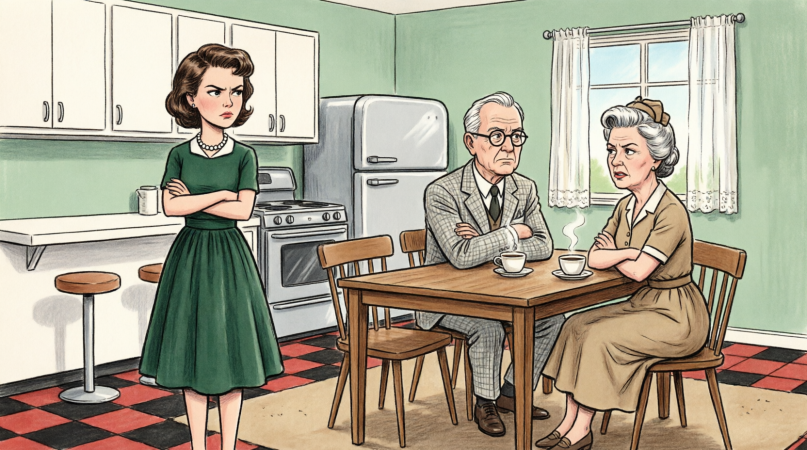
Mom blinked at me like I’d brought up a utility bill at a birthday party. “Oh,” she said, dragging the syllable out. “We didn’t know if she’d want to get in the water.”
Zoe’s eyes dropped to her towel.
“She’s more indoor, right?” Mom added, the way people talk about a dog that doesn’t like fetch.
Zoe didn’t say anything. She never made a scene. She’d learned, somehow, to swallow disappointment so neatly that adults could pretend it wasn’t there.
Amanda chimed in without looking up from her phone. “We only got four this year,” she said. “And the twins need supervision.”
The teenage attendant at the gate stepped forward with the polite boredom of someone on hour four of a summer shift. She looked at Zoe, then at me. “You need wristbands to enter past the rope,” she told Zoe, not unkindly.
Then she handed me a paper sticker. “This will get you into the bleachers.”
The sticker was thin and shiny. I pressed it onto my shirt and it felt like a slap, not because it hurt, but because it was public. Official. A label.
Spectator.
Zoe’s flip-flop squeaked against the wet cement. She wrapped the towel tighter. She tried to make her eyes smaller, like if she didn’t look like she wanted something, maybe it wouldn’t feel like she was being denied.
“It’s fine,” Zoe whispered to me. “I can watch.”
“Maybe next time,” Mom said breezily. “We’ll see.”
The cousins ran under the archway. Water exploded from a fake volcano. The boys were already daring each other to go down the dark slide. The twins squealed at the splash pad like it was Disneyland.
Zoe stayed on our side of the rope, clutching her towel like it was a ticket that never got printed.
I nodded to her like we had a plan. Like this was temporary. Like it didn’t matter.
But my throat burned. My hands were shaking, and I hated myself for how practiced my smile was when I glanced at my mother. Lips friendly. Eyes empty.
Because the truth was: I should’ve known.
I did know.
I just hadn’t said the words out loud yet.
I was thirty-eight, living in Darby, Georgia, doing senior operations analysis for a delivery company off Memorial Drive. I was the person who made sure trucks went where they were supposed to go, that numbers balanced, that plans didn’t fall apart because someone forgot something simple.
At home, I was a single mom to Zoe. I adopted her when she was four days old, a newborn delivered to me through paperwork and trust and a kind of love that felt like stepping into sunlight after years in a dim room.
My parents told their church they were “helping me out with a child.” They smiled for pictures. Mom told anyone who listened that our hearts were open. Family is family.
Family was also my debit card.
It started small. A couple hundred when Dad’s truck needed tires. Then weekly groceries during COVID—one-click deliveries that turned into expectation. It snowballed into property tax I paid because the envelope sat under a fruit bowl until it got sticky. It turned into daycare money for Amanda’s twins when her husband’s hours got cut.
I made a line item in my budget called family fund. Four hundred dollars every Friday, auto-transferred, a separate checking account with a light gray debit card Mom kept behind her library card. The family fund paid for utility bills, a washer, summer camp deposits, even a neighbor’s fence because Dad promised and didn’t want to look bad.
Zoe got lip service. A ten-dollar gift card on her birthday while the twins got a bounce house. “We don’t know what she’s into,” Mom would say, even though Zoe’s drawings covered their fridge—right under the stained calendar where they wrote the twins’ soccer games and forgot to write hers.
That day at the water park wasn’t new pain. It was just pain in bright daylight, printed in wristbands.
Zoe stood beside me and watched the others disappear into water and noise.
I swallowed the urge to make a speech at the gate. I swallowed the urge to demand fairness right there in front of everyone.
Not because I was scared of conflict.
Because Zoe was watching my face, and I didn’t want her to feel like she was the reason adults fought.
So I did what I always did.
I held it in.
And I told myself I’d deal with it later.
Part 2
Later came in quiet pieces, the way truth often does when you’ve spent years sanding it down to something you can live with.
That night, after the water park, Zoe fell asleep on the couch with damp hair and sunburned cheeks, her towel still folded neatly beside her like she wasn’t sure she had permission to leave it on the floor. I carried her to bed, tucked her in, and stood in her doorway longer than usual.
She didn’t talk about the wristband. She didn’t complain about being stuck on the bleachers. Zoe processed hurt the way she processed everything—silently, carefully, as if she could solve it by being good enough.
I hated my family for training her into that.
I also hated myself for letting it happen again.
In the kitchen, I opened my phone and checked the family fund account out of habit. Two charges from the water park snack shack: forty-seven dollars and sixty-two. Another charge at the gift shop for foam swords and matching towels.
None of it had Zoe’s name on it. None of it had anything to do with the “indoor” child who apparently didn’t need access.
I stared at the numbers until my hands stopped shaking. Then something else slid into place, heavy and calm.
Certainty.
It wasn’t rage. Rage burns out. Certainty is colder. It’s math.
The math of my family had always been like this: my labor, my money, my patience were assumed. Zoe’s inclusion was optional. Conditional. A nice extra if it didn’t inconvenience the twins, if it didn’t disrupt Mom’s story about being the perfect grandmother to a perfect set of grandkids.
I thought about the year I adopted Zoe.
Mom smiled in the hospital parking lot when I brought Zoe home in a tiny white onesie. “Our baby,” she said, loud enough for the nurses to hear.
But later, in the quiet of my parents’ kitchen, she got careful. “You know,” she said, rinsing a bottle, “it’s just… different when it’s not blood.”
She didn’t say it like cruelty. She said it like a weather forecast. Like something we had to accept.
I accepted too much.
I stopped mentioning adoption at family events because it made Mom’s mouth go tight, like I was turning Zoe into a topic. I told myself I was protecting Zoe from being singled out, but maybe I was also protecting my parents from discomfort.
I paid for a beach rental one summer—four thousand eight hundred dollars, two installments—because I wanted “family memories.” On day two, Amanda suggested “blood cousins photos at sunset.”
She didn’t say Zoe’s name, but she didn’t have to.
I stood there with my nice camera, took the photo, and felt something sour settle in my throat. Zoe built sand castles nearby, humming, pretending she didn’t notice the exclusion that had become routine.
Then last fall happened.
Amanda asked me to co-sign her refinance. She said it like it was no big deal, like my credit score was just another family resource. I listened, asked a few questions, and said no.
Clear. Calm.
Amanda’s smile disappeared so fast it looked like it fell off her face. Mom didn’t call me for a week. Invitations got thin. Zoe’s name slipped off text messages. Not dramatic punishment—paper-cut punishment.
And still, the family fund debit card kept working. They didn’t cut that thread because it was useful.
The morning after the water park, Mom called to chat like nothing happened. She asked if I could pick up matching shirts for the twins before Saturday. She mentioned Dad might need help with his prescription refill. She didn’t mention Zoe’s wristband at all.
I listened. I said, “I’ll see,” and ended the call with a polite goodbye.
I didn’t confront her then, because again, Zoe was in the room. Zoe was coloring at the table, tongue poking out in concentration. She looked peaceful. I didn’t want to poison her calm with adult disappointment.
But the disappointment didn’t stay quiet.
It showed up at school.
Zoe’s elementary was five minutes from my parents’ house. At the beginning of the year, Mom had insisted they should be on Zoe’s emergency contact list.
“That’s what grandparents are for,” she said proudly. “We’ll pick her up if you’re stuck at work.”
The first time they forgot, it was a Tuesday. Zoe waited in the front office coloring until I could leave work. Two hours. My parents apologized, said they lost track of time.
The second time, traffic. The third time, Dad’s back. The fourth time, “we didn’t hear the phone.”
By the eighth time, the school secretary greeted me with a soft face. “She’s sweet,” she said gently. “So patient.”
Zoe never cried in the office. She sat with her library book, hands folded, making herself easy to ignore.
And every time, my parents acted like it was an inconvenience I should manage silently because they had “so much going on.”
So much going on meant Amanda’s twins.
Everything meant the twins.
If Amanda needed someone to watch the boys for an hour, my parents jumped. If a school pickup had Zoe’s name on it, my parents forgot. Not always. Not every time. Just enough that it became a pattern.
And patterns are choices.
The eleventh time was late August, early release, the kind of day you put reminders on your reminders.
I set three alarms. I texted Mom twice: Reminder, 12:30 pickup.
Both messages delivered. Blue bubbles. No response.
At 1:50, my phone rang with the school’s number.
“Hi, Ms. Vincent,” the secretary said. “Zoe is here in the office. She says her grandparents were supposed to pick her up.”
I could hear Zoe in the background, chatting softly with the secretary about a poster on the wall, as if she was there by choice.
My chest caved inward and then braced.
“I’m on my way,” I said.
I had a meeting in three minutes. I closed my laptop, grabbed my keys, and left my spreadsheet mid-formula.
Traffic was a slow ribbon. It took twenty-five minutes. When I walked into the office, Zoe sat at a little round table with her backpack on her lap like a seat belt. Her braid was crooked. She smiled at me like she was sorry.
“Hi, Mom.”
The secretary placed a stack of yellow forms on the counter. “We tried calling your parents,” she said. “No answer.”
I nodded. “Thank you for staying with her,” I said. My voice sounded calm, distant, like someone else was speaking through me.
Zoe’s hand slid into mine. Her fingers were warm. Trusting.
We got in the car. Zoe stared out the window and said, “Grandma probably forgot.”
“Probably,” I echoed.
At the red light, I opened the school portal app. I scrolled to emergency contacts.
Sharon and Michael—Grandparents.
I tapped edit.
Remove.
A dialogue box popped up: Are you sure?
My thumb hovered for half a heartbeat, and I pictured Zoe’s towel at the water park. The bleachers. The printed wristbands on everyone else. The four hours in the office.
I tapped yes.
The app refreshed.
Contacts left: me, my neighbor Mary, and my cousin Catherine.
No grandparents.
At home, before I reopened my laptop, I logged into my bank and moved the family fund balance into my personal savings. I disabled the auto-transfer. I removed Mom as an authorized user on my credit card.
No yelling. No speeches.
Just numbers moving from one line to another.
A valve closed.
Part 3
That evening, Zoe asked if we could put stickers on the calendar.
“For the days you pick me up,” she said, matter-of-fact, like this was just a new system. Like adults disappearing was as normal as homework.
We chose star stickers. Gold ones that caught the light. She lined them up neatly on the edge of the fridge, ready.
“Do Grandma and Grandpa still pick me up sometimes?” she asked, eyes on the stickers instead of my face.
“No,” I said gently. “Not anymore.”
Zoe nodded, accepting it without drama. Then she asked, “Can Mary pick me up?”
Mary was my neighbor in the truest sense—not just proximity, but presence. She was the kind of woman who brought your package inside when it rained. The kind who remembered Zoe liked extra pickles without being asked.
“Yes,” I said. “Mary can.”
Zoe smiled, small and relieved. “Okay.”
The next morning, I sent Mary a message: Can you be backup pickup Wednesdays for the next six weeks? I’ll pay you.
Mary replied immediately: Of course. Don’t pay me. Zoe is easy.
I paid her anyway. One hundred and twenty dollars upfront, because help deserves respect, and I was done confusing entitlement with love.
A week passed before my parents noticed the money was gone.
That’s the thing about auto-pay and routines: they hide reality until the day they stop.
The first call came on a Thursday morning.
“My card isn’t working at Publix,” Mom snapped, like I was the cashier who’d embarrassed her. “Is something wrong with your bank?”
“It’s not my card anymore,” I said.
Silence. Then a sputter. “What do you mean?”
“I closed that account,” I said, keeping my voice steady—the same voice I used at work when explaining timeline changes. “I’m not your backup bank.”
Mom’s breath went sharp. “Why would you do that without—after all we—this is dramatic.”
“I’m not funding a family my kid isn’t part of,” I said. “And I’m not putting Zoe on your to-do list again.”
Mom made a noise like a laugh that hurt. “Oh, here we go. Is this about the water park? For heaven’s sake, she didn’t even like slides.”
“She likes whatever she’s allowed to like,” I said.
Mom ignored that. “We’re not a taxi, Janice,” she snapped, using my name like a reprimand. “We were busy with your sister’s twins.”
“And Zoe waited four hours,” I replied.
“That was a misunderstanding,” Mom insisted. “Your father’s phone was on silent. The boys had dentist appointments. We all have things.”
“We do,” I agreed. “Which is why I’m taking responsibility for mine.”
Mom pivoted the way she always did when confronted: straight to urgency. “Your father’s blood pressure medicine is due,” she said. “And the water bill is coming. Are you going to let your father go without water?”
“They’re your bills,” I said. “You’ll have to pay them. You can set up your own autopay now. It’s simple.”
The silence on the line was thick. Then Mom hung up.
The texts came in flurries.
From Mom: I can’t believe you’re doing this.
From Dad: Call me.
From Amanda: Are you serious? You’re punishing Mom and Dad because of your delicate child.
Delicate child. The phrase made my skin go hot. Zoe wasn’t delicate. Zoe was patient. There’s a difference.
Amanda followed up: Families help each other.
Two hours later, she sent a new message with a photo of a glossy passport cover. Europe, baby! she wrote. We’re going in October. Two weeks.
Then: I told Mom you can watch the twins. Winky face.
I stared at the screen. My thumb hovered over the keyboard.
I typed: I’m busy.
Three dots appeared.
A new message popped in from Mom—sent from Amanda’s phone, like they were sharing a single outrage.
Doing what?!
I could’ve written a paragraph. I could’ve listed every bill I paid, every hour Zoe sat in that office, every way I’d been used as the family’s silent solution.
Instead, I typed: Raising my daughter with people who show up. And balancing my own accounts.
Then I added: Also, I’m taking Zoe to the aquarium that Saturday. Lunch after. Nap at home. It’s a full day.
Mom responded instantly: You’ll regret this.
I put my phone face down on the counter.
Zoe was on the floor sorting colored pencils into an old mason jar, humming softly like the house itself was safe.
I didn’t regret anything.
Dad called the next day, which was rare. He didn’t like conflict unless he could end it quickly.
“Your mother is upset,” he said, like it was a weather update. “We’ve planned this Europe trip for years. We were counting on you.”
“I counted on you eleven times,” I said.
He went quiet.
“You could’ve told us in person,” he muttered, as if my boundaries needed a meeting agenda.
“I’m telling you now,” I said, not unkindly. “You’re off my accounts. You’re off the emergency list. I’m not your babysitter. I’m not your bank.”
Dad exhaled slowly. “This is all over a wristband?”
“No,” I said. “This is over years. The wristband was just easy to see.”
On Saturday, my parents showed up at my house with muffins and brittle smiles.
Mary was on my couch with Zoe, painting her nails glitter blue.
I didn’t invite my parents inside. We talked on the porch.
Mom did the soft-sad voice, dabbing her eyes with a tissue like she was auditioning for sympathy. “We love Zoe,” she said. “You know that. But the twins are a lot. Your sister needs us.”
“Then give your time to them,” I said. “But don’t put Zoe in a queue.”
Dad tried logic again. “We’re family.”
“Family shows up,” I said. “Family doesn’t make a nine-year-old wait in an office because someone else’s schedule matters more.”
Mom’s face hardened. “You’ve become so cold,” she snapped. “Money has made you.”
I kept my voice calm. “Money helped me adopt Zoe. Money bought your washer. Money is not love. Holding my kid’s hand at 12:30 on a Thursday is love.”
Mary stepped onto the porch then, handed me the glitter polish, and smiled politely at my parents. “Zoe picked blue,” she said, like it was the most normal thing in the world.
My parents left without another word.
I watched their car pull away.
Zoe’s nails glittered in the sunlight.
And for the first time in a long time, the house felt like it belonged to us.
Part 4
The fallout wasn’t dramatic at first. It was petty, like mosquitoes.
Mom started telling relatives I was “going through a phase.” Amanda complained to anyone who would listen that I was “weaponizing adoption,” which wasn’t even true—I’d barely said the word out loud.
Catherine, my cousin, forwarded me screenshots with a shrug emoji.
From Aunt Deb: Janice thinks she’s better than us now.
From Mom: We have always included Zoe. She’s just sensitive.
From Amanda: She’s vindictive. Always has been.
Catherine added: You don’t owe them your balance.
I didn’t respond to the group chat. I didn’t correct the narrative. I’d spent too long trying to manage people’s perception. I was tired.
Instead, I did something that felt rebellious in its calm: I made our life smaller and steadier.
Wednesdays became pizza nights with Mary’s family. Zoe loved that Mary’s daughter, Talia, asked her questions and actually waited for the answers. Sundays became pancakes—Zoe got the first one, always, because I wanted that rule carved into her memory: you don’t wait in line for love.
I also did the unglamorous work of safety.
I updated Zoe’s school file. I added Mary and Catherine everywhere—emergency contact, pickup list, aftercare backup. I emailed the office manager my work schedule and arranged for early-release coverage that didn’t rely on people who “forgot.”
When Zoe asked why Grandma and Grandpa weren’t on the list anymore, I didn’t lie. I didn’t blame. I kept it plain.
“Because they didn’t show up,” I said. “And showing up is important.”
Zoe nodded like that made sense, then asked if she could add star stickers to the calendar for the days Mary picked her up too.
We added silver stars for Mary. Gold for me.
A month later, Mom texted: The water bill is overdue. Your father is stressed.
I replied once: I can help you set up autopay if you want. I will not pay it.
No response.
Another week passed. Then Dad texted: Your mother says you’re enjoying this.
I stared at the message for a long time, feeling the old reflex to defend myself rise up like nausea.
Then I typed: I’m enjoying my daughter not waiting alone.
And that was the end of it.
October came fast.
A week before the “Europe trip,” Amanda sent a message: Dropoff Saturday 7:00 a.m. We’ll be there with the boys.
I replied: No.
Mom jumped in immediately: We already booked flights. Don’t do this.
I didn’t argue. I didn’t explain again. I wrote: I’m busy.
Mom: Doing what?!
I copied and pasted my previous answer, then added one more sentence: Doing what you refused to do—showing up.
I muted the thread.
Saturday morning, no one came.
Later, Catherine told me the trip didn’t happen the way they’d planned. Mom and Dad scrambled, found a neighbor’s cousin’s college kid to watch the twins, and left anyway. The neighborhood Facebook group filled with frantic posts.
ISO reliable sitter for two spirited boys. Must handle travel drop-offs. Experience preferred.
They’d finally stepped into the world where you can’t guilt your way into labor.
Zoe and I went to the aquarium anyway.
Mary and Talia came too, not invited, just included—like it was normal to show up for people.
Zoe stood under the whale shark tank, blue light washing her cheeks, eyes wide as the fish drifted above like living shadows. She pressed her hands to the glass and whispered, “It’s like space.”
I watched her, feeling something in my chest unclench.
At the gift shop, Zoe picked a small stuffed octopus and a paper wristband stamped with a silly purple octopus face. She slid it onto her wrist like it mattered.
“Look,” she said, holding her arm out proudly. “My band.”
It wasn’t printed with her name. It wasn’t glossy. But it was hers.
At lunch, Zoe dipped fries and told Mary about the poster in the school office—the one she’d stared at for four hours. Mary didn’t say “she’ll get over it.” Mary didn’t say “kids are resilient.” Mary just frowned and said, “That shouldn’t have happened to you.”
Zoe blinked like she wasn’t used to adults acknowledging her hurt directly. Then she shrugged, the way kids do when they’re trying to move on. “It happened a lot,” she said.
Mary’s jaw tightened. “Not anymore,” she said.
Zoe looked at me. I nodded.
“Not anymore,” I echoed.
That night, after Zoe fell asleep with the octopus tucked under her arm, I opened my banking app and transferred four hundred dollars into Zoe’s future savings.
The same amount I used to send my parents every Friday.
The number moved from one line to another like it had always belonged there.
I labeled the transfer: Zoe.
It felt like air.
Thanksgiving came a month later.
Catherine brought a store pie and no apologies. Mary brought mac and cheese. Talia brought a lopsided craft centerpiece she made for Zoe.
I set two extra chairs at the table anyway. Not as bait, not as guilt—just space. A reminder that I wasn’t cruel. I wasn’t cutting people out for sport. I was simply refusing to keep my child in the bleachers.
No one knocked.
At 2:30, my phone stayed silent.
Zoe said, when we did gratitude, “I’m grateful Mom picks me up.”
Mary smiled softly. Catherine squeezed my shoulder.
I swallowed the lump in my throat and said, “Me too.”
Because love without presence is just a story people tell themselves.
And I was done paying for stories.
Part 5
In December, it snowed—barely, just a thin dusting that made Georgia roads panic like we’d been hit by a blizzard. Zoe pressed her face to the window and squealed like the world had turned magical overnight.
“Can we build a snowman?” she asked.
“It’s more like a snow blob,” I said, already pulling on boots.
We went outside and rolled the thin snow into lumpy balls. Zoe laughed so hard she fell backward into the cold, arms spread wide. I snapped a photo, her cheeks pink, her smile huge, and it hit me how much lighter she looked lately.
Not because her life had become perfect.
Because she wasn’t waiting anymore.
My parents, meanwhile, were learning the difference between being loved and being supported.
Mom tried to call more often that winter, but her tone didn’t change. She didn’t ask how Zoe was. She asked if I’d “calmed down,” if we could “move on,” if I could “help just this once” with some bill or some problem.
Each time, I gave the same answer: I can help you learn how to handle your own responsibilities. I will not take them on.
It drove her crazy.
One afternoon, she snapped so hard I could hear her teeth clicking. “So you’re just going to let us struggle?”
I looked across the kitchen at Zoe doing homework, pencil tapping thoughtfully, tongue peeking out in concentration.
“No,” I said calmly. “I’m going to let you live in the world you chose. You chose the twins over Zoe’s pickups. You chose convenience over showing up. Now you’re choosing your own bills.”
Mom inhaled sharply. “You make everything sound like a crime.”
“No,” I said. “I make it sound like a choice.”
She hung up.
A week later, she showed up at Zoe’s school.
Not to pick her up. To talk to the secretary.
The school called me, careful and polite. “Ms. Vincent, your mother asked if she could be added back to Zoe’s contact list.”
I closed my eyes. “No,” I said. “Please note that she is not authorized.”
“Understood,” the secretary said gently. “We wanted to check.”
I thanked her and hung up, the old anxiety flickering through me. Then I did the thing I’d learned to do now: I dealt with it directly, calmly, without fear.
I texted Mom: You are not to approach Zoe’s school again. If you want time with Zoe, you ask me. We do it in a public place. With me present.
She replied: Are you threatening me?
I wrote: I’m protecting my daughter.
No response.
The next time my mother asked for Zoe, she asked like she was asking for a favor. “Can we take her to lunch?” she said, voice sugary.
“No,” I replied. “You can see her at the park with me there.”
Mom sighed dramatically. “You’re making this so hard.”
“You made it hard,” I said. “I’m making it safe.”
We met at the park the following Saturday. Mom and Dad arrived with stiff smiles, hands empty. Zoe stayed close to me, watching them like she was deciding how real they were.
Dad tried to play cheerful. “Hey, kiddo,” he said, like they’d just seen her yesterday.
Zoe nodded politely. “Hi.”
Mom sat on the bench and patted the space beside her. Zoe didn’t move. Mom’s hand hovered awkwardly, then dropped.
“What have you been doing?” Mom asked Zoe.
Zoe glanced up at me. I nodded slightly, giving her permission to speak for herself.
“Art club,” Zoe said. “And I went to the aquarium.”
Mom’s smile tightened. “Oh. That sounds… nice.”
Zoe shrugged. “It was.”
Dad asked about school. Zoe answered with short, polite sentences. No warmth. No anger. Just distance.
After fifteen minutes, Zoe asked if she could go to the swings. I walked her over. Mom and Dad watched from the bench like they were observing a stranger’s child.
Mom tried again when Zoe wasn’t within earshot. “She’s so cold,” she whispered, offended. “She used to hug me.”
I stared at her. “She used to trust you,” I said quietly. “Trust changes when people don’t show up.”
Mom opened her mouth, then closed it. Dad rubbed his hands together like he wanted the conversation to end.
Mom tried a different angle. “Amanda is overwhelmed,” she said. “The twins are exhausting. We’re exhausted.”
I didn’t flinch. “That’s unfortunate,” I said. “But it’s not Zoe’s job to pay for it.”
Mom’s eyes narrowed. “You always act like Zoe’s the only one who matters.”
“She is the only one who matters to me,” I said, simple and steady.
My mother looked like she’d been slapped, not because my words were cruel, but because they were honest.
When we got home, Zoe asked, “Did Grandma and Grandpa get mad at you?”
“Maybe,” I said, helping her hang up her jacket.
Zoe nodded thoughtfully. “I don’t like when they’re mad,” she admitted.
I crouched to her height. “You don’t have to like it,” I said. “But their feelings are not your responsibility.”
Zoe blinked slowly, like she was absorbing something new.
“Whose responsibility is it?” she asked.
“Theirs,” I said. “Mine, for how I act. Yours is to be a kid and tell the truth about how you feel.”
Zoe looked down at her hands. “I feel… relieved,” she said quietly.
My chest tightened. “Me too,” I admitted.
That winter, when a new year rolled in, I made a list—quiet, practical.
Emergency contacts updated. Savings automatic. Therapy sessions booked for Zoe, not because she was broken, but because she deserved a place where her feelings didn’t have to be polite.
On the first day of therapy, Zoe climbed into the car after and said, surprised, “She said it’s okay to be mad.”
I smiled. “It is.”
Zoe stared out the window, then whispered, “I am mad.”
“Good,” I said gently. “That means you know you deserved better.”
And for the first time, Zoe didn’t sound like she was apologizing for existing.
Part 6
Spring brought a school art night, the kind where construction paper flowers cover the walls and parents wander the hallways pretending they don’t want to cry.
Zoe’s drawing hung near the cafeteria entrance. A bright sun. A small house. Two figures holding hands. Simple, bold, steady.
Underneath, in careful letters, Zoe had written: Showing up is love.
I stared at it until my eyes stung.
Mary leaned in beside me. “That’s your kid,” she said, warm pride in her voice.
Zoe tugged my sleeve. “Do you like it?” she asked, suddenly shy.
“I love it,” I said, voice thick. “Can we frame it?”
Zoe grinned. “Really?”
“Really,” I said.
As we walked out, I saw my parents across the parking lot.
They hadn’t come to the art night—of course not. But they were there, standing by their car like they’d been waiting.
Mom lifted a hand in a half-wave. Dad stood stiff. They both looked tired in a way I hadn’t noticed before, like the world had gotten heavier now that their automatic safety net was gone.
Mom stepped forward. “We wanted to talk,” she said.
“About what?” I asked, keeping Zoe close.
Mom’s gaze flicked to Zoe’s framed drawing in my hands. Something flickered in her eyes—regret, maybe, or envy.
“Amanda’s sitter quit,” Mom said, like that explained everything.
I didn’t respond.
Mom pressed on. “We need help. Just for a little while. You’re good with kids.”
Zoe’s hand tightened in mine.
“I’m good with my kid,” I corrected.
Mom’s mouth pinched. “Janice—”
“No,” I said calmly. “You don’t get to act like we’re your emergency solution while you treat Zoe like an optional grandchild.”
Dad finally spoke, voice low. “We never meant to hurt her.”
“But you did,” I said.
Mom’s eyes flashed with irritation. “You act like we left her on the side of the road.”
“You left her in an office for four hours,” I said. “Eleven times.”
Dad’s shoulders slumped. Mom looked away like she couldn’t stand being seen as wrong.
Zoe whispered, “Can we go home?”
“Yes,” I said instantly.
As I turned, Mom snapped, the anger breaking through her tiredness. “You’re going to keep holding this over our heads forever?”
I looked back, my voice steady. “I’m not holding it over your heads,” I said. “I’m holding my daughter’s safety in my hands.”
We left.
In the car, Zoe stared at her lap. “Grandma looked mad,” she murmured.
“She did,” I said.
Zoe’s voice got small. “Is it my fault?”
I pulled into a parking space and turned to face her fully. “No,” I said firmly. “Never. You are not the cause of adults’ bad choices.”
Zoe swallowed. “Sometimes I think… if I was like the twins, they would remember.”
My chest tightened so hard it hurt. “Zoe,” I said softly, “they forgot because they chose not to prioritize you. That’s about them, not you.”
Zoe blinked rapidly. “I don’t want to be different,” she whispered.
I reached back and squeezed her hand. “You are different in the best ways,” I said. “And we’re building a life where being you is enough.”
That summer, I did something I’d put off for years: I took real vacation time.
Not the kind where you bring your laptop and answer emails from the pool. The kind where you actually leave.
Zoe and I drove to the coast for three days. We stayed in a cheap little motel with peeling paint and a view of a parking lot, but the beach was ten minutes away and Zoe didn’t care about fancy.
We walked barefoot in the morning. Zoe collected shells like they were treasure. On the second day, she asked if we could take a “family photo.”
“Just us?” I asked.
Zoe nodded. “And Mary, if she was here,” she added thoughtfully.
I laughed. “Mary would love that.”
Zoe smiled and lifted her chin. “She always shows up,” she said, like that was the only qualification that mattered.
When we got back home, Mom called again. Her voice was softer, not sweet, but tired.
“Zoe has a birthday coming up,” she said. “Can we come?”
I paused. “If Zoe wants you there,” I said. “And if you can follow rules.”
“What rules?” Mom asked, already defensive.
“No guilt,” I said. “No comparisons. No talk about Amanda or the twins. You come to celebrate Zoe, or you don’t come.”
Mom exhaled sharply. “You’re treating us like strangers.”
“No,” I said. “I’m treating you like adults who need to earn trust.”
There was a long silence.
Finally, Mom said, almost inaudible, “Okay.”
Zoe’s birthday arrived, and for the first time, she made the guest list herself.
Mary and Talia. Catherine. Two friends from art club. A neighbor kid who always waved at Zoe from the hallway.
Then, after thinking for a long time, Zoe said, “Grandma can come for one hour.”
I looked at her carefully. “Are you sure?”
Zoe nodded. “I want to see if she can be nice,” she said. “But I want you here.”
“I’ll be here,” I promised.
When Mom arrived, she brought an art set. Not a loud gift. Not a performance. A sketchbook, pencils, and a note.
Zoe read the note twice, then looked up. “Are you going to forget me again?” she asked bluntly.
Mom flinched. Then, for once, she didn’t deflect. “I don’t want to,” she said softly. “I’m sorry I did.”
Zoe stared, then said, calm as an old soul, “If you do it again, you have to leave.”
Mom’s eyes filled. “That’s fair,” she whispered.
For that hour, Mom sat quietly and watched Zoe laugh with her friends. She didn’t make it about herself. She didn’t drag the twins into it. She didn’t ask for anything.
When the hour was up, Mom left without complaint.
Afterward, Zoe climbed into my lap and whispered, surprised, “She didn’t ruin it.”
I kissed the top of her head. “No,” I said. “She didn’t.”
Zoe yawned. “Maybe she can learn,” she murmured.
“Maybe,” I said.
But I didn’t build our life on maybe anymore.
Part 7
Two weeks after Zoe’s birthday, Amanda’s husband left.
Not dramatically. Not with shouting in the driveway. He moved out the way people do when they’ve been leaving for a long time and finally make it official—two suitcases, a stiff goodbye, a “we’ll figure it out” that meant he’d already decided what he wouldn’t be figuring out.
Catherine told me first. She always knew everything before it hit the family group chat.
Amanda started calling my parents constantly. The twins got louder, wilder, older. My parents got more exhausted. And suddenly, the family’s usual solution—me—wasn’t available.
One evening, Dad called. His voice sounded different, less commanding, more… unsure.
“Janice,” he said, “your mother isn’t sleeping. She’s worried about Amanda.”
I didn’t respond right away.
Dad cleared his throat. “We need help. We’re getting older.”
There it was again: need.
Not apology. Not accountability. Need.
“What kind of help?” I asked carefully.
Dad hesitated. “Babysitting,” he admitted. “Money. Your mother says—”
“No,” I said.
Dad’s breath caught. “Just hear me out—”
“I have heard you out for years,” I said calmly. “And my daughter waited four hours. Eleven times.”
Dad went quiet.
“You want to know what I’m doing?” I continued, my voice steady. “I’m raising Zoe in a way she won’t grow up thinking love means being forgotten.”
Dad’s voice turned brittle. “So we’re just… cut off?”
I exhaled slowly. “You can have a relationship with Zoe,” I said. “If you show up for her. If you keep your promises. If you treat her like she matters.”
Dad sounded frustrated. “That’s what we’re trying to do.”
“Then keep doing it,” I said. “But I’m not funding Amanda’s life. And I’m not taking care of the twins so you can pretend everything’s fine.”
Dad’s voice sharpened. “Family helps family.”
“Family doesn’t pick favorites and then demand loyalty from the leftovers,” I replied.
I hung up before he could respond.
That night, Zoe asked if Grandma was going to stop coming.
“I don’t know,” I admitted, sitting beside her on the couch. “But whatever she chooses, you’re safe.”
Zoe nodded, then asked, “Can I tell you something without you getting mad?”
“Always,” I said.
Zoe picked at a loose thread on her sleeve. “Sometimes I wish I wasn’t adopted,” she whispered.
The words hit me like a punch.
I forced my face to stay calm. “Why?” I asked gently.
Zoe shrugged, eyes glossy. “Because… then maybe Grandma wouldn’t forget. Maybe I’d look like them. Maybe I’d be… easier.”
My throat tightened. I wrapped an arm around her and pulled her close.
“Oh, Zoe,” I whispered. “You being adopted is not the problem. Them being unfair is the problem.”
Zoe sniffled. “But it still hurts.”
“I know,” I said. “And you’re allowed to say that.”
Zoe leaned into me. “Am I allowed to be mad at Grandma?” she asked.
“Yes,” I said. “You’re allowed to feel whatever you feel.”
Zoe nodded slowly. “I’m mad,” she said quietly.
“Good,” I said, voice shaking just a little. “That means you know you deserved better.”
Later, after Zoe went to bed, I sat at the table and wrote a list. Not a budget list. Not a logistics list.
A values list.
Show up. Tell the truth. Protect the kid. Don’t confuse obligation with love. Don’t buy belonging.
Then I did something else I’d avoided: I emailed a mediator.
Not because I wanted to fix my family. But because I wanted tools. I wanted language that didn’t collapse into guilt the moment my mother cried. I wanted ways to say no that didn’t require me to become cold.
The mediator met with me twice, listened to my story, and said something that made my eyes sting.
“You’re not punishing them,” she told me. “You’re ending a system that harmed your child.”
That sentence gave me peace I didn’t know I needed.
A month later, Mom asked to meet again at the park. She arrived alone this time, hands clasped, face pale.
“I want to talk about Zoe,” she said quietly.
“Okay,” I replied.
Mom stared at the playground where Zoe swung gently, feet pumping, hair bouncing. “She seems… happier,” Mom admitted.
“She is,” I said.
Mom swallowed. “I didn’t realize how much she noticed,” she whispered.
I didn’t soften my truth. “She noticed everything,” I said. “She just didn’t feel safe saying it.”
Mom’s eyes filled. “I don’t want to lose her,” she said.
“Then stop making her feel like an afterthought,” I replied. “Stop making her wait.”
Mom nodded, tears slipping down. “I don’t know why I did it,” she whispered. “I just… the twins need so much. Amanda needs so much.”
“And Zoe needed you,” I said.
Mom flinched. “I know,” she whispered. “I know.”
She reached into her purse and pulled out something small—a laminated card. A little schedule, printed neatly.
“I wrote down Zoe’s early releases,” she said. “If you ever… if you ever want me to pick her up again… I would. I would be there.”
I stared at the card. It looked earnest. It also looked like a request for a second chance.
I watched Zoe on the swings and asked myself one question: Is this safe?
I turned back to Mom. “Not yet,” I said gently. “But keep that schedule. Keep showing up in the ways you can. We’ll reassess later.”
Mom’s face fell, then steadied. “Okay,” she whispered. “I’ll earn it.”
Zoe ran back over then, cheeks flushed. She looked at Mom and said, bluntly, “Are you still going to come to my art show?”
Mom blinked, then nodded fast. “Yes,” she said. “I’ll be there.”
Zoe studied her for a long moment, then nodded once and ran back to the swings, satisfied.
Mom watched her, tears on her cheeks, and whispered, “She’s so… strong.”
“She had to be,” I said.
Mom looked at me like she finally understood the cost.
Part 8
The first time my mother actually showed up on time, it shocked me.
Zoe’s art club had a Saturday morning workshop at the community center—paint everywhere, kids in smocks, parents milling around with coffee and tired smiles. I didn’t invite my mother. Zoe did, in her simple way.
“She can come if she wants,” Zoe said, shrugging like it wasn’t a big deal.
I didn’t know if she meant it or if she was testing the universe.
Mom arrived ten minutes early, holding a small paper bag with muffins. No balloons. No loud entrance. She walked in quietly, found Zoe, and said, “Hi.”
Zoe stared at her like she was checking for hidden traps, then nodded. “Hi.”
Mom sat in the back, hands folded, and watched Zoe paint.
When the instructor praised Zoe’s use of color, Mom didn’t jump up and take credit. She just smiled, quiet and proud, like she’d finally learned that pride doesn’t have to be a performance.
Afterward, in the parking lot, Mom approached me carefully. “Thank you,” she said, voice low.
I didn’t know what she meant—thank you for allowing her there, or thank you for forcing her to see what she’d been missing.
“Zoe invited you,” I said.
Mom nodded, then hesitated. “Amanda is… falling apart,” she admitted. “The boys are a lot.”
I held my boundary. “I’m not taking that on,” I said.
“I know,” Mom whispered. “I’m not asking.”
We stood there in awkward quiet. It wasn’t warm. It wasn’t healed. But it wasn’t combative either.
Sometimes progress looks like people not trying to take from you.
A week later, Dad had a minor health scare—nothing dramatic, but enough to shake the family. Mom called me from the hospital parking lot, voice trembling.
“They’re running tests,” she said. “His blood pressure spiked.”
I paused, the old instinct to rush in rising up.
Then I asked the question I’d learned to ask: What do I want to model for Zoe?
I wasn’t cruel. I wasn’t petty. I could care without surrendering.
“Keep me updated,” I said. “And if you need someone to pick up groceries or drive you home, I can do that.”
Mom exhaled shakily. “Thank you,” she whispered.
I drove to the hospital later with a bag of snacks and a phone charger. Zoe stayed home with Mary, safe and laughing, because my daughter didn’t belong in the middle of adult emergencies when she didn’t have to.
Dad was fine. Exhausted, embarrassed, and fine. He avoided my eyes when I walked in.
Mom took the snacks with shaky hands. “He needs to rest,” she murmured.
I nodded. “Good.”
Dad cleared his throat. “I didn’t think you’d come,” he said quietly.
“I came,” I replied, steady. “But understand something. I can care about you without going back to how things were.”
Dad stared at his hands. “Your mother says you won’t help Amanda,” he muttered.
“I won’t,” I said.
Dad’s jaw tightened. “She’s your sister.”
“And Zoe is my daughter,” I replied. “Zoe comes first.”
Dad didn’t argue. He looked tired. Smaller. Like someone who’d lived his whole life assuming the world would cushion his choices, then discovered it doesn’t always.
On the drive home, I felt a strange mix of grief and relief. Grief for what should’ve been. Relief that I wasn’t pretending anymore.
Thanksgiving rolled around again, and this time Mom asked if she could come by for dessert.
“Just me,” she said. “If that’s okay. If Zoe wants.”
I asked Zoe directly. “Do you want Grandma here?”
Zoe thought hard. “For one hour,” she decided. “And if she doesn’t talk about the twins.”
“Fair,” I said.
Mom arrived with a pie. Not a fancy one. A store pie. She looked nervous, like she understood she was entering a house where she didn’t have automatic access.
Zoe greeted her politely, then went back to her coloring, making it clear: you don’t get my full heart until you earn it.
Mom sat at the table and watched Zoe for a long time. Finally, she said quietly, “I missed a lot.”
“Yes,” I said.
Mom’s eyes filled. “I’m sorry,” she whispered. “I thought… I thought you could handle it.”
I didn’t let her off the hook. “It wasn’t about me handling it,” I said. “It was about Zoe being hurt.”
Mom nodded, tears slipping down. “I know,” she whispered.
Zoe looked up then, hearing her name. “Are you crying?” she asked bluntly.
Mom wiped her face quickly. “A little,” she admitted.
Zoe tilted her head. “Why?”
Mom hesitated, then did something new—she told the truth. “Because I did something wrong,” she said softly. “And I wish I hadn’t.”
Zoe stared for a moment, then shrugged like she’d filed it away. “Okay,” she said, and went back to coloring.
An hour later, Mom left without complaint.
After she walked out, Zoe asked, “Do you think she’s really sorry?”
“I think she’s trying,” I said carefully.
Zoe nodded. “Trying is okay,” she decided. “But she still can’t pick me up.”
I smiled, proud and aching. “That’s right,” I said. “Trust takes time.”
That night, I transferred another four hundred into Zoe’s savings and labeled it: Trust Fund.
Not because I was building money for her.
Because I was building a future where she didn’t need to beg for attention.
Part 9
In February, Amanda showed up at my door.
Not my parents. Not a text. Amanda herself, standing in the hallway with a face that looked older than it should have. The twins were with her, climbing the railing like it was a jungle gym.
I opened the door but didn’t step aside.
“Janice,” she said, voice brittle. “We need to talk.”
“About what?” I asked calmly.
Amanda’s gaze flicked past me into my living room, where Zoe was on the floor working on a puzzle with Talia. Zoe glanced up, saw Amanda, and quietly slid closer to Mary’s daughter, like her body remembered being optional.
Amanda saw it too. Her expression tightened.
“I’m sorry,” Amanda blurted suddenly, and it sounded like she hated the taste of the words. “About… everything.”
I didn’t react. I didn’t reward the attempt with instant forgiveness.
Amanda swallowed. “Mom and Dad are exhausted,” she said. “I’m exhausted. The boys’ school keeps calling. I can’t keep doing this alone.”
I waited.
Amanda’s eyes flashed, frustration bubbling up. “Are you just going to stand there and stare at me?”
“Yes,” I said. “Because I’m not sure why you’re here.”
Amanda exhaled sharply. “Because you have your life together,” she snapped. “Because you always do. Because you’re… capable.”
There it was—the compliment that was also an accusation. As if capability meant obligation.
“I’m capable because I had to be,” I said. “And I’m not going to be punished for it.”
Amanda’s jaw worked. “Mom said you won’t help,” she muttered.
“I won’t help you by sacrificing Zoe,” I corrected. “And I won’t help you by funding your life.”
Amanda’s eyes darted to Zoe again. “She’s fine,” she said, too quickly.
Zoe’s hands paused on the puzzle piece.
I felt my voice go colder. “Don’t talk about my daughter like she’s fine,” I said. “You weren’t there when she waited four hours. You weren’t there at the bleachers.”
Amanda looked away.
The twins shouted something and nearly toppled into the hallway wall. Amanda grabbed one by the arm, irritated. “See?” she hissed. “This is my life.”
I softened one notch—not my boundary, just my tone. “I’m sorry you’re overwhelmed,” I said. “Truly. But you need a support system that doesn’t rely on taking from Zoe.”
Amanda’s shoulders slumped, the fight draining out. “I don’t know how to build one,” she admitted.
That was the first honest thing she’d said.
I nodded slowly. “Then start with professionals,” I said. “A regular sitter. A parenting support group. Counseling. Asking your ex for consistent support. Not just dumping the boys on Mom and Dad.”
Amanda swallowed hard. “You make it sound so simple.”
“It’s not simple,” I said. “It’s just necessary.”
Amanda stood there for a long moment, then said quietly, “I didn’t realize you’d stop.”
“I didn’t either,” I said honestly. “Until I had to.”
Amanda’s eyes filled with frustrated tears. “You think you’re better than me,” she whispered.
“No,” I said. “I think my daughter deserves better than what we accepted.”
Amanda flinched, then nodded once like she’d been struck. “Okay,” she said hoarsely.
She turned to leave, then stopped. “Can I… can I say hi to Zoe?” she asked, voice smaller.
I looked back at Zoe. Zoe watched us warily.
I walked to Zoe and crouched beside her. “Aunt Amanda wants to say hi,” I said. “Do you want that?”
Zoe hesitated, then nodded once. “Just hi,” she said.
Amanda stepped into the doorway of the living room, careful now, like she wasn’t sure she belonged. “Hi, Zoe,” she said softly.
Zoe nodded. “Hi.”
Amanda swallowed. “I’m sorry I didn’t… notice,” she said.
Zoe’s face stayed calm. “Okay,” she replied, and went back to her puzzle.
Amanda stood there a second longer, then left without another word.
After the door shut, Zoe looked up at me. “Is she going to be mean again?” she asked.
“I don’t know,” I admitted. “But you don’t have to be close to anyone who hurts you.”
Zoe nodded thoughtfully. “Okay,” she said. “I like Mary better.”
Mary laughed from the couch. “That’s because I bring snacks,” she teased.
Zoe smiled, the tension easing.
That spring, my mother kept showing up—small, consistent. She came to Zoe’s school play and sat quietly. She didn’t try to take a photo for Facebook. She clapped. She left.
Dad stayed distant. Sometimes he texted. Short, stiff messages. Hope you’re well. Tell Zoe hi. No apology. No ownership. Just a toe dipped in the water.
I stopped expecting him to change.
What surprised me was Amanda.
She started therapy. She hired a sitter once a week. She stopped using my parents as her only plan. It didn’t fix everything, but it slowed the collapse.
One afternoon, Amanda texted me: I set up autopay for Mom and Dad’s bills like you said. It’s done.
I stared at the message, then replied: Good.
A minute later: Also… I’m sorry about the “delicate child” thing. Zoe isn’t delicate. She’s steady.
I read that twice.
Then I called Zoe into the kitchen. “Amanda sent a message,” I said carefully. “She apologized.”
Zoe shrugged. “Okay,” she said.
“Do you feel anything about that?” I asked gently.
Zoe thought. “A little happy,” she admitted. “But also… I don’t trust her yet.”
I smiled softly. “That’s honest,” I said. “Trust is earned.”
Zoe nodded, then pointed at the calendar. “Can we put a sticker for today?” she asked. “Because you picked me up.”
My throat tightened. “Yes,” I said.
We placed a gold star.
And I realized the story of our family wasn’t about whether my parents or my sister learned.
It was about Zoe learning she never had to wait for love again.
Part 10
Two years later, Zoe was eleven and taller, her hair longer, her confidence sharper around the edges like she’d grown armor without losing softness.
She still loved art club. She still hummed while sorting pencils. But she also spoke up now. If a teacher forgot her name, she corrected them politely. If a kid cut in line, she said, “Hey, I was here.”
The first time I heard her do it, I had to turn away so she wouldn’t see my eyes fill.
My construction of safety—lists, contacts, schedules, boundaries—had built something deeper than logistics.
It built a kid who knew she mattered.
My parents were… changed, but not transformed.
Mom kept showing up in controlled ways. She never regained emergency contact status. She never picked Zoe up from school. But she came to performances. She sent birthday cards on time. She asked before buying gifts. She learned, slowly, that access wasn’t automatic.
Dad remained stiff and proud, but he stopped demanding. He started listening more than speaking. Once, after Zoe’s art show, he lingered by the exit and said quietly, “I’m glad you came.”
It wasn’t an apology. It was a crack.
Amanda stabilized. The twins grew into chaotic little people with personalities, not just needs. Amanda and I weren’t close, but we became civil. Sometimes she even asked Zoe about her drawings like she was trying to know her, not just tolerate her.
One Saturday in late summer, Zoe and I went back to the same water park.
Not for Cousins’ Day. Not for anyone else’s ceremony.
Just us, Mary, Talia, Catherine, and two of Zoe’s friends from art club.
I bought wristbands at the gate. Real ones. Printed with names.
Zoe held hers up like it was a trophy.
ZOE VINCENT, it read in bold black letters.
She stared at it for a long moment, then slid it onto her wrist with a kind of reverence that made my chest ache.
“Mom,” she said softly, “I have one.”
I swallowed. “You do,” I said.
Zoe looked up at me. “Can we take a picture?” she asked.
“Of course,” I said.
We took a photo under the faded blue canopy. Zoe grinning, wristband held up. Mary and Catherine leaning in, laughing. Talia making a goofy face. Zoe’s friends throwing peace signs like it was the best day of summer.
Not blood cousins. Not envelopes handed out like blessings.
Just people who chose each other.
Later, Zoe climbed the stairs to the big slide, paused at the top, and waved down at me.
“Watch!” she yelled.
I waved back. “I’m watching!”
She went down fast, shrieking the whole way, and when she splashed into the pool at the bottom, she surfaced laughing so hard she could barely breathe.
She swam to the edge and called, “Mom!”
I crouched by the water. “Yeah?”
Zoe’s eyes were bright. “I’m not indoor,” she declared, like she was reclaiming something that had been taken from her.
I laughed, relief and pride tangling together. “No, you’re not,” I said. “You’re whatever you want to be.”
That night, after we got home, Zoe peeled off her wristband and stuck it on the fridge next to her oldest drawing: Showing up is love.
She looked at both for a long time.
Then she turned to me and said, “I’m glad you didn’t yell.”
I blinked. “About what?” I asked softly, though I knew.
“About Grandma and Grandpa,” Zoe said. “When they forgot. You didn’t yell, but you changed things.”
I sat beside her at the table. “Yelling doesn’t always change people,” I said. “Sometimes it just makes noise.”
Zoe nodded thoughtfully. “You made it quiet,” she said. “And safe.”
I reached over and squeezed her hand. “That was the goal,” I said.
Zoe smiled, then asked the question that felt like the closing of a chapter. “Do you think they’ll ever be like Mary?”
I thought about my mother’s small efforts. My father’s stubborn pride. Amanda’s slow humility. All the years of imbalance.
“I don’t know,” I admitted. “But here’s what I do know: you don’t need them to be like Mary for you to be okay.”
Zoe nodded, satisfied with that truth.
My phone buzzed then. A message from Mom.
Can you watch the twins next weekend? Amanda has an appointment.
I stared at it for a moment, then typed: I’m busy.
Three dots appeared.
Doing what?!
I didn’t hesitate this time. I wrote: Building a life where my daughter never waits four hours for someone who calls her a burden. I’m taking Zoe to her art workshop and then we’re getting ice cream. Hope you find a sitter.
I sent it, set my phone down, and looked at Zoe.
She was already back at the table, sketchbook open, drawing another sun—bigger this time, bolder, taking up more space.
I watched her pencil move, steady and sure.
And I knew the ending, clear as math.
I wasn’t their taxi. I wasn’t their bank. I wasn’t their emergency plan.
I was Zoe’s mother.
And I finally balanced the books.
THE END!
Disclaimer: Our stories are inspired by real-life events but are carefully rewritten for entertainment. Any resemblance to actual people or situations is purely coincidental.