AFTER BUYING ME A VACATION TICKET AND DROPPING ME OFF AT THE AIRPORT, MY HUSBAND SEEMED STRANGELY EAGER TO LEAVE. JUST AS WE SAID GOODBYE AND I WAS ABOUT TO WALK TOWARD THE BOARDING GATE, A SECURITY OFFICER STOPPED ME. “MA’AM, DON’T BOARD THIS FLIGHT. COME WITH ME… YOU NEED TO SEE THIS.”
My Husband Sent Me on Vacation — But Airport Security Stopped Me: “Don’t Get on That Flight.”
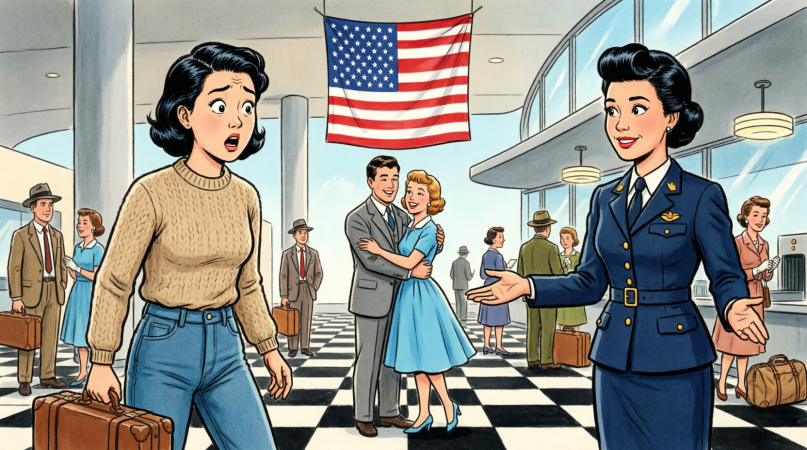
My husband drove me to the airport for a relaxing getaway. He called it a small surprise. But just as I was about to enter the security line, he hugged me quickly and hurried away without even looking back, as if staying one second longer was too much.
I had just reached the boarding gate when a security officer suddenly pulled me aside. She glanced around, then whispered quietly,
“Listen to me. Don’t board that flight. Come with me right now.”
I had no idea what was happening until a few minutes later, when I saw something that nearly made my legs give out.
I’m incredibly thankful you watched to the end. Now let’s keep the conversation going. Comment below where you’re tuning in from and share this story with someone who needs to hear it. Together, we can raise awareness about financial abuse and family betrayal. Please note, this narrative includes fictional elements designed to educate and inspire. Any similarities to real individuals or locations are purely coincidental, though the message remains deeply important.
Three months ago, my husband gave me a gift that should have killed me.
I’m standing in my classroom at Lincoln High right now, watching twenty-three juniors pretend to read The Great Gatsby while actually scrolling through TikTok under their desks. December rain hammers against the windows. My wedding ring sits in an evidence locker somewhere in downtown Seattle. And I can still see the exact way Michael smiled that morning—September 12th, 7:30 a.m., our kitchen still smelling like the French toast he’d burned trying to impress me—when he slid the envelope across the breakfast table.
“I have a surprise for you,” he said.
I should have trusted my instincts the moment he said those words. I should have noticed how his hands shook. How he wouldn’t meet my eyes. How the envelope was sealed with tape instead of tucked closed the way normal people hand over greeting cards. But I didn’t, because I wanted to believe him. I wanted to believe that eight years of marriage, eight years of inside jokes and shared coffee mugs, and the way he used to kiss the back of my neck while I graded papers still meant something.
So I opened it.
Two first-class tickets to Las Vegas. Departure September 12th, return September 15th. The Bellagio. The kind of trip we couldn’t afford when we got married in 2015, back when Michael was still climbing the ranks at Mercer Financial and I was student teaching for thirty-two thousand a year.
“Baby, this is—”
I looked up at him, smiling despite myself.
“Michael, we can’t afford this.”
“We can now.”
He reached across the table and covered my hand with his. His palm was cold, clammy.
“I know things have been hard. I know the marriage counseling didn’t work out. I know we’ve been distant, but I want to fix this. I want us to reconnect. Just you and me. No distractions.”
The thing is, he wasn’t wrong.
We had been distant. Ever since my parents died in March of 2021—drunk driver, Tuesday afternoon, gone in an instant—I’d buried myself in grief and lesson plans. And Michael had buried himself in something else: his phone. Late nights at the office had turned into late nights of unemployment after Mercer let him go in November of 2022. By January of that year, we were two strangers sharing a mortgage.
But this? This felt too big, too sudden.
“Our anniversary isn’t until October third,” I said slowly.
He blinked, just once. A flicker of something—confusion, irritation—crossed his face before he smoothed it into another smile.
“I know, but I thought, why wait? Why not celebrate early? Spontaneity, Sarah. Remember when we used to be spontaneous?”
I did remember. I remembered the weekend we drove to Portland on a whim, singing off-key to Dashboard Confessional the whole way. I remembered how he proposed at Gas Works Park. No ring, just a handful of daisies he’d stolen from somebody’s garden. I remembered when he used to look at me like I was the only person in the room.
I didn’t remember when that stopped.
“Okay,” I heard myself say. “Okay. Let’s do it.”
The smile he gave me didn’t reach his eyes.
The rest of the morning moved too fast. Michael insisted I pack light.
“Just a carry-on, babe. We don’t want to deal with checked baggage.”
He hovered while I folded sundresses and swimsuits into my weekender bag. He checked it twice, unzipped the front pocket, looked inside, zipped it again.
“What are you looking for?” I asked, laughing nervously.
“Just making sure you didn’t forget anything.”
He kissed my forehead. It felt like a punctuation mark.
His phone rang four times while I was packing. Four times he stepped into the hallway to answer it. I heard fragments.
“Yeah, she’s coming.”
“No, she doesn’t know.”
“I told you it’s handled.”
When he came back the fourth time, I was standing in the bedroom doorway.
“Who keeps calling you?”
“Work stuff.”
He didn’t elaborate. Michael had been “consulting” for the past six months—his word, not mine—but I’d never seen a paycheck. The bills piled up on the kitchen counter told a different story. Overdue notices from Seattle City Light. A second mortgage statement I didn’t remember signing. A collection letter from someone called Cascade Credit Solutions.
“I thought you said we could afford this trip,” I said quietly.
His jaw tightened.
“I said it’s handled, Sarah. Can you just—can you just trust me for once?”
The words stung because I had trusted him. I’d trusted him with my parents’ life insurance money when I was too shattered to think straight. Three point eight million dollars invested, he’d said, managed carefully. He’d shown me spreadsheets, quarterly reports, all of it looking official and safe. I’d never actually checked the account myself.
“I do trust you,” I said.
It felt like a lie.
He pulled me into a hug. I stood there, my cheek pressed against his shoulder, and smelled cologne I didn’t recognize. Something expensive. Something new.
Over his shoulder, I saw his laptop open on the kitchen counter. The screen was facing away from me, but I caught a glimpse before it went dark. A webpage. A form. The word beneficiary in bold at the top.
“Michael—”
He let go of me abruptly, crossed the room in three strides, and slammed the laptop shut.
“Battery’s dying,” he said too quickly. “I’ll charge it in the car.”
I didn’t ask what he’d been looking at. Maybe I should have. Maybe some part of me already knew.
We loaded my bag into his Lexus at 9:15. He put it in the trunk himself. Wouldn’t let me help. He drove with both hands on the wheel, checking the rearview mirror every thirty seconds like he thought someone was following us.
“You okay?” I asked.
“Fine. Just want to make sure we don’t miss the flight.”
Our flight wasn’t until 10:30. We had over an hour.
I watched Seattle slide past the window, the Space Needle small and gray in the distance, the trees along I-5 still green despite it being September. Starbucks on every corner, because this is Seattle, and of course there is.
I thought about the students I’d left sub plans for. I thought about Diana, my best friend, who’d texted me the night before.
You sure about this trip? Michael’s been acting weird lately.
I’d replied, He’s trying. I should too.
Now, sitting in the passenger seat while my husband white-knuckled the steering wheel, I wondered if Diana had seen something I hadn’t.
“Trust me, Sarah,” Michael said again, quieter this time.
He reached over and squeezed my knee.
“This trip is going to change everything.”
He wasn’t lying. I just didn’t know how right he was.
I agreed to go. Six hours later, I would stand at airport security and hear five words that saved my life.
The drive to the airport should have taken thirty-five minutes. Michael did it in twenty-two. I know because I watched the clock on the dashboard the entire way. Watched the minutes flip over while he wove through traffic on I-5 like we were fleeing a crime scene. Sixty in a forty-five. Seventy in a fifty-five. The Lexus’s engine purred like it was built for this, but my hands gripped the door handle until my knuckles went white.
“Michael, slow down. We’re fine.”
He didn’t look at me. His eyes flicked between the road and the rearview mirror over and over, like he thought someone was chasing us.
“Our flight’s not until ten-thirty. We have time.”
“I don’t want to risk it.”
His jaw was tight.
“Traffic near the airport gets bad.”
It was 9:07 on a Tuesday morning. The only traffic we’d hit so far was a FedEx truck and a guy in a Subaru going ten under in the right lane. But I didn’t argue. I’d learned over the past year that arguing with Michael when he was in a mood like this only made things worse.
So I watched Seattle disappear behind us, the skyline shrinking, the trees thickening along the freeway, the Starbucks and Targets and storage facilities that mark the slow transition from city to suburb to airport sprawl.
His phone rang.
He answered it through the car’s Bluetooth before I could see the caller ID.
“Yeah.”
His voice dropped, clipped.
A man’s voice crackled through the speakers, low and distorted by the connection. I couldn’t make out words, just tone—urgent, maybe irritated.
“I told you it’s handled,” Michael said.
Then, quieter:
“Flight 447. Leaves at 10:30. Policies active as of this morning. I checked.”
My stomach flipped.
“Michael, hang on—”
He jabbed the button on the steering wheel, cutting the call.
Silence flooded the car. Then he cranked up the radio, some classic-rock station playing Tom Petty, and turned the volume loud enough that I couldn’t ask questions without shouting.
I stared at him. His hands were locked on the wheel, ten and two, the way they teach you in driver’s ed. His shoulders were rigid. A muscle in his jaw twitched.
“Who was that?” I said louder over the music.
“Work.”
“You don’t have work.”
His head snapped toward me just for a second, and the look in his eyes—something cold, something cornered—made me wish I hadn’t said it. Then he turned back to the road, and the moment passed.
“Consulting work,” he said evenly. “A client. It’s complicated.”
It was always complicated.
For six months, ever since Mercer fired him, everything had been complicated. The bills were complicated. The credit-card statements were complicated. The reason we couldn’t afford to fix the dishwasher or take a real vacation or do anything that didn’t involve me stretching my teacher’s salary to cover two people—that was complicated too.
But somehow first-class tickets to Vegas weren’t.
My phone buzzed in my lap. I glanced down.
Diana Walsh.
Sarah. My mom fell. Can you call me?
My best friend since sophomore year of college. The one who’d held my hand through my parents’ funeral. The one who told me last month that Michael was giving off weird vibes and I should maybe talk to a lawyer, just in case. I’d brushed her off, told her she was overreacting.
Now her mom was hurt.
I started to dial her number.
Michael’s hand shot across the center console and grabbed my phone out of my hand.
“What are you doing?” I said, too shocked to be angry yet.
“You can call her from Vegas.”
He dropped my phone into the cup holder between us, out of reach.
“We’re about to miss our flight.”
“We’re not going to miss our flight, Michael. It’s 9:15.”
“Sarah.”
His voice cut through mine like a blade.
“Can you just for once let me handle this, please?”
The word please sounded like a threat.
I stared at him. At the way his knuckles were bone white on the steering wheel. At the vein pulsing in his temple. At the man I’d married eight years ago, who used to make me laugh so hard I’d snort wine out of my nose. Who used to slow-dance with me in the kitchen to Dashboard Confessional. Who used to be the safest person I knew.
I didn’t recognize him anymore.
I thought about my parents. About the call I got on March 10th, 2021, from a Washington State Patrol officer who said the words fatal accident and died on impact, and I stopped hearing anything after that. I thought about the life insurance check that came six weeks later: $3.8 million. Because my dad had been an engineer at Boeing and my mom had been a librarian, and they’d been careful, cautious people who believed in preparing for the worst.
I thought about how I’d signed everything over to Michael to manage because I couldn’t think straight, couldn’t sleep, couldn’t do anything but cry and teach and cry some more. He promised me he’d take care of it, invest it carefully, make sure we were secure.
I hadn’t looked at the statements since.
“Michael,” I said slowly, “where’s my parents’ money?”
He didn’t answer. Just kept driving. Faster now. Eighty in a sixty.
“Michael.”
“It’s fine,” he said. “It’s invested. It’s fine.”
“Then why are we getting letters from debt collectors?”
His jaw locked.
“Those are old. From before. I’m handling it.”
“How are you handling it if you don’t have a job?”
“Jesus Christ, Sarah.”
He slammed his hand against the steering wheel. The car swerved slightly. I gasped, grabbed the door handle again. He corrected, took a breath, lowered his voice.
“I’m sorry. I’m sorry. I’m just—there’s a lot going on right now, okay? A lot you don’t understand. But this trip is going to fix things. I promise. Just trust me.”
There it was again.
Trust me.
I wanted to. God, I wanted to, because the alternative—that the man I loved was lying to me, that my parents’ money was gone, that something was terribly, desperately wrong—was too big to fit inside my head.
So I looked out the window and said nothing.
We pulled up to the departure drop-off at SeaTac at 9:38. Michael didn’t park. Didn’t even slow down much. Just stopped long enough at the curb for me to grab my bag from the trunk.
“I’ll see you at the gate,” he said through the open window.
I frowned.
“You’re not coming in?”
“I need to return something at the mall. I’ll meet you inside in twenty minutes. Gate C7, right?”
“Yeah, but—”
“Sarah, go. You’re going to miss check-in.”
I stood there on the curb, my weekender bag slung over my shoulder, and watched him pull away without looking back. He didn’t wave. Didn’t blow a kiss. Just merged into the flow of cars circling the terminal and disappeared.
I turned toward the automatic doors, toward the noise and the crowds and the smell of Starbucks and Cinnabon and recycled air, toward whatever was waiting for me inside.
I walked through the automatic doors into SeaTac Airport.
I would never walk out the same person.
Security lines at SeaTac on a Tuesday morning move fast. I wish they hadn’t.
There were maybe twenty people ahead of me when I joined the queue for TSA, Checkpoint C. A family with two toddlers. A businessman in a rumpled suit scrolling through his phone. A college-aged girl with purple hair and noise-canceling headphones.
Normal.
Everyone looked normal, including me, probably, standing there in jeans and my Nordstrom Anniversary Sale sweater, driver’s license and boarding pass clutched in one hand, trying not to think about Michael’s face in the rearview mirror as he drove away.
Except he hadn’t driven away.
I saw him through the glass partition that separates the secure area from the rest of the terminal, standing near the Starbucks twenty yards past the checkpoint on the wrong side—the side you stand on when you’re not flying anywhere, when you’re just dropping someone off and pretending you’re going to park the car.
He was watching me.
I froze.
My brain tried to make sense of it. Maybe he’d changed his mind. Maybe he was coming with me after all. Maybe—
No.
He wasn’t moving toward the ticket counters. Wasn’t getting in line. Just standing there, phone in hand, eyes locked on me like I was a package he needed to track until delivery.
A TSA officer—a woman in her mid-forties, dark hair pulled back in a tight bun—was watching him too. I saw her glance at Michael, then at her coworker, then back at Michael. She said something into the radio clipped to her shoulder.
“Ma’am.”
The officer at the podium, a younger guy with a name tag that read Jay Torres, gestured for my documents.
“ID and boarding pass, please.”
I handed them over. He scanned the boarding pass, checked my driver’s license against my face, handed everything back.
“Gate C7. Have a nice flight.”
I walked to the conveyor belt, put my purse in a gray bin, my phone, my shoes, watched them disappear into the X-ray machine, stepped through the metal detector when the officer waved me forward.
It didn’t beep.
Of course it didn’t. I wasn’t hiding anything except a growing sense that I’d made a terrible mistake by coming here.
I collected my things on the other side, shoved my feet back into my flats, slung my purse over my shoulder, and looked back through the glass.
Michael was gone.
No, not gone.
I spotted him near the men’s restroom, half hidden in the little alcove between the bathroom entrance and a closed-down newsstand. His back was to me, phone pressed to his ear, his free hand gesturing sharply the way it did when he was angry.
The TSA officer—the woman with the dark hair—was moving toward him.
Her name, I’d learn later, was Jennifer Mitchell. Eighteen years with the Transportation Security Administration. Eighteen years of watching people lie about the bottles of water in their carry-ons. Of confiscating nail clippers and snow globes. Of training her brain to spot the micro-expressions that mean someone’s hiding something. Eighteen years of being told she was paranoid, overzealous, a pain in the ass.
She wasn’t paranoid.
She was right.
I didn’t know any of that yet. All I knew was that she’d been watching Michael the same way I’d been watching Michael—like he was a bomb someone had forgotten to defuse.
She walked past me without looking at me, casual, like she was just making her rounds. But I saw the way her eyes tracked him, the way her hand hovered near the radio on her shoulder. She got close enough to the alcove that I could see her tilt her head, listening.
Michael’s voice, even from fifteen feet away, was a low rasp, urgent. The kind of voice you use when you’re trying not to be overheard, but you’re too worked up to whisper. I couldn’t make out words.
Officer Mitchell could.
Later—hours later—sitting in a windowless room with a detective who’d introduce himself as Ryan Morris, I’d hear the report she delivered into her radio at 9:51 a.m. in a voice that was calm and clipped and left no room for argument.
“This is Mitchell, Checkpoint C. I have a possible code yellow. Adult male, Caucasian, mid-thirties, gray Lexus drop-off approximately 9:40. Subject is loitering post-security on non-secure side, observed making a phone call, overheard fragments: Flight 447, Gate C7, policy active, two million if something happens on that plane, subject stated she just went through security, it’s done. Requesting airport police and supervisor to Checkpoint C. Passenger intercept at Gate C7 before boarding.”
I didn’t hear that at 9:51 a.m.
What I heard was Officer Mitchell’s footsteps behind me, fast and deliberate, and her voice saying,
“Ma’am? Excuse me. Ma’am.”
I turned around. She was right there, close enough that I could see the tiny scar above her left eyebrow, the silver roots starting to show in her hairline, the ID badge clipped to her uniform that read Mitchell, J. — TSA Officer, 18 Years Service.
“Ma’am, I need you to come with me.”
My stomach dropped.
“Did I do something wrong? My bag?”
“You’re not in trouble.”
Her voice was kind. Firm, but kind. The voice of someone who’d delivered bad news before and learned how to do it without making people cry.
“But I need to ask you some questions about your flight.”
“My flight?”
I looked past her toward the gates. Toward Gate C7, where Flight 447 to Las Vegas was supposed to board in less than thirty minutes.
“What’s wrong with my flight?”
She didn’t answer. Just put a hand—not on my arm, not touching me, but close enough to guide me—toward a door marked Authorized Personnel Only near the checkpoint exit.
“Is this about a delay?” I asked. My voice sounded small. “Did something happen to the plane?”
“Maybe nothing,” Officer Mitchell said.
She glanced over her shoulder back toward the alcove where Michael had been standing. He was gone now. Disappeared into the crowd or out the doors or somewhere I couldn’t see him.
“But the man who dropped you off—your husband?”
I nodded.
“He just made a phone call that scared the hell out of me.”
The world tilted. Not metaphorically. Literally. The floor felt like it shifted under my feet, and I reached out to steady myself against the wall. Officer Mitchell’s hand, firm and warm, closed around my elbow.
“Ma’am, I need you to stay calm. You’re safe, but I need you to come with me right now.”
Two men in airport police uniforms appeared beside us. One of them, tall, Black, with sergeant stripes on his sleeve, nodded at Officer Mitchell.
“Detective Morris is on his way,” he said. “ETA five minutes.”
“Detective?” I said, my voice cracking. “Why do I need a detective?”
Officer Mitchell looked at me. Her eyes were brown, steady, and full of something I couldn’t name yet. Pity, maybe. Or recognition.
And then she said quietly,
“I think someone’s trying to hurt you.”
I opened my mouth to say that was crazy, that Michael wouldn’t hurt me, that this was a misunderstanding, a mistake, some kind of insane mix-up we’d all laugh about later.
But the words didn’t come.
Because somewhere deep in the part of my brain that still remembered my parents’ funeral, the part that knew what it felt like when everything you thought was safe turned out to be a lie, I already knew.
She was right.
They took me to a windowless room that smelled like burnt coffee and fear.
Detective Morris had kind eyes. That’s the only reason I stayed.
The room was small, maybe ten by twelve feet, with gray walls, a metal table bolted to the floor, two chairs, and a mirror that I knew even in my shock was the kind you could see through from the other side. A clock on the wall read 10:02 a.m. My flight was supposed to board in twenty-six minutes.
Detective Ryan Morris was younger than I expected, late thirties, maybe forty, with dark hair starting to gray at the temples and the kind of tired face that comes from seeing too much too early. He wore a Seattle PD badge clipped to his belt and a navy windbreaker with POLICE stenciled across the back in yellow letters.
When he sat down across from me, he didn’t smile. But his eyes—brown, steady, the kind that looked at you instead of through you—softened at the edges.
“Mrs. Bennett,” he said, “I’m Detective Ryan Morris, Seattle Police Department. I work with the airport security task force. Officer Mitchell briefed me on what she overheard. I need to ask you some questions, and I need you to be honest with me. Can you do that?”
I nodded. My throat was too tight to speak.
“First question: do you know why your husband would make a phone call about a two-million-dollar life insurance policy this morning?”
“I—what?”
The words didn’t make sense.
“What life insurance policy?”
Morris pulled a notepad from his jacket pocket and flipped it open.
“Officer Mitchell heard your husband say, ‘Flight 447, Gate C7, policies active, two million if something happens on that plane.’ Does that mean anything to you?”
I shook my head.
“No. We don’t have—I mean, Michael used to be a financial adviser. He talked about insurance sometimes, but we never—”
“Mrs. Bennett.”
Morris’s voice was gentle but firm.
“I need to make a phone call. With your permission, I’m going to contact your insurance provider—or any provider your husband might have used—to verify whether a policy exists. Do I have your consent?”
“Yes. Yes, of course.”
I was babbling now.
“There’s no policy. This is a mistake. Michael wouldn’t—he would never.”
Morris was already dialing. He put the call on speaker.
A woman’s voice answered after two rings.
“Secure Life Insurance Fraud Investigation Department. This is Karen Eldridge.”
“Ms. Eldridge, this is Detective Ryan Morris, Seattle PD, badge number 6247. I’m investigating a potential fraud case involving a life insurance policy. I need you to run a name for me. Sarah Bennett, date of birth August 14th, 1992. Policyholder or beneficiary.”
Keys clicking. A pause.
“Then I have a term life policy under that name. Policyholder Sarah Anne Bennett, DOB August 14th, 1992. Two million dollars, twenty-year term. Beneficiary: Michael James Bennett. Policy effective date March 15th, 2023. Premiums paid in full for the first year.”
The room tilted.
“Can you email me a copy of the application and signature page?” Morris said. “This is an active investigation, time-sensitive.”
“Sending now.”
Morris hung up, pulled out a laptop, opened his email. Ten seconds later he turned the screen toward me.
There it was. A scanned document. My name. My date of birth. My address.
And at the bottom, a signature that was supposed to be mine.
But it wasn’t.
“That’s not my signature,” I whispered.
Morris leaned forward.
“Are you sure?”
“Look at the B in Bennett.”
I pointed at the screen, my hand shaking.
“I loop it twice. I’ve done it that way since high school. My mom was a librarian. She taught me cursive. She always said a signature should have flourishes. That B only has one loop. And the S in Sarah—mine slants left. That one’s vertical.”
Morris studied the screen. Pulled out his phone. Took a photo.
“Mrs. Bennett, I’m going to need you to write your name for me for comparison.”
He slid a piece of paper and a pen across the table. I wrote my name three times, my hand shaking so badly the letters barely looked like letters. Morris compared them, then nodded.
“This is a forgery.”
“I don’t understand.”
My voice broke.
“Why would Michael forge my signature? Why would he take out a policy on me?”
Morris didn’t answer. He opened another window on his laptop and typed quickly.
“Mrs. Bennett, I need your verbal consent to access your husband’s financial records. Credit reports, bank accounts, anything that might explain his actions.”
“Yes. God, yes. Anything.”
More typing.
Morris’s face went still. Then grim.
“Your husband filed for unemployment in November of 2022,” he said quietly. “He’s been receiving benefits—about eighteen hundred a month—but those ran out in May of this year. According to his credit report, he’s carrying sixty-two thousand dollars in credit card debt across seven cards. All of them are maxed out. Collection agencies have been calling since June.”
I couldn’t breathe.
“There’s more.”
Morris glanced at the screen again.
“He made several large wire transfers between January and May of this year to a cryptocurrency exchange called Apex Digital. Total outgoing: two hundred eighty thousand dollars.”
“That’s—”
My voice came out broken.
“That’s my parents’ money. From the life insurance. He was managing it. He said it was invested safely. He said—”
“Mrs. Bennett, I’m sorry, but according to the blockchain records I’m pulling up here, those investments lost ninety-eight percent of their value. He’s down to about five thousand.”
The room spun. I gripped the edge of the table.
“There’s one more thing.”
Morris’s voice was very quiet now.
“Your husband took out a loan from a private lender in July. Ninety-five thousand dollars. The lender is a man named Edward Carver. We have an open investigation on Carver for racketeering. He’s what we’d call a loan shark. The loan comes due on September 20th. Eight days from now.”
“What happens if he doesn’t pay?”
Morris didn’t answer.
He didn’t have to.
I looked at the clock.
10:18 a.m.
My phone, still in Officer Mitchell’s possession, buzzed on the table between us. Morris glanced at the screen.
“It’s your husband,” he said. “That’s the forty-seventh call or text since you went through security.”
“Forty-seven?”
Morris turned the phone toward me.
The lock screen was full of notifications.
Where are you?
Sarah, answer me.
Why aren’t you at the gate?
You’re going to miss the flight.
Sarah. Please.
I love you. Please get on the plane.
The timestamps ranged from 10:06 a.m. to 10:23 a.m. Seventeen minutes of escalating panic.
“He thinks I’m going to board,” I said slowly.
“He thinks you’re going to die,” Morris said.
The PA system crackled to life outside the room. A woman’s voice, calm and professional.
“Final boarding call for Alaska Airlines Flight 447 to Las Vegas, departing from Gate C7. All remaining passengers should board immediately.”
10:28 a.m.
Morris reached across the table and placed his hand over mine. Not holding it. Just there. Steady.
“Mrs. Bennett, if you get on that plane, I can’t protect you. I don’t know what your husband has planned, but I know he’s desperate, and I know he thinks two million dollars is waiting for him if something happens to you in Las Vegas. If you stay here, we can figure out what he’s planning. We can stop him.”
“But if I don’t get on the plane, he’ll know something’s wrong.”
“He’ll know something’s wrong, but he won’t be able to hurt you. You’ll be safe.”
The clock ticked.
10:29 a.m.
I thought about Michael’s face in the rearview mirror. The way he’d grabbed my phone. The way he’d smiled when he said this trip would change everything. I thought about my parents, about the driver who’d taken them from me, about the $3.8 million that was supposed to keep me safe forever. I thought about trust. About love. About the difference between the two.
“Trust your instincts, Mrs. Bennett,” Morris said quietly.
I made a choice that morning.
I stayed.
Two minutes later, the door to Flight 447 closed.
Twelve minutes after that, the plane fell from the sky.
I heard the crash before I saw it. Not the sound of impact that came later on the news, but the sharp intake of breath from Officer Mitchell as she stared at her phone. She’d been standing by the door, half listening to Detective Morris explain something about federal jurisdiction, when her phone buzzed. She looked down, went pale, then looked up at Morris.
“Ryan,” she said.
Her voice was flat. Empty. The voice of someone trying not to scream.
“Flight 447 just went down.”
Time stopped.
Morris crossed the room in two strides, looked at her screen, his jaw locking. Then he turned to me, and I saw something I hadn’t seen in his kind eyes before.
Grief.
“Mrs. Bennett,” he said quietly, “I need you to stay calm.”
“What happened?”
He didn’t answer. Just took Officer Mitchell’s phone and turned it toward me.
Breaking: Pacific Airways Flight 447 crashes into Puget Sound shortly after takeoff from SeaTac. No survivors expected.
The words didn’t make sense. I read them three times. Four. My brain kept trying to reorder them into something that wasn’t a death sentence for 156 people.
“How many?”
My voice broke.
“How many people were on the plane?”
“One hundred fifty-six,” Morris said. “Passengers and crew.”
“All of them?”
He nodded.
My legs gave out. Morris caught me before I hit the floor and lowered me into the chair. Someone—Officer Mitchell, I think—pressed a paper cup of water into my hands. I couldn’t drink it. Couldn’t move.
“One hundred fifty-six people dead because I didn’t get on the plane.”
“No.”
Morris crouched in front of me, his hands on the arms of my chair, forcing me to look at him.
“Mrs. Bennett, listen to me. You did not cause this. The plane had a catastrophic engine failure six minutes after takeoff. The NTSB will investigate, but preliminary reports suggest a mechanical malfunction. This was not sabotage. Do you understand?”
“But if I’d gotten on the plane, one hundred fifty-seven people would be dead instead of one hundred fifty-six. That’s the only difference.”
His voice was hard. Not cruel. Just certain.
“Someone wanted you on that plane, Mrs. Bennett. And now we need to figure out why.”
The door opened.
A man walked in—tall, mid-forties, Black, wearing a dark suit and a federal badge clipped to his belt.
“Detective Morris,” he said. His voice was low, authoritative. “I’m Special Agent Marcus Cole, FBI Seattle Field Office. I’ve been briefed. We need to talk about the manifest.”
Morris stood and gestured for Agent Cole to join us at the table. Officer Mitchell closed the door. The room suddenly felt very small.
“Mrs. Bennett,” Agent Cole said, sitting across from me, “I need to explain something complicated, and I need you to stay with me. Can you do that?”
I nodded.
“Pacific Airways just released a preliminary passenger manifest based on their gate boarding system. Your name is on that list.”
My stomach dropped.
“But I didn’t—”
“I know. But the system shows your boarding pass was scanned at Gate C7 at 10:18 this morning. Airport security footage confirms it.”
“That’s impossible. I was here with Detective Morris.”
“Correct.”
Agent Cole pulled a tablet from his briefcase, swiped the screen, and turned it toward me.
Security footage.
Gate C7.
A man in a baseball cap and sunglasses, wearing a jacket, walked up to the self-service boarding-pass kiosk. He scanned something—his phone, I realized, a QR code on the screen—and walked away.
The timestamp read 10:18:03 a.m.
“That’s your husband,” Agent Cole said. “He’s wearing a wig and fake glasses, but facial-recognition software confirms it. He used a screenshot of your mobile boarding pass—the one the airline sent to your email yesterday—to scan through the kiosk. The gate agents were busy with the boarding queue. Nobody noticed him.”
“Why would he do that?”
Morris answered.
“Because he needed you on the manifest. If you died in a plane crash, the insurance company would verify the passenger list before paying out. If your name wasn’t on the list, the claim would be denied.”
Agent Cole nodded.
“In the chaos of the crash, Pacific Airways released the preliminary manifest to the FAA for next-of-kin notifications. That list is based on gate scans, not on who physically boarded the aircraft. Your name is on it, and right now the airline believes you’re dead.”
The room spun. I gripped the edge of the table.
“Mrs. Bennett,” Agent Cole said, “I’ve requested that Pacific Airways not correct the manifest for the next forty-eight to seventy-two hours. This is now a federal investigation—aviation disaster plus suspected insurance fraud and attempted murder. Under operational security protocols, we have the authority to seal certain information. The airline has agreed.”
“You want them to keep lying?”
My voice came out strangled.
“There are families. People who think I’m dead.”
“No,” Morris said gently. “There are no families looking for you, because your husband is the only next of kin listed on your boarding information. And he already thinks you’re dead.”
Agent Cole swiped to another video.
Airport terminal. Michael standing near a TV monitor, watching the news. The timestamp read 10:51 a.m.
I watched him see the headline. Watched his face go slack. Watched him pull out his phone, scroll—looking at the manifest, I realized, looking for my name—and then I watched him smile.
Just for a second.
A flash of something that might have been relief.
“He left the terminal at 11:03 a.m.,” Agent Cole said. “He thinks he got away with it.”
“He thinks he got away with it,” I repeated. My voice sounded like it belonged to somebody else.
“Yes,” Agent Cole said. “And that’s going to help us catch him.”
Morris leaned forward.
“Mrs. Bennett, we want to let your husband believe you died in that crash. We’ll put you in a safe house in Tacoma, outside his usual radius, and we’ll surveil him. People who think they’ve committed the perfect crime get sloppy. He’ll make a mistake. Contact the mistress. Try to access your bank accounts. File the insurance claim. And when he does, we’ll have evidence of intent.”
“How long?” I whispered.
“Seventy-two hours,” Agent Cole said. “Maybe less.”
I looked at the tablet, at the frozen image of Michael’s face caught in that half second of relief. At the man I’d married eight years ago. The man who promised to love me in sickness and in health, for richer or for poorer, till death do us part.
He’d meant it.
Just not the way I thought.
Agent Cole slid a card across the table.
“There’s one more thing. The media is going to report on the crash. Your name will be on the victim list. If anyone you know sees it—friends, coworkers—they’ll think you’re dead. We can’t control that. But we can’t tell them the truth either. Not yet.”
Diana. My students. Everyone I knew.
They’d think I was gone.
“I understand,” I said.
Because what else could I say?
Detective Morris stood and pulled a small cardboard box from a drawer. Inside was a burner phone, a key on a plain metal ring, and an envelope with cash.
“The phone has one number programmed,” he said. “Mine. The key is to the safe house. The cash is for essentials—food, toiletries. Don’t use credit cards. Don’t contact anyone.”
He paused.
“For the next seventy-two hours, Sarah Bennett is dead. Let’s see what your husband does when he thinks he got away with murder.”
The safe house had three locks on the door and a view of the Tacoma Narrows Bridge. I couldn’t look at the water. All I could see were the bodies they were pulling from Puget Sound.
The apartment was small. One bedroom. A living room with two folding chairs and a card table. On the table, three laptop screens, each split into four camera feeds. Twelve black-and-white squares showing different angles of my house.
The house where my husband was pretending to mourn me.
Detective Morris sat beside me, lukewarm 7-Eleven coffee in hand. He’d been there since we arrived at 1:34 p.m.—hours ago—and he hadn’t left once.
“The cameras went live at 2:00 p.m.,” he said quietly. “Federal judge signed the warrant at 1:15. Attempted murder plus conspiracy in connection with a federal aviation disaster. We’ve got eyes in the living room, kitchen, garage, and front entrance. Audio warrant is still pending, so I can see him, but I can’t hear him. Not yet.”
At 2:34 p.m., Michael’s Lexus pulled into the driveway.
I watched him walk through the front door, drop his keys on the hall table, walk into the living room, and stand there looking around like he’d forgotten where he was.
Then he sat down on the couch, pulled out his phone, and stared at it.
For five minutes he didn’t move. Just sat there, phone in his hands, staring at the screen.
And then he smiled.
Not a big smile. Just a small curve at the corner of his mouth.
Relief, maybe. Or satisfaction.
It lasted three seconds. Maybe four.
But I saw it.
“Did you see that?” I whispered.
Morris nodded. His jaw was tight.
Michael stood, walked to the kitchen, opened the fridge, pulled out a beer, twisted off the cap, took a long drink. Then he set the bottle down and just stood there breathing like a man who’d been holding his breath for hours and could finally exhale.
Diana arrived at 6:48 p.m.
I saw her ancient Subaru Outback pull up on the front-entrance camera, the Bernie sticker still on the bumper. She got out, clutching her purse to her chest, walked to the door, rang the bell.
Michael answered.
Diana took one look at him and burst into tears.
He pulled her into a hug.
I watched her sob into his shoulder. Watched him pat her back, his chin resting on her head. Watched his face over her shoulder—dry-eyed, calm, scanning the room like he was taking inventory.
“She doesn’t know,” I said, my voice cracking. “She thinks I’m dead.”
“I’m sorry,” Morris said. “Operational security.”
“She’s my best friend.”
Diana said something I couldn’t hear, and Michael nodded. They sat on the couch. Diana pulled a casserole dish from her bag. She’d brought him food, because that’s what Diana did when people were hurting.
Michael smiled at her. A real smile. Warm. Grateful.
I wanted to scream.
They sat together for two hours. I watched Diana cry, watched Michael nod, put his arm around her, hand her tissues. At 8:52 p.m., Diana stood, hugged him again, and left.
The moment the door closed, Michael’s face went blank.
He walked back to the couch, sat down, pulled out his phone, and smiled again.
Morris made a note on his laptop.
“He’s good,” he said.
“He’s a monster.”
“Yeah,” Morris said. “That too.”
That night, I didn’t sleep. I sat in the folding chair and watched the screens. At 11:14 p.m., Michael turned off the living-room lights. At 11:22, the bedroom light went out. I watched the night-vision feed and waited for him to toss and turn, to stare at the ceiling, to do anything that looked like grief or guilt.
He didn’t.
He fell asleep within minutes. I could see his chest rising and falling, slow and steady.
The sleep of someone with nothing on his conscience.
Morris came back at 6:00 a.m. with McDonald’s breakfast sandwiches. I hadn’t moved.
“You need to sleep.”
“I can’t.”
He didn’t argue. Just set the food in front of me and sat down.
At 9:12 a.m. on September 13th, Michael walked into the garage. We only had one camera there, mounted near the door, facing the workbench. Michael stood in the center of the frame, pulled out his phone, and made a call. I couldn’t hear what he said, but I could see him. He was animated, smiling, gesturing with his free hand, stabbing the air the way he did when he was excited. He paced back and forth, nodding, laughing—actually laughing, his head thrown back.
Then he ended the call, looked at his phone, and punched the air with his fist.
A victory gesture.
Morris leaned forward.
“Jesus. What was that?”
“I don’t know.”
“But we’re going to find out.”
He pulled out his phone and texted someone.
“I’ll get the phone records. We’ll know who he called by end of day.”
I watched Michael walk back into the house, still smiling.
“He’s not grieving,” Morris said quietly.
“He’s celebrating.”
That night, at 11:47 p.m., a silver Honda Accord pulled into Michael’s driveway.
The driver was a woman.
I couldn’t see her face clearly. The camera was too far away, the resolution too low. But I could see her shape. Slim. Long hair. She got out, walked to the door, didn’t ring the bell, just opened it like she had a key.
Michael met her in the hallway, pulled her into his arms, and held her for a long time.
They went upstairs.
The bedroom light turned on.
Ten minutes later, it turned off.
Morris ran the license plate.
“Vanessa Cole. Twenty-nine. Bellevue address.”
He glanced at me.
“You know her?”
I shook my head.
I’d never heard the name before in my life.
The woman didn’t leave until 6:00 a.m.
The audio came online at 4:17 p.m. on September 13th.
I wish it hadn’t.
Detective Morris was standing by the window when his phone buzzed. He read the message and turned to me.
“Judge approved the audio warrant. We’re live.”
He crossed to the laptop, clicked something. A green indicator light appeared on each camera feed.
“Audio active. We’ll hear everything now,” he said quietly. “Are you ready?”
I wasn’t.
But I nodded anyway.
FBI Agent Marcus Cole arrived at the safe house at 7:00 a.m. on September 14th with a briefcase and the kind of exhausted face that comes from pulling an all-nighter. He set a folder on the card table in front of me.
“Phone records,” he said. “Your husband’s cell, subpoenaed yesterday. We got the dump from Verizon at three this morning.”
He opened the folder. Pages and pages of call logs. Text-message metadata. I saw Michael’s number at the top and another number repeated over and over and over.
“That second number belongs to Vanessa Cole,” Agent Cole said. “Twenty-nine years old. Works as a pharmaceutical sales rep for Merck. Lives in Bellevue. Drives a 2019 Honda Accord. No criminal record. No outstanding warrants.”
“How long?”
My voice came out hoarse.
“Fourteen months. First contact January 18th, 2022. Since then: 1,347 text messages. 206 phone calls. Average call duration twenty-three minutes.”
Fourteen months.
I’d been grieving my parents, teaching my classes, sleeping next to Michael every night while he texted another woman under the covers.
“We cross-referenced with her employment records,” Agent Cole continued. “She travels for work. Pharmaceutical reps visit doctors’ offices, hospitals. Her company car has GPS tracking. We pulled the logs. She’s been to your neighborhood eighty-three times in the past year. Usually midday, when you’d be at work.”
He paused.
“Mrs. Bennett, I’m sorry, but you need to know what we’re dealing with.”
I stared at the numbers on the page.
1,347 messages.
83 visits.
14 months.
“Does she know?” I whispered. “About the insurance? About what he tried to do?”
“We don’t know yet,” Agent Cole said. “But we’re about to find out.”
That night, September 13th, 11:52 p.m., Vanessa Cole walked into my house and I heard her voice for the first time.
“Oh my God,” she was crying. “Oh my God, Michael. I saw the news. I saw her name on the list. I can’t believe—”
“Hey. Hey. It’s okay.”
Michael’s voice was low and soothing. The voice he used to use on me when I had nightmares.
“Come here.”
The sound of footsteps. The creak of the couch. Fabric rustling as they sat down.
“I’m so sorry,” Vanessa said. She was still crying. “I know you two were—I mean, I know things were complicated, but she was still your wife. This must be—”
“Vanessa.”
Michael’s voice was calm. Steady.
“Listen to me. It’s over. She’s gone. We don’t have to hide anymore.”
Silence.
Then Vanessa’s voice, smaller.
“What do you mean?”
“I mean we’re free. You and me. No more sneaking around. No more lying. We can be together. Really together.”
“But all those people on the plane—”
“Wrong place, wrong time.”
Michael’s voice was flat. Matter-of-fact. Like he was describing traffic, not the deaths of 156 human beings.
“Fate did us a favor.”
I stopped breathing.
Morris was staring at the speaker, his hand frozen halfway to his coffee cup. Agent Cole pulled out his phone and started recording.
“Fate?” Vanessa’s voice cracked. “Michael, that’s—you can’t say things like that.”
“Why not? It’s true. I’ve been trying to figure out how to tell Sarah about you, about us, for months, and now I don’t have to. The universe took care of it.”
“That’s a horrible thing to say.”
“It’s an honest thing to say.”
A pause.
“Don’t tell me you’re not relieved.”
Another pause. Longer.
“I’m sorry,” Vanessa whispered. “But I am.”
“I know, baby. I know. But it’s over now. There’s something else.”
Vanessa hesitated.
“Something we need to talk about.”
“What?”
“The baby. You said we’d tell her together. You said we’d sit down with Sarah and explain everything and we’d figure out custody.”
“And we don’t have to tell anyone anything now.”
Michael’s voice was suddenly energized. Happy, almost.
“You’re five months along. We can say we got together after Sarah’s death. People will understand. Grief, loneliness, finding comfort in each other. Nobody will question it.”
Five months.
I pressed my hand to my mouth.
“Are you sure?” Vanessa said. “Because people will do the math. If the baby comes in February—”
“By then, we’ll be long gone.”
“Gone?”
“Caymans. I told you. We’re not staying here, Vanessa. Too many memories. Too much press. We’ll start over somewhere warm. Just you, me, and the baby.”
“How are we going to afford that?”
Michael laughed.
Actually laughed.
“Sarah had a life insurance policy. Two million. I’m the beneficiary. It’ll take a few weeks to process, but once it pays out, we’re set.”
Two million.
“Jesus, Michael.”
“I know. It’s going to change everything.”
I heard footsteps, the sound of the fridge opening, glass clinking.
“What are you doing?” Vanessa asked.
“Getting champagne. We’re celebrating.”
“Michael, I can’t drink. I’m pregnant.”
“Then I’ll drink for both of us.”
A cork popping. Liquid pouring.
“To us, Vanessa. To our new life. To not having to hide anymore.”
“To us,” Vanessa echoed. Her voice was quiet. Uncertain.
Morris and Agent Cole were both leaning toward the speaker now, listening to every word.
“By this time next month,” Michael said, “we’ll be in the Caymans. Two million buys a lot of forgiveness. Buys a lot of starting over.”
“I love you,” Vanessa whispered.
“I love you too. Both of you.”
A pause. Then quieter:
“Let me see. Come on. Let me see the bump.”
Rustling. A soft laugh from Vanessa.
Then Michael’s voice, so tender it made me want to scream.
“Hey there, little one. Daddy can’t wait to meet you.”
I made it to the bathroom before I threw up.
I knelt on the linoleum floor, retching into the toilet, my whole body shaking. I heard footsteps behind me—Morris, probably—but I couldn’t stop. Couldn’t breathe. Couldn’t think past the sound of Michael’s voice saying Daddy can’t wait to meet you to a child that wasn’t mine. A child he’d made with another woman while planning to end my life.
When I finally stopped, Morris was sitting on the floor beside me, holding a glass of water.
“I’m sorry,” he said quietly. “I’m so sorry you had to hear that.”
I took the water. My hands were shaking so hard I almost dropped it.
“Five months,” I whispered. “She’s five months pregnant.”
“I know.”
“He was planning this even before the insurance policy. He was already—”
“I know.”
I looked at him.
“How do I come back from this?”
Morris didn’t answer, because there wasn’t an answer.
There was only forward.
And forward meant watching my husband celebrate my death with the woman carrying his child.
We went back to the surveillance room. Agent Cole had rewound the audio and was playing it again, taking notes.
“He just confessed to insurance fraud,” Morris said, pulling up a new window on his laptop. “Said he’s the beneficiary on a two-million-dollar policy, planning to use the payout to flee to the Caymans. That’s conspiracy to commit wire fraud at minimum. But we need to prove he knew the policy existed before the crash.”
“Defense will argue he took it out recently,” Agent Cole said, “that the crash was coincidental, that he’s just opportunistic, not a would-be killer.”
Morris looked at me.
“Mrs. Bennett, do you know of any documents, emails, anything that would show your husband researched or purchased that policy before September 12th?”
I closed my eyes and saw Michael’s laptop on the kitchen counter, the screen flashing beneficiary before he slammed it shut.
“Yes,” I said. “I know exactly where to look.”
On the fourth day, after I died, my husband filed a claim for two million dollars.
On the fifth day, he started spending it.
I watched it all from the safe house in Tacoma.
Watched him walk into the law offices of Patterson and Low at 10:23 a.m. on September 15th, carrying a manila folder and wearing the charcoal suit he’d bought for my father’s funeral. Watched him sit across from a man in his late fifties—David Patterson, Morris told me, a state and insurance attorney—and sign paperwork for forty-seven minutes.
At 10:31 a.m., Agent Cole’s laptop pinged with an alert.
“Secure Life Insurance has received a death claim,” he said. “Policyholder Sarah Anne Bennett. Beneficiary Michael James Bennett. Amount: two million.”
“Standard processing time is thirty to sixty days,” Agent Cole added. “But airline disasters move faster. Presumptive death certificates can be issued within two weeks when there’s a confirmed manifest and no chance of survivors. He could see money by early October.”
“October third,” I said quietly.
“Our anniversary.”
Morris looked at me. Didn’t say anything. Didn’t have to.
That afternoon Michael called Diana. We heard it through the kitchen audio feed. He was standing by the sink, staring out the window at the backyard where I’d planted tomatoes in June.
“Hey, Di. Yeah, I’m… I’m hanging in there. Listen, I wanted to ask you something.”
His voice was soft. Broken. The voice of a man barely holding himself together.
“I’m planning a small memorial at Seward Park, Sunday the twenty-fourth. Just close friends. I can’t…”
He paused, swallowed hard.
“I can’t do a funeral without a body.”
Diana’s voice came through the phone speaker, tiny and distant.
“Oh, Michael. Of course. Whatever you need. Do you want me to help organize?”
“No, no. I just need people there. People who knew her. People who loved her.”
“I’ll be there. I’ll bring Mark, and I’ll reach out to some of the other teachers from Lincoln High.”
“Thank you.”
Michael’s voice cracked.
“I don’t know how to do this, Di. I don’t know how to say goodbye to someone I never got to say goodbye to.”
I watched Diana through his phone screen. She was crying again.
And Michael, standing in my kitchen, his face angled just slightly away from the camera, was smiling.
Morris wrote on his notepad:
Memorial, September 24th, Seward Park. Public performance.
On September 15th at 3:42 p.m., Michael walked into the Wells Fargo branch in Bellevue and withdrew eight thousand dollars in cash. We had the ATM footage within an hour. Black and white. Grainy. But clear enough.
Michael standing in front of the machine, feeding in a card, punching buttons. The timestamp. The amount. His face calm. Focused. No trace of grief.
Agent Cole pulled up the transaction log on his laptop.
“Joint savings account. Wells Fargo. Balance: $127,000.”
“He has legal access,” I said. “Both our names are on the account.”
“Then why does he need to use an ATM?” Morris asked.
“He doesn’t.”
Agent Cole scrolled down.
“This withdrawal was made with a different card. Your personal Visa, Mrs. Bennett. Not the joint account debit card.”
I stared at the screen.
“I don’t have my Visa. I left it in my purse at home.”
“He took it,” Morris said. “Before the trip. Probably the week before.”
Agent Cole nodded.
“The bank’s fraud-detection system flagged the transaction. Account holder is listed as deceased in the Social Security Death Master file updated by Pacific Airways on September 13th. Automatic alert was sent to our fraud division. We have him on video using a dead woman’s credit card.”
Morris leaned back in his chair.
“He’s getting sloppy.”
“He’s getting desperate,” Agent Cole said.
The next day Michael called Charles Schwab. We couldn’t see him—he was in the garage pacing—but we could hear him. And we could hear the frustration in his voice.
“I understand that, but I’m her husband. I’m the executor of her estate. I need to access her brokerage account.”
A pause.
“Two hundred forty thousand. Yes, I’m aware of the balance.”
Another pause. Longer.
“What do you mean you need a death certificate? You have the news reports. You have the airline manifest. She was on that plane.”
The customer-service rep’s voice was too faint to hear, but Michael’s reaction was loud.
“How long does that take? Weeks? I don’t have weeks. I have creditors calling me every goddamn day.”
He stopped himself, took a breath.
“I’m sorry. I’m sorry. This has been very difficult. Can you at least tell me what the process is?”
More silence. Then Michael, quieter:
“Fine. I’ll get the death certificate. Thank you for your time.”
He hung up, stood there for a moment, then slammed his fist into the workbench.
Morris made another note.
Needs death certificate. Estate liquidation stalled.
On September 16th at 9:47 p.m., Michael was back in the kitchen with Vanessa.
“I booked the tickets,” he said.
We could hear the smile in his voice.
“Grand Cayman. September twenty-fifth. One way.”
Vanessa sounded nervous.
“Michael, that’s only nine days from now.”
“I know, but we can’t wait. The longer we stay here, the more questions people ask, and I don’t want to be here when the insurance pays out. Too much attention.”
“But what about the baby? I’m supposed to see my OB on the twenty-seventh.”
“We’ll find a doctor in Grand Cayman. A good one. Money’s not going to be a problem, Vanessa. Trust me.”
A pause.
“I do trust you,” she said. “It’s just… this is all happening so fast.”
“I know, baby. I know. But by this time next month, we’ll be sitting on a beach drinking piña coladas, watching the sunset. No more hiding. No more looking over our shoulders. Just us and the baby.”
Agent Cole pulled up a new window.
“Airline booking records. Federal subpoena to United.”
Two seats. First class. Seattle to Grand Cayman via Houston. September 25th, 6:00 a.m. departure. Return open-ended.
“He’s running,” Morris said.
“He thinks he’s running,” Agent Cole corrected.
Then Agent Cole turned his laptop toward me.
ATM footage zoomed in. Michael’s face, grainy but recognizable. The timestamp. The amount: $8,000.
“He’s using your money to fund his escape,” Agent Cole said.
I looked at the screen. At the man I’d married. The man who promised to love and cherish me. The man who was draining my bank account to pay for a new life with another woman while I sat in a safe house, legally dead, watching him on a surveillance monitor.
“How much longer?” I whispered. “How much longer do I have to be dead?”
Morris exchanged a glance with Agent Cole. Then he pulled up a file on his laptop.
“We traced a payment from Michael’s account,” Morris said. “Fifteen thousand dollars, wired on August 28th to a man named Victor Reeves. He’s a professional fixer based in Las Vegas. We picked him up this morning.”
I went very still.
“A fixer?”
“Someone you hire when you need a problem to disappear.”
Morris’s voice was careful. Gentle.
“Mrs. Bennett, your husband didn’t just want you dead. He tried to make it happen.”
On the sixth day, they arrested the man my husband hired to kill me.
On the seventh day, I listened to him describe exactly how it was supposed to happen.
Agent Cole arrived at the safe house at 2:00 p.m. on September 17th with a tablet and the kind of expression that meant the news was bad but necessary. He set the tablet on the card table and swiped to a booking photo.
Victor Reeves. Forty-one. Ex-military, dishonorable discharge in 2009. Seven arrests over the past decade. Two for assault, three for fraud, two for racketeering. Never convicted—witnesses tended to disappear or change their stories. He was known in Las Vegas as a problem solver. Someone you call when you need something, or someone, to go away.
I stared at the photo. Shaved head. Cold eyes. A scar running through his left eyebrow. He looked exactly like what he was.
“We picked him up this morning at a motel in Henderson, Nevada,” Agent Cole said. “The fifteen-thousand-dollar wire transfer from your husband’s account on August 28th went to an LLC registered in Victor’s name. We have the bank records. We have the contract.”
“Contract?” My voice was barely a whisper.
“Email exchange. Encrypted, but we cracked it. Your husband laid out what he wanted. Victor laid out his terms. Fifteen thousand up front. Eighty-five thousand on completion, wired to an offshore account in the Caymans.”
A hundred thousand dollars.
The price Michael had put on my life.
Agent Cole turned the tablet toward me.
Live video feed. FBI interrogation room. Gray walls. Metal table. Two chairs.
Victor sat on one side, handcuffed to a bolt in the table. Agent Cole’s partner, a woman named Special Agent Linda Reeves—no relation, she’d clarified—sat across from him. A lawyer in a cheap suit sat beside Victor, looking like he’d rather be anywhere else.
“This is happening right now,” Agent Cole said. “You’re seeing what I’m seeing. Are you ready?”
I nodded.
I wasn’t ready. But I nodded anyway.
For the first hour Victor denied everything. Said the fifteen thousand was a loan. Said he’d never met Michael Bennett. Said the emails were fabricated.
Then Agent Reeves slid a piece of paper across the table.
“Your phone records. On September 12th at 3:17 p.m., you received a call from Michael Bennett’s cell phone. Two minutes, thirty-four seconds. What did you talk about?”
Victor stared at the paper. Said nothing.
“We can offer you a deal,” Agent Reeves said. “Conspiracy to commit murder: ten years. You’d be out in seven with good behavior. Or we charge you with attempted murder and you’re looking at twenty-five to life. Your choice.”
Victor looked at his lawyer. The lawyer nodded.
Victor leaned back in his chair.
“What do you want to know?”
I met Michael Bennett on August 20th at a bar in Las Vegas, Victor said. His voice was flat, bored, almost like he was describing a grocery list. He said he had a problem. A wife who wouldn’t go away. He wanted it to look like an accident. I told him accidents cost money. He said money wasn’t an issue.
Agent Reeves asked, “What was the plan?”
He was taking her to Vegas. September 12th through 15th, staying at Caesars. I was supposed to make contact at the pool on the thirteenth. Lots of people. Lots of noise. Easy to slip something into a drink without anyone noticing.
“Slip what?”
“A liquid sedative. Colorless. Tasteless. She’d think she had too much sun, too many cocktails. I’d play the good Samaritan, offer to help her back to her room. Hotel cameras would show me helping a drunk woman. Nothing suspicious. Then a bathtub. Fill it up. Wait for her to pass out. Keep her under. Make it look like she slipped, hit her head, drowned. Happens all the time in Vegas. Tourists get wasted. Accidents happen. Hotel calls the cops. Cops rule it accidental. Husband gets the insurance money. I get my eighty-five grand.”
I pressed my hand over my mouth.
“But it didn’t happen,” Agent Reeves said.
“No.”
Victor almost smiled.
“On September 12th, around 3:17 p.m. Pacific time, Michael called me. He said, and I quote, ‘Victor, the job’s off. She’s dead. Plane crash. Fate did your work for you.’ Then he laughed. He actually laughed.”
Agent Reeves pulled out her phone and played an audio file.
Michael’s voice. Tinny through the speaker.
“She’s dead. Plane crash. Fate did your work for you.”
And then unmistakable—
a laugh.
Short. Relieved. Almost giddy.
I’d heard Michael laugh a thousand times. At jokes. At movies. At stupid things I said when I was half asleep.
I’d never heard him laugh like that.
Like he’d won the lottery.
Like all his problems had just disappeared.
“What did you say?” Agent Reeves asked.
“I told him he still owed me the deposit. He said keep it. Said it was a lucky break. Then he hung up.”
Agent Reeves leaned forward.
“Victor, let me be clear. You’re admitting that Michael Bennett hired you to murder his wife, that he paid you fifteen thousand dollars as a deposit, that he provided you with her travel itinerary and hotel information, and that when she died in a plane crash, he called you to cancel the contract because, quote, ‘Fate did your work for you.’ Is that what you’re saying?”
“That’s what I’m saying.”
“And you’re willing to testify to this in court?”
Victor looked at his lawyer again. The lawyer nodded.
“Yeah,” Victor said. “I’ll testify.”
Agent Cole closed the tablet and looked at me.
“Mrs. Bennett, we have attempted murder, conspiracy to commit murder, insurance fraud, wire fraud. Your husband is going away for a very long time. But we need you to come home. We need him to see you.”
Morris stood up and pulled a keychain from his pocket. My house key dangled from it—the brass one with the little flower charm I’d bought at Pike Place Market three years ago.
“Tomorrow,” Morris said. “2:30 p.m. We go in through the front door. Detective Chen and I, four FBI agents, and you. Michael will be home. We’ve been tracking his location. Vanessa will be there too. We’re arresting both of them.”
“Vanessa?” I said.
“Accessory after the fact. She knew you were dead. Knew about the insurance money. Knew about the escape plan. She’s complicit.”
I looked at the key in Morris’s hand. The key to the house I’d left seven days ago. The house where I’d lived with a man who’d tried to have me killed.
“Are you ready?” Morris asked.
I wasn’t. I wasn’t ready to walk back into that house. Wasn’t ready to see Michael’s face when he realized I was alive.
Wasn’t ready for any of this.
But I took the key anyway.
“Yes.”
Before I reveal the moment I walked back into my house and looked my husband in the eye—the man who tried to kill me, who smiled when he thought I was dead—I need to see if you’re still here. Type alive in the comments right now. And a quick heads-up: what comes next is intense. This story includes some dramatized elements, though the patterns of betrayal and survival are very real. If confrontations are hard for you, take care. Still ready? Let’s finish this.
The house looked exactly the same. The blue door I’d painted three summers ago. The rose bush I’d planted for our fifth anniversary. The maple tree in the front yard that turned gold every October.
Everything the same except the woman who lived there was dead.
Or so he thought.
Detective Morris stood beside me on the driveway at 2:31 p.m., his hand resting lightly on my back. Not pushing. Just there. Steady. Agent Cole was on my other side. Behind us, four FBI agents in tactical vests fanned out—two toward the back entrance, two to the street, blocking exits.
“Ready?” Morris asked.
I wasn’t. I’d never be ready.
But I nodded.
Morris walked up to the door and knocked. Three sharp raps.
“Michael Bennett, this is Detective Ryan Morris, Seattle Police. Open the door.”
Silence.
He knocked again.
“Mr. Bennett, we have a warrant. Open the door or we’re coming in.”
Nothing.
Morris looked at me and held out his hand. I gave him the key—the brass one with the little flower charm, the one I’d carried for six years. He unlocked the door and pushed it open.
We stepped inside.
The living room smelled like coffee and Vanessa’s perfume. Something floral and too sweet. Nothing like the sandalwood I used to wear. The TV was off. The curtains were half drawn.
And on the couch, bathed in the gray afternoon light, Michael and Vanessa sat side by side staring at an iPad propped on the coffee table.
They didn’t hear us. Didn’t turn around.
Michael was swiping across the screen. I could see it from where I stood.
United Airlines booking confirmation.
Seattle to Grand Cayman.
September 25th.
One way.
Vanessa leaned her head on his shoulder. Her hand rested on her belly, five months pregnant, the bump just starting to show under her sweater.
I stepped into the doorway between the hall and the living room. Into the light. Into his line of sight.
“Michael,” I said.
One word. Just his name.
But it was enough.
His head snapped up. The iPad clattered to the floor.
For three seconds, maybe four, he just stared at me.
His face went white. Not pale. White, like every drop of blood had drained straight out of his body.
His mouth opened.
No sound came out.
Vanessa saw me next. Her eyes went wide. She screamed—high and sharp, the kind of scream that comes from somewhere animal and afraid—and scrambled backward, tumbling over the arm of the couch and landing hard on her knees.
Michael stood, swayed, grabbed the back of the couch to steady himself.
“No,” he whispered. “No. You’re—you’re supposed to be dead.”
I took a step forward. Felt Morris’s hand on my shoulder, steadying me.
“I know,” I said.
My voice was calm. Steady. Like I was talking to a student who’d missed a homework assignment.
“That was the plan, wasn’t it?”
“You were on the plane.”
His voice cracked.
“Your name. I saw your name on the list.”
“I was never on the plane, Michael. I was at the airport talking to the police about the two-million-dollar life insurance policy you took out on me. The one I never signed.”
He shook his head. Kept shaking it, like if he denied it hard enough I’d disappear.
“You don’t understand. I can explain.”
“Explain what?”
I took another step.
“That you hired a man in Las Vegas to drug me and drown me in a bathtub? That when the plane crashed, you called him and told him fate did his work for you? That you laughed? That you celebrated with her?”
I looked at Vanessa, still on the floor, staring at me like I was a ghost.
“That you were booking flights to run away with my money while I was supposed to be dead?”
Michael took a step toward me.
Morris moved faster, stepping between us.
“Don’t,” Morris said.
His voice was flat. Final.
Michael’s eyes flicked past Morris and locked on mine.
“You don’t understand. I did this for us. The debt. I couldn’t stop—”
I cut him off.
“You did this for two million dollars. And in your mind, you used one hundred fifty-six deaths to cover it.”
Michael ran.
Not toward me. Toward the back door. Toward the kitchen. Toward anywhere that wasn’t here.
He made it three steps before two FBI agents came through the back entrance.
“Weapons down! On the ground, now!”
Michael froze. Turned. Looked at me one more time, wild-eyed and desperate.
Then Agent Cole was behind him, pulling his arms back, clicking handcuffs around his wrists.
“Michael James Bennett,” Agent Cole said, “you are under arrest for attempted first-degree murder, conspiracy to commit murder, insurance fraud, and wire fraud. You have the right to remain silent. Anything you say can and will be used against you in a court of law. You have the right to an attorney. If you cannot afford an attorney, one will be provided for you. Do you understand these rights?”
Michael didn’t answer. Just stared at me.
“Mr. Bennett,” Agent Cole said. “Do you understand?”
“Yes.”
Barely a whisper.
They walked him toward the door, past me, close enough that I could smell his cologne—the same one he’d been wearing the morning he gave me the plane tickets.
He stopped. Turned his head.
“Sarah, please. You have to believe me. I never wanted—”
“You wanted me dead,” I said. “You hired someone to kill me. And when that didn’t happen, you thought a plane crash did it for you. Don’t tell me what you wanted, Michael. I know exactly what you wanted.”
They pulled him through the door, down the driveway, into the back of an unmarked FBI sedan.
Vanessa was still on the floor crying. An agent—a woman in her mid-thirties with kind eyes—crouched beside her.
“Ma’am, you’re going to need to come with us. We have some questions.”
“I didn’t know,” Vanessa sobbed. “I swear I didn’t know. I thought the plane just—I didn’t know.”
“We’ll talk at the field office,” the agent said. Not unkind. Just firm.
They helped her up. Walked her out.
She didn’t look at me.
Couldn’t, maybe. Or wouldn’t.
I stood in the living room.
My living room.
The couch where I’d read a thousand books. The coffee table where I’d graded papers. The window where I’d watched the seasons change.
Morris stood beside me.
“You okay?”
I didn’t answer.
Didn’t know how to.
Through the window, I could see Michael in the back of the FBI car. He was staring at me. Just staring. Like if he looked long enough, he’d understand how I was still here. How I’d survived.
I stared back.
Didn’t blink.
Didn’t look away.
The car pulled away from the curb and disappeared down the street.
“He’s gone,” Morris said quietly.
I nodded.
But I didn’t feel relief.
Didn’t feel anything except the hollow weight of seven days spent dead.
Detective Morris told me Michael refused to talk without a lawyer. It didn’t matter. We had Victor’s confession. The insurance documents. The wire transfer.
But the next morning, alone in an interrogation room, Michael said five words that would put him away for life.
“I want to make a deal.”
They gave me a chair in a dark room with a window that looked into another room. Michael sat under fluorescent lights, his hands folded on a metal table.
He looked small.
It was September 20th, 10:00 a.m. I’d barely slept. Detective Morris sat beside me, a cup of coffee going cold in his hand. Agent Cole was on the other side of the glass, across from Michael. Between them sat a defense attorney, Linda Crawford, mid-forties, expensive suit, the kind of lawyer you hire when you’ve done something you can’t undo.
“My client is willing to provide full disclosure,” Crawford said, “in exchange for a reduced sentence. Second-degree attempted murder. Fifteen years.”
Prosecutor Rebecca Hartman, watching from our side of the glass via video link, spoke into the intercom.
“First-degree attempted murder, conspiracy, insurance fraud. No deal. He talks. We consider it at sentencing.”
Crawford leaned toward Michael and whispered something. Michael nodded. His shoulders sagged.
“He’ll talk,” Crawford said.
Agent Cole opened a folder, pulled out a printed timeline, and slid it across the table.
“Walk me through it. Start with March.”
Michael stared at the paper. His voice, when it came, was barely audible.
“March 2023. I lost everything.”
“Be specific.”
“Two hundred eighty thousand. Crypto. I’d been investing Sarah’s inheritance. Her parents died in 2021. Left her three point eight million. She trusted me to manage it. I thought I could double it, triple it. I put it into Bitcoin, Ethereum, some altcoins. The market crashed. I lost it all.”
Agent Cole made a note.
“And then?”
“I borrowed money from a man named Eddie Carver. Ninety-five thousand. He said if I didn’t pay by September 20th, he’d…”
Michael stopped. Swallowed.
“He said he’d kill me.”
“So you decided to kill your wife instead.”
Michael flinched.
“I didn’t think of it like that.”
“How did you think of it?”
“I thought… I thought if something happened to her, I could pay Carver, start over. I wasn’t thinking clearly.”
“When did you take out the life insurance policy?”
“March 15th.”
“How did you do it?”
“I researched it online. Googled things like accidental death insurance and how long before a policy pays out. I found Secure Life. Two million, twenty-year term. I filled out the application, forged Sarah’s signature in Photoshop, submitted it by email. It was approved June first.”
“And then you started planning.”
Michael nodded.
“I looked at different scenarios. Car accident—too risky. Too many variables. Hiking accident—the same. Drowning seemed cleanest. We used to go to Cannon Beach. I thought maybe there, but it was too isolated, too suspicious. Then I thought Vegas. Public. Crowded. Easy to make it look like an accident.”
“When did you contact Victor Reeves?”
“August twentieth.”
“How?”
“I found him on a dark-web forum. Encrypted messaging. He said he could handle it. Fifteen thousand up front. Eighty-five on completion. I wired the deposit August twenty-eighth.”
Agent Cole leaned forward.
“What was the plan?”
“Victor was supposed to meet Sarah at the pool at Caesars on September thirteenth. Slip something into her drink. Help her back to the room when she got disoriented. Stage a drowning in the bathtub. Make it look like an accident.”
“And you were okay with that?”
Michael’s jaw tightened.
“I was desperate.”
“When did you book the Vegas trip?”
“September tenth. I told Sarah it was a surprise anniversary trip. She believed me.”
His voice cracked.
“She always believed me.”
He closed his eyes.
“I stole her credit card that week. Kept it in my safe at home. I knew I’d need cash after… after everything.”
“September twelfth. What happened?”
“I drove her to the airport, called Victor on the way, told him she was coming. At the airport, I watched her go through security. I thought…”
He swallowed.
“I thought that was the last time I’d see her. Then I left. Got a call from Victor around 3:17 p.m. He asked if the plan was still on. I was about to say yes when I saw the news. Flight 447 crashed. All passengers lost.”
“What did you feel?”
Michael opened his eyes and looked straight at Agent Cole.
“Relief.”
The word hung in the air.
“Relief?” Agent Cole repeated.
“Yes. I called Victor back. Told him the job was off. That fate had done his work for him. I didn’t have to do anything. God—God handed it to me.”
I pressed my hand over my mouth. Morris squeezed my shoulder.
“Why did you feel relief?” Agent Cole asked. “One hundred fifty-six people were dead.”
Michael was quiet for a long time. When he finally spoke, his voice was small. Broken.
“Because I didn’t have to be the one who killed her. Because I could tell myself I hadn’t done it. That it was just bad luck. Fate. Not me.”
“But you’d already hired someone to kill her.”
“I know.”
“You’d already forged documents, wired money, planned her death for five months.”
“I know.”
“So tell me, Mr. Bennett.”
Agent Cole’s voice was very quiet. Very steady.
“Did you feel any remorse when you saw the news? When you saw that one hundred fifty-six innocent people had died?”
Michael stared at the table. At his hands. At the timeline printed in black ink.
“I felt relieved,” he whispered.
“Does that make me a monster?”
Agent Cole closed the folder.
“Yes.”
On September 21st, 2023, King County prosecutors charged Michael James Bennett with attempted first-degree murder, insurance fraud, conspiracy to commit murder, and theft. Bail was denied. His trial was set for March 2024.
I sat in the observation room long after Michael was taken away, staring at the empty chair where he’d sat, at the fluorescent light still buzzing overhead.
“You okay?” Morris asked.
I didn’t answer.
Didn’t know how to.
Because the man I’d loved, the man I’d married, the man I’d trusted, had just confessed to planning my death for five months. Had hired a stranger to drug me and drown me. Had felt relieved when a plane full of people crashed because it meant he didn’t have to get his hands dirty.
And somewhere buried under the horror and the grief, I felt something else.
Relief.
Because I was alive.
Because he hadn’t won.
Because in six months, I’d walk into a courtroom and tell the world exactly what he’d done.
I had six months to figure out how to live as the woman who survived.
Six months after I walked out of a safe house in Tacoma, I stepped into Courtroom 3A at the King County Superior Court and saw my husband in an orange jumpsuit.
He’d lost twenty pounds.
I’d lost a marriage, a name, and the belief that I knew how to read people.
It was March 4th, 2024. A Tuesday. The courtroom smelled like old wood and industrial cleaner. Judge Thomas Kellerman, sixty-one, silver-haired with twenty-three years on the bench, sat beneath the Washington State seal. Twelve jurors—seven women, five men, ages twenty-three to sixty-seven—filled the jury box. Diana sat three rows behind me, her hand resting on the back of my chair.
Michael sat at the defense table beside his attorney, Linda Crawford, a woman in her early fifties with sharp eyes and a navy suit. He didn’t look at me. He hadn’t looked at me since the day I walked into his living room and said his name.
At 9:02, Judge Kellerman tapped his gavel.
“The State of Washington versus Michael James Bennett. Will counsel please rise for opening statements?”
Prosecutor Rebecca Hartman stood. She was thirty-eight, auburn-haired, with fourteen years in the King County Prosecutor’s Office. She walked to the center of the room, hands clasped, and spoke directly to the jury.
“This is a case about greed dressed as love,” she began. “Michael Bennett looked his wife in the eye, kissed her goodbye, and drove her to the airport knowing a hired killer was waiting in Las Vegas. When fate intervened and a plane fell from the sky, killing one hundred fifty-six innocent people, Michael Bennett did not mourn. He celebrated. You will hear a recording of that celebration.”
She paused. Let the silence settle.
“You will hear testimony from the man Michael paid fifteen thousand dollars to drown his wife in a bathtub. You will see the forged life-insurance policy worth two million dollars. You will watch surveillance footage of Michael kissing his pregnant mistress hours after he believed his wife had died. And you will hear his own voice, recorded without his knowledge, saying the words, ‘Fate gave us a hand.’”
Hartman turned, looked at Michael for three long seconds, then back at the jury.
“The defense will tell you Michael Bennett never harmed anyone. They’re right. He hired someone else to do it. And when the job was done for him by a plane crash, he filed the insurance claim anyway. That, ladies and gentlemen, is attempted first-degree murder. That is conspiracy. That is fraud. And that is why we’re here.”
She sat down.
Linda Crawford rose. Calm. Measured. Her voice softer than Hartman’s, but no less confident.
“This is a case about a man who made terrible mistakes but did not commit murder. Michael Bennett never harmed his wife. The plane crash was a tragedy, but it was not caused by my client. Intent is not action. The law requires proof beyond a reasonable doubt that Michael Bennett attempted to kill Sarah Bennett. The evidence will show he did not. He made plans he never carried out. He hired a man he never allowed to act. And when that plane went down, my client had no control over it, no knowledge of it, and no responsibility for it.”
She gestured toward Michael.
“You will hear about his debts, his affair, his desperation. You will hear about a man who lost everything and made the worst choices of his life. But you will not hear evidence that he killed anyone, because he didn’t.”
Crawford sat.
The courtroom was silent.
On March 5th, the prosecution called Victor Reeves.
Victor was forty-one, muscular, with a scar along his jawline and a dishonorable discharge from the Marines in 2009. He wore a gray suit provided by his public defender and spoke in a flat, rehearsed voice.
“I met Michael Bennett on August 20th, 2023, at a bar off the Strip in Vegas,” he testified. “He offered me one hundred thousand dollars to kill his wife. Fifteen up front. Eighty-five after the job.”
Hartman walked him through the plan. Sedative in Sarah’s drink at a Caesars Palace pool party on September 13th. Carry her back to the room as a good Samaritan. Stage a bathtub drowning.
Victor described the phone call at 3:17 p.m. on September 12th.
“Michael said, ‘Job’s off. She’s dead. Plane went down. Fate did your work.’ He was laughing.”
On March 6th, FBI Agent Marcus Cole took the stand. He was methodical. He walked the jury through Exhibit A: the forged Secure Life insurance application dated March 15th, showing a signature mismatch in the loop of the B. Exhibit B: Michael’s Google search history—how long does GHB stay in system, accidental death insurance payout time, Cayman Islands extradition laws. Exhibit C: surveillance footage from September 13th, 11:52 p.m.—Michael and Vanessa on the couch. Champagne glasses. Michael kissing her pregnant belly.
Then Hartman played the audio.
Michael’s voice, clear and unmistakable.
“Fate gave us a hand. She’s gone. We’re free.”
The courtroom went silent. One juror, a woman in her fifties, covered her mouth.
Hartman asked, “Agent Cole, did the defendant express any remorse for the one hundred fifty-six people who died on Flight 447?”
Cole shook his head.
“No, ma’am. He said he felt relieved.”
On March 8th, Prosecutor Hartman called my name.
“The State calls Sarah Bennett.”
I stood. Walked down the aisle. Diana squeezed my hand as I passed. I placed my palm on the Bible, swore to tell the truth, the whole truth, and nothing but the truth.
I sat in the witness chair.
The room was silent.
I looked at Michael. He stared at the table.
I had waited six months to tell this story. But when I opened my mouth, every word I’d prepared disappeared. Judge Kellerman asked if I needed a moment. I shook my head. I’d waited six months for this. I wasn’t going to waste it.
Prosecutor Rebecca Hartman stood and walked toward the witness stand.
“Mrs. Bennett, can you tell the jury a little about yourself?”
I took a breath.
“I’m thirty-one. I teach English at Lincoln High School in Seattle. I’ve been married to Michael for eight years. We got married on October 3rd, 2015, at Golden Gardens Park.”
“Do you have children?”
“No.”
My voice cracked.
“We tried. I had three miscarriages. 2017. 2019. 2021. The last one was six weeks before my parents died.”
Hartman let the silence sit. A few jurors looked down.
“Can you tell us about your parents?”
“They were driving home from a weekend in Cannon Beach on March 17th, 2021. A semi crossed the median on Highway 101. They died instantly.”
I swallowed.
“They left me $3.8 million from a life-insurance policy through my father’s union. The money was deposited into our joint account in April 2021.”
“Who managed that money?”
“Michael. He was a financial adviser at Mercer Financial Group. He had a Series 65 license. I trusted him.”
Hartman paused.
“Mrs. Bennett, are you aware that Michael’s license was revoked in August 2022?”
The courtroom went still.
I looked at Michael.
He didn’t move.
“No,” I said. “I didn’t know that until two weeks ago when Agent Cole told me.”
Hartman walked to the prosecution table and picked up a document.
“Your Honor, I’d like to enter Exhibit F, notice of revocation from the Washington State Department of Financial Institutions dated August 9th, 2022, citing excessive trading to generate commissions, also known as churning.”
“Objection,” Crawford said. “Relevance.”
“Goes to motive and credibility, Your Honor,” Hartman replied.
“Overruled. Exhibit F is admitted.”
Hartman handed me the document.
“Did Michael ever tell you he lost his license?”
“No. He said he quit to pursue cryptocurrency full-time. He said we’d be rich by the end of the year.”
“And were you?”
“No. He lost $280,000 of my inheritance by May 2023.”
A murmur ran through the gallery. Judge Kellerman tapped his gavel once.
Hartman continued.
“Mrs. Bennett, did you notice any changes in Michael’s behavior in 2022 and 2023?”
“Yes. He started taking phone calls in the garage. He’d close his laptop whenever I walked into the room. He snapped at me more. He stopped sleeping in our bed in January 2023. He said it was because of my snoring, but I don’t snore.”
“Did you ever ask to see the investment statements?”
“Twice. Once in November 2022. Once in March 2023. Both times he said, ‘I’ve got it handled. Don’t worry.’ I wanted to believe him.”
Hartman’s voice softened.
“Why did you want to believe him?”
I looked at the jury.
“Because I loved him. Because I’d lost my parents and three babies, and I didn’t want to lose my marriage too.”
My voice broke.
Hartman handed me a tissue. I wiped my eyes. One of the jurors, a woman in her forties, was crying too.
“Mrs. Bennett, if Michael had asked you for money, would you have given it to him?”
“Yes. All of it. It was our money. I would have given him every cent if he’d just asked.”
I looked at Michael.
He was staring at the table.
“But he didn’t want to ask. He wanted me gone.”
Hartman nodded.
“No further questions, Your Honor.”
Linda Crawford stood. Calm. Professional. Almost kind.
“Mrs. Bennett, I’m sorry for your losses. I want to be respectful of your grief, but I have to ask some difficult questions.”
“I understand.”
“You said you loved your husband. Did your husband love you?”
I hesitated.
“I thought he did.”
“But you don’t know for certain.”
“I know he hired someone to kill me. I know he celebrated when he thought I was dead.”
“Objection,” Crawford said. “Nonresponsive.”
“Sustained,” Kellerman said. “Mrs. Bennett, please answer only the question asked.”
Crawford continued.
“Mrs. Bennett, isn’t it true that you discussed divorce with Michael in February 2023?”
My stomach tightened.
“I suggested marriage counseling. Michael said no.”
“And didn’t he say, quote, ‘Divorce would destroy me financially’?”
“Yes.”
“And what did you think he meant?”
I looked at her.
“At the time, I thought he meant emotionally. That losing me would destroy him. Now I know he meant the inheritance. If we divorced, I’d take my money. If I died, he’d keep all of it. $3.8 million from my parents, plus two million from the forged policy. $5.8 million total.”
Crawford didn’t flinch.
“But you admit your marriage was troubled.”
“Yes.”
“You admit Michael was under financial stress.”
“Yes.”
“You admit you discussed ending the marriage.”
“I suggested counseling. He’s the one who planned—”
“Objection,” Crawford snapped.
“Overruled,” Kellerman said. “The witness is entitled to her opinion based on the evidence.”
Crawford sat down.
Hartman stood for redirect.
“Mrs. Bennett, one last question. The FBI recovered sixty-seven emails from your husband’s laptop. I’d like to read one aloud.”
She walked to the screen. An email appeared projected for the entire courtroom. Draft, not sent. Dated August 14th, 2023. To: Michael Bennett, self. Subject: Final numbers if S dies.
Will have $5.8 million total. V and I can disappear. Baby born in Caymans. No extradition for fraud under $10 million. Victor wants $100,000, but he’s worth it. Once the policy pays out, we’re gone by November. V doesn’t know about the hitman. She thinks it’s fate. Better that way.
The courtroom was silent.
I heard someone in the gallery sob.
I turned and saw a woman in her fifties holding a photo of a young man. One of the families from Flight 447.
Hartman turned to the jury.
“These emails were recovered by the FBI Cyber Division from Mr. Bennett’s deleted folders. He wrote them to himself. He never sent them, but he kept them.”
She looked at me.
“Mrs. Bennett, did you know your husband kept a detailed record of his plan to kill you?”
“No.”
“Why?” I whispered.
“Thank you,” Hartman said. “No further questions.”
The defense rested on March 15th. Closing arguments were scheduled for March 18th.
I didn’t sleep for three nights. I kept dreaming about the plane falling into the water, one hundred fifty-six faces I’d never met. Then I’d wake up and remember I survived because a TSA officer trusted her instincts.
The closing arguments began at 9:00 a.m. on March 18th.
Prosecutor Rebecca Hartman stood in the center of the courtroom, hands folded, voice steady. She didn’t raise it once.
“Michael Bennett had a plan,” she said. “Hire a killer. Send his wife to her death. Collect $5.8 million. When the plane went down, he didn’t grieve. He adapted. He saw one hundred fifty-six deaths as his alibi. He filed the insurance claim four days later. He kissed his pregnant mistress and said, ‘Fate gave us a hand.’ Ladies and gentlemen, that is not grief. That is not shock. That is celebration.”
She walked to the jury box.
“The defense will tell you Michael never touched his wife. They’re right. He paid someone else fifteen thousand dollars to do it. The defense will tell you he didn’t cause the plane to fall from the sky. They’re right. He just used it. He exploited one hundred fifty-six deaths to cover his tracks. That is attempted first-degree murder. That is conspiracy. That is fraud. And that is why you must find him guilty on all counts.”
She sat down.
Linda Crawford rose. Calm. Her voice softer, almost sympathetic.
“Michael Bennett is a liar and a cheat,” she began. “He had an affair. He mismanaged his wife’s inheritance. He made plans he should never have made. But he is not a murderer. He never touched Sarah Bennett. He did not cause that plane to fall from the sky. Intent is not action. The prosecution has shown you emails, recordings, plans, but they have not shown you a single moment where Michael Bennett physically harmed his wife, because it didn’t happen. Victor Reeves never acted. The plane crash was a mechanical failure investigated by the NTSB. Michael’s celebration was shock, denial, relief that his wife wasn’t on that plane. Was it appropriate? No. Was it evidence of murder? Also no. You must find reasonable doubt, because a man’s life depends on it.”
She sat.
The jury deliberated for twelve days.
I didn’t leave Seattle. I stayed in a hotel near the courthouse, waiting. Diana brought me coffee every morning. Officer Jen Mitchell texted me every night.
Hanging in there. Justice takes time.
On April 2nd at 9:37 a.m., my phone buzzed. A text from the court clerk.
Verdict reached. Be in courtroom by 10:30.
I arrived at 10:15. The gallery was packed—media, victims’ families from Flight 447, Diana, Officer Mitchell. Michael sat at the defense table in his orange jumpsuit. He didn’t look at me.
At 10:47, Judge Kellerman entered. We rose. He sat. We sat.
“Has the jury reached a verdict?”
The foreperson stood. Her name was Ruth Martinez, a sixty-two-year-old retired teacher from Tacoma. She held a single sheet of paper.
“We have, Your Honor.”
“On Count One, attempted murder in the first degree, how do you find?”
Ruth looked at Michael.
“We, the jury, find the defendant, Michael James Bennett, guilty.”
The courtroom erupted. Judge Kellerman banged his gavel.
I felt Diana’s hand on my shoulder. I couldn’t breathe.
“On Count Two, conspiracy to commit murder?”
“Guilty.”
“On Count Three, insurance fraud?”
“Guilty.”
“On Count Four, theft in the first degree?”
“Guilty.”
“On Count Five, wire fraud?”
“Guilty.”
Michael’s head dropped. Crawford placed a hand on his arm. He shook it off.
Judge Kellerman thanked the jury and set sentencing for April 15th.
I walked out of the courthouse into blinding sunlight. Reporters shouted questions. I didn’t answer. Officer Mitchell hugged me. Diana cried.
I felt hollow.
Sentencing was two weeks later.
The courtroom was quieter this time. Fewer reporters. Michael sat in the same orange jumpsuit. He’d lost more weight. His hands shook.
Judge Kellerman asked if anyone wished to make a victim-impact statement.
I stood.
I walked to the podium in the center of the room. I didn’t look at Michael. I looked at the judge.
“Your Honor, my name is Sarah Bennett. I’m thirty-one years old. I teach English at Lincoln High School. I have three students who want to be writers. I have a friend who texts me every morning to make sure I’m still alive. I have a TSA officer who saved my life because she trusted her instincts.”
I paused. My voice was steady.
“Michael didn’t just try to kill me. He tried to erase me. He wanted my money, my life insurance, my parents’ memory, all of it gone, so he could start over with someone else. And when one hundred fifty-six people died, he didn’t mourn. He celebrated. He saw their deaths as a gift.”
I looked at the gallery.
A woman in her fifties held a photo of a young man. I recognized her from the trial.
Carla Donovan, mother of Flight 447 victim Daniel Donovan, age twenty-four.
“Every day I live, I honor the one hundred fifty-six people who didn’t get a second chance. I will not let Michael erase me. I will not let him erase them.”
I sat down.
Judge Kellerman removed his glasses. He looked at Michael for a long time.
“Mr. Bennett,” he said, “I have been a judge for twenty-three years. I have seen crimes of passion, crimes of desperation, crimes of stupidity. But I have never seen a man celebrate the deaths of one hundred fifty-six innocent people because he saw them as his alibi. You will spend the rest of your life learning their names.”
He put his glasses back on.
“On Count One, attempted murder in the first degree, I sentence you to twenty years. On Count Two, conspiracy, I sentence you to fifteen years to run consecutively. On Counts Three, Four, and Five, I sentence you to ten years to run concurrently. Total sentence: forty-five years in the custody of the Washington State Department of Corrections. You will be eligible for parole when you are eighty-one years old.”
The bailiff removed the defendant.
Michael was led away.
He didn’t look back.
One week later, on April 22nd, Vanessa Cole accepted a plea deal. She pleaded guilty to rendering criminal assistance in the second degree. She was sentenced to eighteen months in the SeaTac Federal Detention Center, minimum security, followed by three years of probation. She was also ordered to pay fifty thousand dollars in restitution to me.
Her son, Marcus, born on November 17th, 2023, was placed in the custody of her mother, Linda Cole, until Vanessa’s release.
I watched the sentencing on a livestream from my apartment. Vanessa cried. She said she didn’t know about the contract. Didn’t know about the insurance fraud. Didn’t know Michael had planned to kill me.
The judge didn’t believe her.
Neither did I.
I walked out of the King County Superior Court on April 2nd, 2024, at 11:32 a.m. The sun was bright. Reporters shouted questions I didn’t answer. Officer Jen Mitchell hugged me on the courthouse steps. Diana squeezed my hand.
But I didn’t feel like I’d won.
I felt like I’d survived again.
The first month after the trial, I didn’t leave my apartment. I’d moved out of the house Michael and I shared. I couldn’t sleep in the bed where he’d planned my death. I couldn’t walk past the kitchen table where he’d handed me those tickets.
So I rented a one-bedroom in Fremont. Fifth floor. View of the ship canal. No memories.
Diana brought groceries. Officer Jen Mitchell texted every morning.
You okay?
I wasn’t.
But I answered yes.
On May 3rd, Diana drove me to my first therapy appointment. Dr. Angela Ross’s office was on Capitol Hill, above a coffee shop that smelled like cinnamon and espresso. She was forty-eight, with gray-streaked hair and kind eyes that reminded me of Judge Kellerman’s.
She didn’t ask me to relive anything.
She asked me what I needed.
“I need to stop dreaming about drowning,” I said.
She nodded.
“Let’s start there.”
The dreams were always the same. I’m in a bathtub at Caesars Palace. Victor Reeves is standing over me, holding my head under the water. I thrash, scream, but no sound comes out. The water tastes like chlorine and champagne. Michael is watching from the doorway, smiling.
I wake up gasping.
Dr. Ross called it PTSD. Post-traumatic stress disorder. She said it was normal for survivors of attempted murder. She said the dreams would fade, but I had to process the trauma first.
She taught me breathing exercises. She taught me grounding techniques.
Five things I can see. Four I can touch. Three I can hear.
It helped a little.
But the airport panic was worse.
In June, I tried to fly to Portland to visit my aunt. I made it through security. I made it to the gate. But when they called for boarding, I couldn’t move. My chest tightened. My vision blurred. A flight attendant asked if I was okay. I said yes.
I lied.
I walked back through the terminal and took a Greyhound bus instead.
Dr. Ross said that was okay.
“You’re not ready yet, and that’s fine. Healing isn’t linear.”
On June 12th, I had my breakthrough.
I’d been seeing Dr. Ross twice a week for six weeks. We’d talked about Michael, the trial, Victor, Vanessa, the sixty-seven emails. But I hadn’t talked about the one hundred fifty-six.
“I keep thinking,” I said, “that if I’d gotten on that plane, maybe it wouldn’t have crashed.”
Dr. Ross tilted her head.
“Why?”
“Because my weight would have been different. The balance would have been different. Maybe the engine wouldn’t have failed. Maybe those one hundred fifty-six people would still be alive.”
I started crying. I couldn’t stop.
Dr. Ross handed me a tissue. Waited until I could breathe again.
“Sarah,” she said, “you are not responsible for an engine failure. You are not responsible for Michael’s choices. You are responsible for trusting your instincts. You survived because you listened to the warning signs. That’s not guilt. That’s wisdom.”
I cried harder.
But this time it felt like relief.
In July, I joined a support group. Crime Survivors Northwest met every Thursday night at the Fremont Community Center. There were usually eight to twelve people in the circle. A facilitator, Dr. Mark Stevens, a clinical psychologist in his fifties, opened each session with the same line.
“This is a space where your story matters.”
I didn’t speak for the first three weeks. I just listened.
Claire Martinez, forty-two, survived domestic violence. Her ex-husband broke her ribs and told the police she fell down the stairs. She left him after he threatened their daughter.
David Walsh, thirty-nine, survived a workplace shooting. He was in the break room when a fired coworker walked in with a gun. Four people died. David hid in a storage closet for two hours.
On the fourth week, Dr. Stevens asked if anyone else wanted to share.
I raised my hand.
“My name is Sarah,” I said. “My husband tried to kill me. He hired a fixer to drown me in a bathtub, but I didn’t get on the plane he expected me to die near. And then the plane crashed, killing one hundred fifty-six people, and he celebrated.”
The room was silent.
Then Claire reached over and squeezed my hand.
“You’re here,” she said. “That’s what matters.”
I started writing in June.
At first it was just journal entries. Memories. Fragments. The way Michael used to kiss my forehead. The way his voice changed when he lied. The way Officer Jen Mitchell looked at me and said,
“Ma’am, I need you to come with me.”
By July, I had fifty pages.
By August, I had two hundred.
I called it The Manifest: A Survivor Story.
Dr. Ross said writing was part of my healing.
“If you write it, you own it. He doesn’t own your story anymore.”
On September 1st, I sent the manuscript to a literary agent named Rachel Turner. She ran a small agency in New York. She responded in two days.
“Sarah, I stayed up all night reading this. It’s one of the most powerful memoirs I’ve ever seen. Let me make some calls.”
Three publishers bid.
On September 10th, HarperCollins offered me a two-book deal: the memoir, plus a guide for trauma survivors. The advance was $150,000.
I called Diana. I called Dr. Ross. I called Officer Jen Mitchell.
Jen cried.
Jen and I had coffee once a month. She’d retired from the TSA in September after nineteen years. She said she couldn’t walk through that checkpoint anymore without thinking of me.
“I almost let you through,” she said, stirring her latte. We were at a Starbucks in Queen Anne near her apartment. “If Michael had been quieter, if I’d looked away for five seconds, you’d be gone.”
“But I’m not,” I said.
She nodded.
“Because I trusted my gut, and you trusted yours.”
We clinked our coffee cups together.
Diana never left.
She texted me every morning. She brought me soup when I couldn’t eat. She sat with me on the couch and watched bad reality TV when I couldn’t talk. She never asked me to be okay. She just let me be.
On September 11th, she came over with Thai food and a bottle of wine.
“You’re not supposed to drink on therapy meds,” I said.
“One glass won’t kill you,” she said. “And you have something to celebrate.”
We toasted the book deal. We toasted survival. We toasted friendship.
Then I checked my email and saw one that changed everything again.
Subject: Flight 447 Families Alliance — One-Year Memorial, September 12th, 2025.
Date: September 11th, 2024.
Dear Ms. Bennett, we are organizing a memorial service at SeaTac Airport on September 12th, 2025, to honor the 156 lives lost on Pacific Airways Flight 447. We would be honored if you would speak. Your story is part of theirs. Sincerely, Carla Donovan, Chair.
I stared at the screen.
Diana leaned over.
“What is it?”
“They want me to go back,” I said. “To the airport. On the anniversary.”
I hadn’t been back to SeaTac since the day I didn’t die.
I couldn’t get out of the car.
We drove to SeaTac at 7:00 a.m., Diana behind the wheel, Officer Jen Mitchell in the passenger seat, me in the back. The airport parking garage looked the same as it had a year ago. Level three, section B. The same concrete pillars. The same yellow lines.
I sat in the back seat staring at the elevator doors and my chest tightened.
“I can’t do this,” I said.
Jen turned around. She was in civilian clothes now—jeans, a blazer, no TSA badge. She’d retired two weeks ago, but her eyes were the same. Steady. Kind.
“You can,” she said. “Those families need to see you. They need to know their loved ones’ deaths weren’t ignored. You’re proof that someone tried to use this tragedy and justice caught him.”
Diana reached back and squeezed my hand.
“We’ll be right beside you.”
I took a breath.
Opened the door.
Walked toward the elevator.
The memorial was at Gate C7.
Pacific Airways had closed the gate for the day. TSA had set up a security bypass so families didn’t have to go through screening. I walked through the sterile hallway, past Starbucks, past Hudson News, past the spot where Officer Jen Mitchell had grabbed my arm and said,
“Ma’am, I need you to come with me.”
The gate area had been transformed.
One hundred fifty-six empty white chairs sat in rows facing a small stage. Each chair had a name card. I saw Daniel Donovan, 24 in the third row. Amy Morrison, 28, Portland, Oregon in the seventh. There were flowers everywhere—white lilies, white roses. A large screen behind the stage cycled through photos of the victims. Three seconds per face. Seven minutes and forty-eight seconds per loop.
Four hundred people filled the space—families, friends, airline employees in black suits, media in the back with cameras.
Carla Donovan, chair of the Flight 447 Families Alliance, stood at the podium. She was the woman I’d seen in court holding Daniel’s photo. She wore a black dress and a silver pin shaped like an airplane.
“Thank you all for being here,” she said. Her voice was steady, but her hands shook. “One year ago today, at 10:42 a.m., Pacific Airways Flight 447 fell from the sky. One hundred fifty-six people—our parents, children, siblings, friends—were taken from us. We gather here not to relive the tragedy, but to remember the lives.”
She paused, looked at the screen as a young man’s face appeared. Her son.
“Daniel was twenty-four. He was flying to Las Vegas for his best friend’s bachelor party. He loved basketball, terrible puns, and his dog, Rocket. He called me every Sunday. I will never hear his voice again.”
Her voice broke. She stepped back.
The room was silent except for quiet crying.
At 10:15, the CEO of Pacific Airways took the podium. Richard Hayes was fifty-eight, gray-haired, visibly shaken.
“On behalf of Pacific Airways, I want to say what should have been said a year ago without legal hesitation. I am sorry. Our maintenance team failed to detect a hairline fracture in a fan blade during a routine inspection on August 15th, 2023. This was human error compounded by procedural failure. The NTSB confirmed this in its final report. We have implemented new protocols, but no protocol will bring back the one hundred fifty-six souls we lost. I am sorry.”
He stepped down. Some families nodded. Others looked away.
Dr. Ellen Bradford, an NTSB representative, spoke next. She explained the technical findings in plain language: catastrophic engine failure, fan-blade fracture, no pilot error, no weather factor. It was a maintenance failure. It was preventable.
At 10:42 a.m., exactly one year after the crash, Carla called my name.
“We have a special guest today. Sarah Bennett was supposed to be on Flight 447. Because of the actions of a TSA officer and her own courage, she survived. But her survival came at a cost. Her husband attempted to murder her and planned to use this tragedy as his alibi. Sarah, would you like to say a few words?”
I walked to the podium.
My legs felt like water.
I looked at the faces in the crowd—mothers, fathers, children holding photos. I looked at the empty white chairs.
I spoke.
“My name is Sarah Bennett. One year ago, I was supposed to be on Flight 447. I had a boarding pass. I had a seat. I walked through security. But a TSA officer named Jennifer Mitchell heard my husband on a phone call and trusted her instincts. She pulled me aside. Two hours later, the plane went down.”
I paused. Looked at Jen. She was crying.
“I survived because someone listened. One hundred fifty-six people did not. And when my husband learned about the crash, he didn’t grieve. He celebrated. He saw their deaths as proof he hadn’t tried to kill me. He tried to erase me. And he tried to use your loved ones as his alibi.”
My voice cracked.
“I’m sorry. I’m sorry I wasn’t on that plane. I’m sorry my name was on the manifest. I’m sorry my husband turned your tragedy into his opportunity. But I promise you this: I will spend the rest of my life living in a way that honors their memory. I will make sure the world knows their names, not his.”
I stepped back.
The room was silent.
Then someone started clapping.
Then another.
Then the whole room stood.
I couldn’t stop crying.
After the ceremony, families came up to me.
A man shook my hand.
“My brother was on that flight. Thank you for speaking.”
An older woman hugged me.
“My grandson. He was six. Thank you.”
Then Kate Morrison approached. She was in her early thirties, blonde, with red-rimmed eyes. She held a photo of a young woman with a bright smile.
“My sister Amy was on that flight,” she said. “She was a teacher. Twenty-eight years old. She was flying to Vegas for a friend’s wedding.”
“I’m so sorry,” I said.
Kate looked at me for a long moment.
“When I heard your husband celebrated the crash, I wanted him dead. I wanted to scream at you. I wanted to ask why you got to live and Amy didn’t.”
I didn’t know what to say.
“But then I watched your testimony,” she said. “And I realized you didn’t take Amy’s seat. He tried to put you there. You’re not the monster. He is.”
She hugged me.
I held her and cried.
That afternoon I flew home.
It was the first time I’d been on a plane since September 12th, 2023. Jen sat beside me. The flight was only thirty minutes—a short regional hop from SeaTac to Pasco to visit Jen’s sister, then back to Seattle the next day. When the engine started, my hands shook. Jen held one. Diana texted from the ground.
You’ve got this.
The plane lifted.
I closed my eyes.
I didn’t dream of drowning.
I dreamed of empty white chairs.
And when I opened my eyes, I was still alive.
Two months later, I received an email that changed everything again.
Two months after the memorial, my book launched.
The Manifest: A Survivor’s Story hit shelves on November 7th, 2024. By November 17th, it was number three on the New York Times nonfiction bestseller list. I’d sold forty-seven thousand copies in the first week.
Rachel Turner, my literary agent, called me at 6:00 a.m. the morning the list came out.
“Sarah, you did it. You told your story, and people are listening.”
I cried.
Not because of the sales.
Because for the first time in my life, I owned my narrative.
Michael didn’t. The insurance company didn’t. The media didn’t.
I did.
On November 12th, I flew to New York for Good Morning America. The host asked me the question I’d been asked a hundred times.
“How did you survive a husband who wanted you dead?”
I looked into the camera.
“I survived because a TSA officer named Jennifer Mitchell trusted her instincts. I survived because I finally trusted mine. And I survived because I refused to let him erase me.”
The segment went viral. By that afternoon, the book was number two.
On November 15th, I did something I’d been planning since the trial ended. I launched the Trust Your Instincts Fund, a nonprofit dedicated to helping women escape financially abusive relationships.
The fund offered two things: free financial-literacy workshops and emergency grants—five hundred to five thousand dollars—for women who needed money to leave but had no access to their own accounts.
I donated fifty percent of my book earnings.
Three hundred thousand dollars.
Diana became the treasurer. Dr. Angela Ross joined the advisory board. We also brought on Linda Vasquez, a domestic-violence advocate who’d been working in Seattle shelters for twenty years.
“You’re doing what you needed when you were with Michael,” Dr. Ross told me at our next session. “You’re giving women the tools to see the warning signs. That’s powerful.”
I posted about the fund on social media. By the end of November, we’d received over two hundred thousand dollars in public donations. Corporations started matching gifts. Survivors started reaching out.
One woman wrote,
“Your story saved my life. My husband controlled all our money. I didn’t think I could leave. Now I have a plan.”
I read that email three times.
Then I cried.
On November 21st, I did a book signing at Elliott Bay Book Company in Seattle. I signed 214 books that night. Readers hugged me. Some cried. One woman handed me a photo of her sister, a victim of domestic homicide.
“Thank you for speaking up,” she said.
Near the end of the line, a man approached. He was tall, late thirties, with kind eyes and a worn paperback copy of my book.
“Hi,” he said. “I’m James. James Ellis. I, uh… I don’t usually do this, but I wanted to say your book helped me understand something I’ve been struggling with.”
“What’s that?” I asked.
“My wife died three years ago. Car accident. Drunk driver. I’ve been stuck ever since. But reading your story—how you survived and still chose to live—it reminded me that moving forward isn’t betraying the past. It’s honoring it.”
I didn’t know what to say, so I said,
“Thank you.”
He smiled.
“Would you maybe want to get coffee sometime?”
I hesitated.
Then I said,
“Yes.”
We met on December 15th at a café in Fremont. We talked for three hours. James was an architect. He had a seven-year-old daughter named Mia who loved drawing and asked too many questions.
“I’m not good at this,” I said.
“Dating? I don’t know if I’m ready.”
“I’m not either,” James said. “But maybe we’re two people who understand loss and still want to try.”
We went on a second date a week later. Christmas lights at Woodland Park Zoo. Mia came. She held my hand and asked,
“Are you the lady from the plane?”
“Yes,” I said.
“Did you get scared?”
“Very.”
“But you’re okay now?”
I looked at James, then at Mia.
“I’m getting there.”
On December 30th, I checked the fund’s website. Public donations had reached $487,000. Combined with my initial $300,000, we had $787,000 in the bank. We’d already distributed sixty-two emergency grants. We’d hosted four financial-literacy workshops. Over three hundred women had signed up for the next session.
I sat on my couch in my Fremont apartment and cried.
Not from grief.
From gratitude.
Diana texted:
You did this. You turned your nightmare into someone else’s escape plan.
I saved that text.
On January 8th, 2025, I opened my email and saw a subject line that made my blood freeze.
Re: Michael Bennett — Cold Case Investigation.
The sender was Detective Raymond Torres, Los Angeles County Sheriff’s Department, Cold Case Unit.
The first line read:
Mrs. Bennett, I believe your ex-husband killed his first wife.
I stared at the screen. My hands shook.
Michael had been married before me. I knew that. He’d mentioned it once—an ex-wife named Jennifer. They’d divorced in 2011. He said it ended amicably. He said she’d moved to Arizona.
The second line read:
Jennifer Hughes Bennett died on February 14th, 2011. Bathtub drowning. Sleeping pills and wine. Ruled accidental. Life insurance payout: $1.2 million. I reopened the case in October after your ex-husband’s conviction. The patterns match. I need your help.
I closed my laptop and called Diana. She answered on the first ring.
“He did it before,” I whispered. “He’s done this before.”
I called Detective Raymond Torres back on January 9th.
“I’ll help,” I said. “Whatever you need.”
Over the next four months, I learned the story of Jennifer Hughes.
She’d married Michael in 2009. She was twenty-seven. A marketing manager. Bright and ambitious. Her younger sister, Emily, told me Jennifer changed after the wedding. She stopped answering calls. Stopped visiting family. Michael said she was focusing on her career. But Emily knew better.
In January 2011, Jennifer had a miscarriage. Emily tried to reach out. Michael said Jennifer needed space.
On February 14th, 2011—Valentine’s Day—Jennifer drowned in the bathtub of their West Hollywood apartment. Toxicology showed Ambien and a blood alcohol level of .12. The coroner ruled it accidental. A depressed woman. Pills. Wine. A tragic mistake.
Michael collected $1.2 million in life insurance.
Emily never believed it, but she was twenty-five and grieving and no one listened.
Until she read my book.
In November 2024, Emily Hughes read The Manifest. She saw herself in my story—a controlling husband, financial manipulation, a forged insurance policy. She called Detective Torres in December. Torres reopened the case in January.
He subpoenaed Jennifer’s old laptop from Emily’s storage unit. The FBI cybercrimes unit recovered sixty-seven deleted emails from Michael’s drafts folder dated 2009 to 2010.
One email, dated February 10th, 2010, read:
Once Jen is out of the picture, the insurance will cover everything. I’ll finally be free of this debt. No more pretending.
The insurance policy had been filed on March 15th, 2010. One year before Jennifer’s death.
Her signature was forged using Photoshop. The same software. The same technique. Thirteen years before he did it to me.
Torres also reanalyzed cell-tower records from February 14th, 2011. Michael’s phone placed him at the apartment between 9:47 and 11:32 p.m.—the window when Jennifer died. His alibi, a friend in Pasadena sixty miles away, collapsed in 2025. That friend recanted.
“Michael asked me to lie,” he said. “I was afraid of him.”
A forensic pathologist reviewed the 2011 autopsy photos. She found what the original coroner missed: petechiae, broken blood vessels in Jennifer’s eyes, bruising on her shoulders, signs she’d been held underwater.
The trial began on June 2nd, 2025, in Los Angeles County Superior Court. District Attorney Lisa Brennan prosecuted. Michael’s Washington attorney, Linda Crawford, declined the case. A public defender named Robert Kaine took over.
He had no chance.
Emily testified first. She cried through the whole thing. She talked about how Michael isolated Jennifer, how he controlled her bank accounts, how she tried to warn her sister but Jennifer wouldn’t listen.
“I lost her twice,” Emily said. “Once when she married him, and again when he killed her.”
Dr. Marcus Reed, the FBI forensic expert, walked the jury through the sixty-seven emails. The courtroom was silent. One juror covered her mouth. Another cried.
On July 18th, I took the stand.
DA Brennan asked me to explain the patterns: the forged signatures, the deleted emails, the insurance policies filed on March 15th—2010 for Jennifer, 2023 for me. The isolation. The control. The celebration.
“He didn’t just do this once,” I said. “This is who he is.”
The defense tried to argue coincidence.
The jury didn’t buy it.
On August 12th, 2025, the jury found Michael Bennett guilty of first-degree murder and insurance fraud. On August 20th, Judge Patricia Morales sentenced him to life in prison without the possibility of parole.
Combined with his forty-five-year sentence in Washington, Michael Bennett, age thirty-seven, would die in prison.
He didn’t look at me.
He didn’t look at Emily.
He stared at the floor.
I felt nothing.
Not relief.
Not anger.
Just closure.
On September 11th, 2025, I visited Jennifer’s grave. She was buried at Forest Lawn Memorial Park in Glendale. Emily met me there. We stood in front of a simple headstone.
Jennifer Marie Hughes. 1982–2011. Beloved sister, friend, and fighter.
“Thank you,” Emily said, “for telling your story. For helping me find justice for her.”
I shook my head.
“She didn’t die in vain. She saved my life. I just wish I could have saved hers.”
Emily took my hand.
“You did. You made sure the world knows what he is. That’s how you save someone—by refusing to let them be forgotten.”
We stood there for a long time.
Then we left flowers—white lilies—and walked away together.
In December 2025, I flew to Hawaii with James and Mia. I didn’t panic on the plane. I didn’t dream of drowning. I looked out the window at the ocean below and thought about empty white chairs, about Jennifer, about the one hundred fifty-six, about Officer Jen Mitchell and Dr. Angela Ross and Diana and Emily Hughes and every person who trusted their instincts when I couldn’t trust my own.
When we landed, Mia held my hand.
“Miss Sarah, are you happy?”
I smiled.
“Yes. I really am.”
The Trust Your Instincts Fund helped over twelve hundred women in its first year. We raised $2.1 million. By December 2025, I returned to teaching full-time and enrolled in a master of social work program at the University of Washington, specializing in trauma recovery.
James asked me to move in with him.
I said yes.
I learned three things from the flight that never took off and the marriage that nearly ended me.
Trust your instincts. They will save your life.
Tell your story. Someone needs to hear it.
And survival is not the ending.
It’s the beginning.
And to you, listening to this story, remember this.
I learned three lessons from the flight that never took off and the marriage that nearly killed me.
First, trust your instincts. God gave us intuition for a reason—not to ignore it, but to listen when something feels wrong. I ignored the warning signs because I wanted to believe in love. Don’t make my mistake. If someone isolates you from family, controls your money, or celebrates tragedy, run. Trust what God placed in your heart to protect you.
Second, tell your story. God didn’t save me just for myself. He saved me so I could warn others. Family betrayal cuts deepest because we trust those closest to us. Family revenge might feel satisfying, but justice is what heals. When someone you love becomes your greatest threat, speaking up isn’t weakness. It’s survival. Don’t stay silent like I did for eight years. Your story might save someone else.
Third, survival is not the ending. It’s the beginning. God doesn’t waste our pain. He redeems it. I thought my life was over when I walked away from that marriage. Instead, I found purpose—teaching, advocacy, a fund that’s helped over twelve hundred women escape family betrayal. I found love again, real love built on truth. I found myself.
Don’t be like me. Don’t wait until you’re standing at an airport security checkpoint, seconds from death, to trust your gut. Don’t wait until a detective shows you sixty-seven deleted emails to see the truth.
Act now.
Leave now.
Ask for help now.
If my story resonated with you, please share it. Comment below if you’ve ever ignored a red flag. Subscribe to hear more stories like mine, some fictional, meant to educate and empower.
Thank you for listening to the very end.
And remember, the next stories may contain fictionalized elements designed for educational purposes. If that’s not for you, please choose content that fits your preferences.
Stay safe.
Trust God.
Trust yourself.