Karla stopped smiling. I felt my hands freeze against my apron because Emiliano never improvised. My grandson might take five minutes to answer a simple question, but when he decided on something, he had already analyzed it from every possible angle.
The folder opened.
First, a photo appeared. It was Emiliano at five years old, asleep on my old armchair, with his blue backpack at his feet and that note pinned to his chest: “I can’t handle him. You deal with him.”
Karla stood up abruptly. “That doesn’t prove anything.” Emiliano didn’t raise his voice. “It proves the beginning.”He pressed another key. The screen changed to show a mountain of receipts. Speech therapy. Neurologist consultations. School evaluations. Medication. Glasses. Educational materials. Laminated picture cards he used to say “I’m in pain,” “I need silence,” or “I’m scared” when the words wouldn’t come out.
Every document was dated. Every payment bore my name. Not a single one mentioned Karla.
Mr. Mendez, our lawyer, leaned toward the screen as if he had finally found a breath of air. “Emiliano… you saved all of this?” “Since I was fourteen,” he said.
I put my hand over my mouth. At fourteen, while I thought he was just fixing cell phones and building websites to sell my pies, my grandson was building a wall. Not a wall of hatred, but a wall of memory.
Karla let out a nervous laugh. “Oh, please. A resentful grandmother could have gathered some papers. I was young, I was sick, my mother manipulated me.”
Emiliano opened another folder: [Karla’s Social Media]. Screenshots flooded the screen. Karla on a beach in Miami in a white dress. Karla in Aspen toasting with friends. Karla at a high-end restaurant in Manhattan with a caption underneath: “No baggage, no drama, finally free.”
I remembered that photo. I saw it one early morning while Emiliano was asleep in my bed because the Fourth of July fireworks had scared him so badly he crawled under the table. That night, I cried at the kitchen sink, squeezing a sponge as if I could drown my rage in the soapy water.
Karla lunged toward the TV. “That’s my private life!” Emiliano blinked. “It was also my abandonment.”
Her lawyer cleared his throat. “I suggest we don’t make this an emotional spectacle. Ms. Karla retains maternal rights.” “And Emiliano retains his rights as a minor,” Mendez countered, firmer now. “Furthermore, his assets are under a protected trust.”
Karla’s lawyer frowned. “A protected trust?”
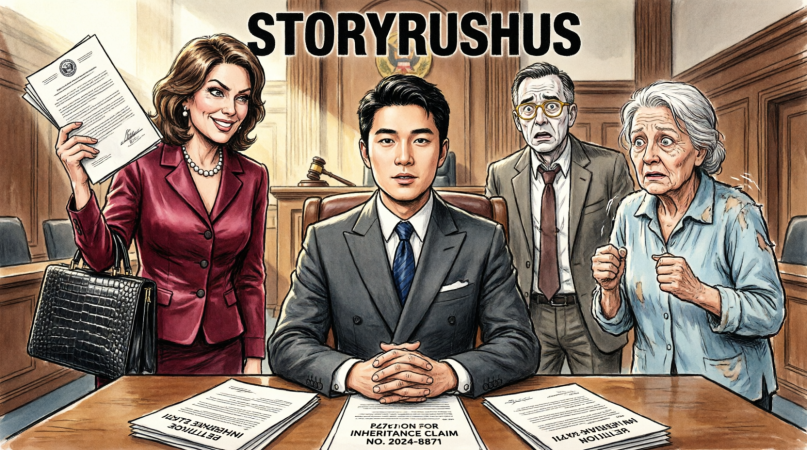
Emiliano tapped another key. A folder appeared titled: [Sales Contract and Trust Agreement]. Karla lost all her color. I did, too—I didn’t even know that folder existed. “What did you do, honey?” I whispered.
He settled his headphones around his neck. “I read before I signed.”
The screen showed the documents from the sale of the app. The company in Austin hadn’t deposited the money into a standard account. It was in a trust until Emiliano turned eighteen, with supervised administration, a committee, and strict restrictions for expenses other than education, health, housing, and project development.
Karla opened her mouth, but nothing came out. Her lawyer quickly flipped through his own papers. He looked at my daughter with an irritation he could no longer hide. “You told me the money was in personal accounts.” “I… I thought it was,” she hissed through her teeth.
Emiliano looked at her. “You didn’t think. You assumed.”
The Intervention
A heavy silence followed. Outside, our Pennsylvania suburb remained quiet. A mail truck drove by, and for a moment, it felt offensive that the world kept spinning while my daughter tried to tear my grandson’s life apart with paperwork.
Karla’s expression shifted—that was her specialty. From arrogance to tears in less than a second. “Emiliano, honey, I didn’t come for the money. I came for you. I’ve regretted it all these years. You don’t know how many times I wanted to come back.”
Emiliano opened one more folder: [Audio Files]. Karla recoiled. “No.”
The first recording played through the room. It was her voice, younger, harsher. “That kid ruined me. I don’t want to spend my life managing weird tantrums.” I closed my eyes.
The second: “If my mom wants him so bad, let her pay for him. I wasn’t born to be a nurse.”
The third was worse: “If he’s ever worth something, then we’ll talk.”
Karla’s lawyer stood frozen. Mr. Mendez looked at me, pale. I felt something inside me break and click into place at the same time. I had always thought Karla came back because of the money after she found out. But maybe she had been waiting for it all along, like someone who abandons dry land and only returns when they hear gold has sprouted.
Karla sobbed, but no one believed her anymore. “I was in a bad place,” she said. “I said horrible things, yes. But it was depression. It was exhaustion. No one helped me.”
I stepped forward. “I helped you.” She looked at me with pure venom. “You always judged me.” “I begged you not to abandon your son.” “I couldn’t handle him!” she screamed.
Emiliano tensed. I noticed it before anyone else. His fingers began to grip the tablet too hard. His breathing grew shallow. The voices, the fake crying, the lights, Karla’s sweet perfume—it was all starting to pile up on him.
I went to him slowly. “Look at the blue curtain, honey.” He turned his head. In our living room, we had a light blue curtain he chose because he said that color “didn’t scream.” “One,” I whispered. “Two. Three.” He breathed with me.
Karla rolled her eyes. “There it is. You always treated him like he was made of glass.” Emiliano took his headphones off completely. I was startled. When he did that, it was because he wanted to hear every last blow. “I am not made of glass,” he said. “I am made of records.”
The Reckoning
Emiliano opened the final folder: [Karla’s Arrival – Exterior Camera]. The screen showed the recording from that morning. The white SUV parking. Karla getting out. Her lawyer grabbing his briefcase. Her looking at the house, smiling, and saying before knocking on the door: “This is the one that fixes our lives.”
The room went cold. Karla put her hand to her chest. “That’s edited.” Emiliano shook his head. “It’s backed up on the cloud.”
Karla’s lawyer closed his briefcase. Slowly. Like someone who knew there was nothing left to win. Just then, there was a knock at the door. Three firm knocks. Karla looked toward the entry. “Who did you call?”
Emiliano raised his hand. “Child Protective Services and the local police.”
I felt my legs give out. A woman in a gray suit entered, followed by a younger man with a badge. They greeted us without raising their voices. That calmed me. In my house, any loud noise could be a storm for Emiliano.
“Good afternoon,” the woman said. “I’m Ms. Reed. We received a report regarding a minor at risk of financial and familial abuse, along with a history of abandonment.”
Karla turned on me. “You did this?” Before I could speak, Emiliano answered: “I did.”
Ms. Reed looked at him carefully. “Emiliano, do you want to continue here or would you prefer another space?” “Here,” he said. “With Teresa.” He didn’t say “my grandmother.” He used my name. And yet, in his mouth, it sounded like home.
The official asked that no one interrupt him. Karla tried to protest, but her own lawyer stopped her with a look. The official asked simple, clear questions. “Who lives with you?” “Teresa.” “Who takes you to the doctor?” “Teresa.” “Who knows your routines?” “Teresa.” “Do you want to go with Karla?”
Emiliano paused. He looked at his hands. Then he looked toward the kitchen, where the pot of rice was still warm. That white rice, separated from the beans, just the way he’d liked it since he was a little boy. “No.”
Karla let out a sob. “He’s rejecting me because my mother poisoned his mind!” Emiliano turned to her. “I don’t need anyone to poison my mind to remember that you left.”
The sentence hit my daughter like a stone.
The New Chapter
The official dictated emergency measures that very afternoon. Karla was barred from taking Emiliano or approaching him without supervision. An investigation into abandonment and financial abuse was opened.
When Karla realized she wasn’t leaving my house with my grandson or a single cent, the mask finally fell off. “You’ll regret this, Mom.” I looked at her. She was my daughter. The girl I gave birth to. The woman who had left her son like someone leaving a piece of furniture that was in the way. “I’ve already spent eleven years regretting that I thought you were incapable of this,” I told her. “I have no room left to fear you.”
Karla walked to the door. Before leaving, she looked at Emiliano. I expected a plea for forgiveness. A crumb of humanity. But she only said: “One day, you’ll understand me.” Emiliano replied without looking up: “I don’t want to understand abandonment.”
The door closed. The white SUV drove away.
I stood there until my legs couldn’t hold me anymore. I sat on the sofa and began to cry. Not quietly. I cried the way old women cry when they’ve been holding up a wall with their backs for too long.
Emiliano approached me. He didn’t hug me—that wasn’t his way. He put two fingers on my wrist. “Teresa.” “I’m sorry, honey.” “Why?” “For not fixing the paperwork sooner. For being afraid. For thinking love was enough.”
He processed my words. “Love wasn’t enough.” My heart broke. “I know.” “But it helped,” he added. He looked at me. “You helped.”
Months later, Emiliano turned seventeen. He didn’t want a big party. Just white rice, vanilla cake with no filling, and very quiet music. He asked me to invite Mr. Mendez and Ms. Reed.
Before cutting the cake, he opened his tablet. “I have a new project,” he said. On the screen, a name appeared: “Teresa’s Bridge.”
“What is that?” I asked. “A platform for caregivers. Grandparents, aunts, uncles, neighbors. People who are raising kids without official custody. It tells them what documents to gather, where to ask for help, how to save evidence, and how to explain the needs of autistic children to schools and courts.”
No one spoke. I cried again, but this time it wasn’t out of fear. “Why did you name it after me?”
Emiliano set his spoon down. “Because when my mother left me, you didn’t know what to do. But you stayed. I want staying to be easier for others.”
He touched my wrist with two fingers. Our version of a hug. “Grandma,” he said. It had been a long time since he called me that. “You can stop washing clothes now. But don’t stop making the pies.”
I laughed through my tears. “Never, honey.”
Karla sent letters. Some we read; some we didn’t. In one, she asked for forgiveness without mentioning money. Emiliano kept it in a folder labeled [Pending]. He didn’t accept it, but he didn’t throw it away. “Maybe one day,” he said.
The house remained modest. Soft light in his room. A small garden. Homemade pies on the counter. Sometimes I still wake up afraid I’ll hear that white SUV outside. But it’s never there.
What is there is Emiliano at his desk, creating something so the world feels a little less heavy for children like him. One afternoon, I saw him working with his headphones on. He was no longer the boy under the table. He wasn’t the millions of dollars Karla tried to claim.
He was Emiliano. My grandson. My home. My reason.
He took off one headphone and looked at me. “Teresa?” “Yes, honey?” “Was I right to let her speak?”
I thought about Karla entering with her lawyer. My fear. The evidence. The truth coming out one by one, inevitable and patient. “Yes,” I told him. “Because when you let her speak, we finally heard what she was really looking for.”
He nodded and went back to his screen. I went into the kitchen and put the rice on to boil. Separated from the beans. Just like always.
And as the steam rose, I understood that Karla hadn’t returned just when Emiliano was worth $3.2 million. She had returned when he was already worth so much more than that. When he had a memory. A voice. And a grandmother who finally learned that love is something you sign for, protect, and defend with the door open and the truth turned on.