My name is Emily. I am twenty-nine years old, and last Christmas should have been the first time my six-month-old son was welcomed into the kind of family holiday I kept telling myself still existed. Instead, I watched my brother turn our Christmas dinner into a performance, and the moment my baby started crying, everything I had spent years excusing about my family came crashing out into the open. We had driven all the way to my parents’ house in Colorado Springs because my husband had just come back after months away, and I wanted one peaceful holiday. One normal memory. One night where nobody had to compete for attention, where my son could be held, kissed, fussed over, and loved. But the second we walked in, I knew I had made a mistake. There were lights set up in the dining room, phones on stands, a ring light by the fireplace, and that restless energy my brother always had when he thought he was about to capture something people online would eat up.
My son was already overtired by the time dinner started. He was rubbing his eyes, twisting in his little seat, making those soft warning sounds babies make right before they fully melt down. I reached for him once. I was told to wait. I tried again when he started crying harder. Then my brother grabbed a glass from the table, flung cold water straight into my baby’s face, and laughed like he had just solved a problem. He actually looked at me and said I was overreacting. Everyone froze. Nobody moved. Nobody told him to stop. But my husband stood up so slowly that the whole room went silent before he even spoke. And when he did, my sister went pale so fast it scared me more than any shouting could have. My husband, Mark, did not raise his voice when he stood up. That was the part that unsettled everyone most. If he had shouted, my family could have called it anger. If he had cursed, they could have called it drama. But he stayed calm. Calm enough to walk straight to our son, lift him out of that little high chair, press him against his chest, and check his face while Liam cried in shocked, broken sobs against his shoulder.
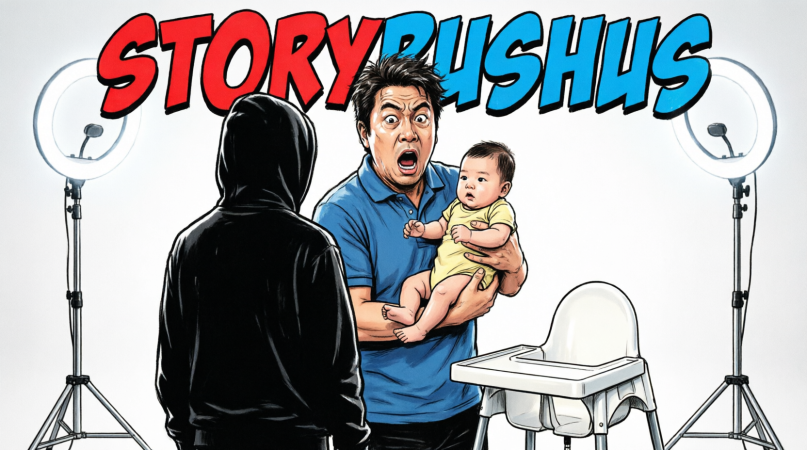
I was already on my feet, grabbing napkins, my hands shaking so hard I could barely hold them. And Ryan was still smiling like he had pulled off a clever joke. He actually said, “Relax, Emily. It was water, not poison.” Then he laughed at his own line like the rest of us were supposed to catch up to how funny he thought he was.
Mark turned and looked at him with a kind of stillness I had only seen once before. It was the look he got when he made a decision he would not reverse. He said, “You need to leave right now.”
Ryan blinked like he thought he had misheard him. My mother, Susan, made a soft, panicked noise and stepped in with that same voice she always used when she wanted to smooth things over without actually confronting anyone. She said Ryan had only gone too far because he was trying to keep the mood light.
My father, Tom, stared down at his plate, then muttered that nobody needed to ruin Christmas over one stupid moment.
One stupid moment. My baby was soaked and trembling, his tiny shirt wet, his lashes clumped with water, and my father called it a stupid moment. That was when I understood the silence around the table was not shock. It was habit.
Brooke, my younger sister, had gone completely pale. She kept looking at Ryan, then at me, then back at Ryan, like she was watching something she had feared for a long time finally happen in front of witnesses.
Ryan tried to recover fast. He said the stream was still running. Said the audience loved real moments. Said people online knew how to take a joke better than I did. Mark did not react to any of that. He just handed me the diaper bag and said, “Emily, get Liam’s blanket. We’re leaving.”
I wish I could say I made a speech on the way out. I wish I could say I looked my family in the eye and finally told them exactly what I thought of all of them. But the truth is, I was too stunned, too angry, too ashamed that I had brought my son into that house at all.
As we reached the front door, Ryan called after us and said I was proving his point. That I had always been too uptight, too sensitive, too ready to act like a victim. Then my mother asked me not to make this bigger than it was, and something inside me cracked. I turned around and asked her how much smaller it needed to be before she would care. She had no answer. Nobody did.
Outside, the cold air hit my face hard, and for the first time all night, I could breathe.
Liam had stopped crying by then, but only in that exhausted way babies do when they have cried so long they have nothing left. Mark buckled him into the car seat with steady hands, then got behind the wheel and drove us back toward Fort Carson in silence.
I watched the lights of Colorado Springs slide past the window and realized I had spent my whole life being the daughter who was expected to absorb things, excuse things, laugh things off. Let Ryan be Ryan. Let the moment pass. Let the family stay comfortable.
Ryan was the talented one. Ryan was the charismatic one. Ryan was the one my mother described as a born entertainer and my father described as impossible to control, as if that were some charming weather pattern instead of a choice.
By the time we pulled into our driveway, I knew Christmas dinner was over. What I did not know yet was that two days later, my phone would start ringing and the people who should have apologized would try to convince me that I had not seen what I saw at all.
The first call came from my mother the morning after we got home. Her voice was careful at first, almost sweet, and that was how I knew she had already decided I was the one expected to soften. She asked how Liam was in the same tone people use before changing the subject to the thing they actually care about. The thing she actually cared about was whether I was ready to calm down.
She told me Ryan had barely slept because he felt awful about how everything had spiraled. Not about what he did. About how everything had spiraled. She said those exact words twice like she needed me to hear that the real tragedy here was the inconvenience of consequences.
I told her my son had been frightened, soaked, and crying so hard his whole body shook. She said, “Babies cry.” I said, “Babies do not deserve to have cold water thrown in their faces because a grown man is losing control of a live stream.” She got quiet then and said I was using very dramatic language.
Dramatic language. I still remember gripping the kitchen counter so hard my fingers hurt because that phrase was my childhood in two words. Every time Ryan pushed too far, every time I complained, every time I said, “This is not funny,” or, “This is not okay,” my emotions somehow became the problem, not his behavior. My reaction.
My mother went on to say that becoming a first-time mom had made me more reactive than usual, and that Mark being military probably made everything feel even more intense in the moment. There it was, the first attempt to move the focus. Not Ryan threw water at a baby. Not why did nobody stop him. It was, “Maybe you are hormonal and maybe your husband is rigid.”
I hung up before I said something I would not take back.
An hour later, my father called. He was gentler, but in some ways worse, because he always hid behind reasonableness. He asked if we could all just be adults. He said Ryan was embarrassed. He said people in the comments had noticed the stream cutting off suddenly and Ryan was under a lot of pressure because he had sponsor obligations.
Sponsor obligations. I asked my father whether he heard himself. My son had been treated like a prop, and my father’s concern was that a man in his thirties might miss a brand deadline.
My father sighed and said, “Emily, brothers mess around. It was water. You’re acting like he hit him.” I remember going completely still when he said that because my mind flashed straight to the sound Liam made after the water hit him. The startled silence. The stunned inhale. The crying that came after. Maybe Ryan had not struck him with his hand, but he had absolutely used fear and humiliation on a baby with total contempt.
I told my father if he really believed that was normal, then he should never be alone with my child either. He got offended at that, which told me more than any apology could have.
Ryan waited until late afternoon to call. He always liked timing. He liked catching people when they were tired, when they wanted peace badly enough to mistake manipulation for sincerity. His voice was warm and casual, like we were siblings getting over a misunderstanding.
He said I had made him look abusive in front of his own family. He said he was trying to keep the stream moving because Liam’s crying had completely hijacked the energy in the room. He said the splash was meant to be playful, like a quick reset.
A reset. My son was six months old, not a glitchy microphone.
Ryan even said that if I had not exploded the way I did, nobody would have thought it was such a big deal. That was when the cold clarity finally started to settle over me. He was not sorry. He was annoyed. Annoyed that his joke failed. Annoyed that Mark had overpowered the room. Annoyed that I had not joined the family tradition of pretending his cruelty was charm.
I ended the call and sat on the nursery floor while Liam napped, replaying every second of Christmas dinner in my head. The lights. The camera tripod. Ryan’s grin. The water running down my son’s face. The way nobody moved.
Then I did something I had never done before in a family conflict. I opened a notebook and wrote down everything, every word I could remember, every expression, every call, every excuse.
By that night, I had three full pages of notes and a new feeling I did not recognize at first. It was not confusion anymore. It was pattern recognition.
And once I saw the pattern, I could not unsee it. My family was not trying to make peace. They were trying to get control of the story back before I understood how much of my life had been shaped by protecting Ryan from the truth.
Two days after Christmas, Brooke texted me just three words: Check Ryan’s page.
I opened his TikTok first, then YouTube, and felt something hot and ugly rise in my throat. He had posted a cut-down version of the stream with a title that read, “Christmas Family Challenge Goes Off the Rails.” The clip started with laughter, music, warm lighting, all the fake cozy pieces he was good at arranging. Then it cut to Liam crying, except Ryan had edited the audio to make it seem shorter and less distressed. You barely saw the water. Just a quick motion, a splash, then me standing up off-camera while Ryan’s text overlay read, “Some people can’t take a joke.”
The comments were full of strangers defending him. Overprotective moms ruin everything. Some people are too soft for real family fun. Military husband sounds controlling. I stared at my phone so long my screen dimmed.
Ryan had done what he always did. He took the ugliest thing he had done, trimmed away context, and turned himself into the wounded, funny guy who got punished for being spontaneous.
Mark came home from base that evening and found me at the table with my laptop open, screenshots spread across the screen, Liam asleep against my shoulder. He did not ask me to calm down. He did not tell me to stay off social media. He read every caption, every clipped comment, every reply where Ryan hinted that I had been unstable since having the baby. Then he looked at me and said, “Save everything.”
So I did. I saved the video, the captions, the comments, the timestamps, even the sponsor tags. I went back through Ryan’s older content too. And the more I looked, the worse it got.
There were years of carefully packaged family moments that had never felt real to me, but I had never known how to explain. He had built an entire audience on the idea that our family was chaotic in a lovable way, loud but loyal, sarcastic but close. In truth, most of us barely saw him unless there was a holiday, a birthday, or some filming opportunity.
He tagged us in stories about family traditions we did not actually share. He reposted old photos to make it look like we all spent more time together than we ever had. He used my wedding once for a relationship-content series without even asking. He filmed our grandmother’s funeral reception and turned it into a reel about cherishing every moment with the people you love.
I had told myself back then that he just processed life differently. Looking at it now, I saw something else. He did not experience family. He harvested it. Every memory was raw material. Every private moment had market value. Every person in the room was either useful to the narrative or in the way of it.
Brooke called me that night instead of texting, and I could hear in her breathing that she had been holding something back for a long time. She told me she had helped Ryan edit a few videos years earlier when she was trying to freelance as a photographer. And she said the one thing she had never told anyone was how often he cut around the truth.
If a kid cried before the joke landed, he removed it. If an adult got angry for a valid reason, he left out what triggered it. If something looked worse on playback than it had in his head, he reframed it with music and captions until he came out looking playful and everyone else looked unstable.
I asked Brooke why she had never said anything. She was quiet for several seconds before answering. Then she told me because nobody in that house ever wanted the full truth if the full truth made Ryan look bad. She said our mother was addicted to the idea that one of her children had made something of himself online. She said our father had spent so long avoiding conflict that he treated silence like wisdom.
Then Brooke said the one thing that made my whole body go cold. She said, “Emily, Aunt Linda has been afraid of this happening with a baby for years.”
That sentence changed everything. Until then, I had still been trying to decide whether Christmas dinner was the worst thing Ryan had ever done or just the first time I had fully seen him. But when Brooke said that, I knew there was a history no one had ever trusted me with, or maybe one I had not been ready to face.
I called Linda the next morning, and before she even said hello, I heard something in her voice that sounded like relief, like she had been waiting for me to finally ask the right question. Aunt Linda did not ease into it. She did not say she might be mistaken. She did not start with excuses.
She said, “I have watched your brother scare children for laughs since he was fourteen.”
And every adult in that family told themselves it was harmless because admitting otherwise would have required them to do something. Then she started giving me examples. Real ones. Specific ones. A Fourth of July barbecue when Ryan dumped a cooler of ice water over a cousin’s five-year-old because the boy would not repeat a line for a prank skit. A birthday party where he locked two younger kids in a laundry room for five minutes so he could film their reaction when they came out crying. A Thanksgiving when he kept pushing whipped cream toward a toddler’s face because he wanted a funny, messy shot and got angry when the child screamed instead of laughing.
Every single time, somebody explained it away. He is immature. He is creative. He does not mean harm. Boys are rougher. Kids are resilient. The phrases changed. The pattern never did.
Linda told me she had tried twice to confront my mother years ago. Both times, my mother cried and said Ryan just had an unusual personality and that people were always too hard on him. My father had taken his usual route and said no one should destroy a family over one incident. Except it was never one incident. It was a trail of incidents no one wanted to line up in the same room.
Brooke called me again later that day and filled in her part. She said she had once seen raw footage Ryan never posted where a little cousin was sobbing after one of his prank setups. And Ryan was furious, not because the child was hurt, but because Brooke had stopped filming too early and missed the funniest angle.
She said he had looked at the kid like children were props with bad timing. That was the phrase she used. Props with bad timing.
I wrote everything down. I asked Linda if she would be willing to send me a statement, even just in an email, and she said yes immediately. Not because she liked conflict, but because she had reached the age where guilt weighed more than family loyalty.
She also told me something else I had not understood before. Ryan’s channel was struggling. He still had followers, but his engagement had been dropping. The family-challenge content was not landing the way it used to. He was trying to pivot into more intimate, more emotional, more personal material.
In other words, he needed us more than ever. He needed Christmas dinner. He needed the perfect military husband home for the holidays. He needed the baby. He needed the warm suburban house and the matching plates and the illusion of a close family gathered around a first Christmas memory.
Liam was never my son in Ryan’s mind that night. He was a production problem.
Once I saw that, all the small, strange details from dinner snapped into place. Why Ryan got so tense when Liam started crying. Why he kept saying we needed to let the moment breathe for the camera. Why my mother had insisted I wait before picking Liam up. Why the lights were aimed so carefully. And why Brooke had looked sick when Mark stood up.
She knew. She knew Ryan had crossed lines with children before, and she knew the family had always covered it. What she had not known was whether anybody would finally stop him in real time. Mark did. That was why Brooke turned pale. Not because she was shocked Ryan did it, but because she had just seen someone refuse to play the family’s old role.
Over the next several days, I contacted two cousins with children of their own. I did not accuse. I did not dramatize. I just asked whether Ryan had ever made them uncomfortable around their kids. The answers came faster than I expected.
One cousin said she never let Ryan babysit, though she had never admitted why out loud. Another said her daughter cried for hours after a family wedding because Ryan had splashed soda in her face during a reception joke. And when she complained, our mother said she was encouraging oversensitivity in the next generation.
By then, I was no longer collecting stories. I was uncovering a system. Ryan did what he wanted. Children got frightened. Adults minimized it. The person hurt was told to stop being dramatic. Then life moved on until the next holiday gave him a new stage.
The most painful part was realizing how many times I had almost seen it and talked myself out of trusting my own instincts. I remembered being sixteen and watching Ryan taunt a little neighbor kid with a fake snake until the boy wet himself. And somehow, by the end of the night, I was the one apologizing because I had made things awkward by saying it was cruel.
I remembered Ryan filming at our grandmother’s house and snapping at me when I stepped into frame. I remembered my mother saying, “Your brother just has a bigger personality than you do.” I used to think that meant I was smaller. Now I understood what it really meant. It meant I was expected to make room for his damage.
By the time I finished organizing the statements and screenshots, I was not just a woman angry about Christmas dinner. I was a mother staring at a twenty-year history of adults sacrificing honesty to keep one man comfortable. And for the first time in my life, I was not going to carry that lie for them.
Ryan’s lawyer letter arrived by certified mail on a gray Thursday afternoon, and even before I opened it, I knew exactly what it was. Pressure in formal language. Shame on expensive paper.
The letter accused me of making false statements that were harming Ryan’s business, damaging sponsor relationships, and interfering with future opportunities. It demanded that I stop sharing defamatory claims and preserve family privacy. Family privacy. They were suddenly very interested in privacy now that the truth was expensive.
I sat at the kitchen table and read it twice, then handed it to Mark, who read it once and said, “He’s scared.” That was the first moment since Christmas dinner that I smiled, because he was right. Men like Ryan only reached for legal threats when charm stopped working, when guilt stopped working, when family pressure stopped working.
I called an attorney Linda recommended, a woman named Janet Morrison, who specialized in family law and civil harassment cases. She listened without interrupting while I walked her through Christmas dinner, the calls, the edited video, the statements from relatives, and the history Linda had given me. When I finished, Janet said, “Truth is not defamation, and documented truth is even better.”
Then she asked the question no one in my family had asked. She said, “What outcome do you want? Not revenge. Not vindication. Outcome.”
I told her I wanted Ryan kept away from my son, and I wanted the parents in our extended family to know enough to make informed decisions about their own children. Janet said that was sane, measured, and easy to defend.
So we built a response. We did not threaten theatrics. We did not play online warfare. We sent a formal reply stating that any statements I had made were factual, privately communicated, and supported by witness accounts and video evidence. We also put Ryan on notice that he had used family likenesses and family events in monetized content without consent, and that if he escalated publicly, we were prepared to address that too.
Silence would have been easier for him. Court would have been catastrophic.
At Janet’s suggestion, I prepared a packet for family members who had young children. Just facts. A timeline of the Christmas incident. A still image from the stream. A short summary of Ryan’s edited repost. Written statements from Linda and two cousins. I did not tell anyone what to do. I did not tell anyone to cut him off. I simply gave them what our family had denied each other for years. Information. Real information.
The reaction was immediate. One aunt called crying because she said she had always felt uneasy leaving Ryan alone with her youngest son and thought she was being unfair. One cousin thanked me for saying out loud what she had swallowed for a decade. Another relative accused me of trying to destroy the family and said no good mother would drag private conflict through the mud. I asked her whether good mothers were supposed to stay quiet when someone treated a baby like a prop. She had no answer.
Then the sponsors started moving.
I never contacted them directly. But Ryan’s panic made it obvious something had shifted. One brand quietly removed his holiday collaboration post. Another suspended comments on a giveaway video. Brooke later told me Ryan was frantically calling people, claiming a bitter family member was trying to sabotage him with exaggerated stories.
But this time, his usual strategy had a problem. Too many people already knew too much. Too many witnesses had finally compared notes. And most of all, Ryan had made the fatal mistake of giving the truth a digital trail.
The edited repost did not help him. It hurt him, because once people started asking what had been cut out, the answer became impossible to contain.
My mother called me in hysterics one evening and said I was humiliating Ryan when all he needed was grace. I told her grace without accountability was just another word our family used for permission.
My father tried a different tactic and warned that I was risking Mark’s career by creating conflict around a military family. Mark took the phone from me and said, “My career will survive me protecting my son.” He handed the phone back before my father could answer. That moment stayed with me, not because it was dramatic, but because it was so clean. No confusion. No apology for the obvious. Protecting your child is not scandal.
What my family had been doing for years was scandal.
Ryan’s channel did not collapse overnight, but I could feel it tilting. The comments under new videos got uglier. He turned off replies on one platform. He posted vague captions about betrayal, jealousy, and how success exposed people’s true colors. It would have worked on me once, maybe even two years earlier, but not anymore.
Because by then, I understood the central lie of my family. They always treated Ryan like the fragile one, when in reality the rest of us had been trained to make ourselves fragile around him. He was never the one bending. We were. And now that I had stopped bending, the whole structure around him was beginning to crack.
Ryan came to my house just after dark on a Sunday, the kind of winter evening when every sound carries farther than it should. I saw him through the front window before he knocked, pacing on the porch in a coat he had clearly thrown over indoor clothes, his face already flushed with rage. Mark looked at me once, then stepped toward the door with his phone in his hand.
He opened it, but did not invite Ryan in. Ryan did not bother with greetings. He launched straight into accusation. He said I was sick. He said I had poisoned the family against him. He said I was costing him deals, meetings, money, momentum. Not once did he ask how Liam was. Not once did he say he regretted what happened. He talked about numbers, reach, brand safety, engagement.
Then he said the sentence that ended any last shred of ambiguity. He said, “Do you have any idea how much that Christmas live could have made me if your kid hadn’t ruined it?”
My whole body went cold, but Mark stayed steady. He asked Ryan to repeat what he had just said. Ryan was too angry to notice the trap. He kept talking. He said the splash was nothing. He said Liam needed to stop screaming. He said every family makes sacrifices for each other. And all I ever had to do was not turn one little moment into a campaign.
One little moment. A grown man standing on my porch, furious not because he frightened a baby, but because the baby had damaged a revenue stream.
Mark told him to leave immediately and warned him that if he came back again unannounced, we would treat it as harassment. Ryan called me heartless. Then he looked past Mark, straight at me, and said I had always been jealous because I knew nobody cared about my quiet little life until I married a man in uniform and had a baby.
There it was. The thing under everything. Not just entitlement. Contempt. He had never seen me as family in the same way he saw himself. I was background. Supporting cast. A useful contrast that made him shine brighter.
But now I had stepped out of the role, and he hated me for it. He left still shouting, his tires spinning as he backed out of the driveway. Mark closed the door, stopped the recording, and set his phone on the kitchen counter without saying a word. We both knew what we had now. Not just proof of anger. Proof of motive.
Within two weeks, the consequences Ryan had spent years dodging started arriving all at once. The largest sponsor tied to his family content ended their relationship. Another company paused a trial campaign that had been in negotiation. His holiday challenge series stopped trending, and his follower count began bleeding. People who once defended him started asking why every explanation he gave made him sound worse, not better.
Brooke cut contact after he tried to blame her for leaking old footage. Two cousins with young children told the family in plain terms that Ryan would not be allowed near their kids. My mother tried one final round of emotional blackmail and said I was tearing the family apart. For the first time in my life, I answered without shaking. I told her the family was not being torn apart by the person telling the truth. It was being torn apart by the truth itself.
Six months later, Liam took his first real steps across our backyard in the late afternoon light while Mark and I sat on the patio and watched him wobble toward us with that wild baby determination that makes you laugh and cry at the same time. There were no cameras, no forced reactions, no one telling him to do it again for a better angle. Just grass, sunlight, and two parents cheering like the moment was enough exactly as it was.
Ryan’s channel still existed, but the version of it he had built on the image of warm family chaos was gone. He posted travel clips for a while, then motivational nonsense, then a heavily edited apology video that somehow still sounded like he was the victim of misunderstanding. It did not bring back what he lost.
Some people in my family still tiptoed around the subject, but they stopped defending him to me. My father became quieter than ever. My mother started therapy with a pastor and a counselor, which was probably years too late, but still better than never. Brooke and I became closer than we had been in years. Not because everything was magically healed, but because at least now we were standing in the same reality.
As for me, I learned something that changed the way I understood love. Love is not asking the vulnerable person to be more flexible so the harmful person can stay comfortable. Love is protection. Love is truth. Love is being willing to make the room awkward, the holiday tense, the relatives angry, if that is what it takes to keep a child safe.
The most valuable lesson hidden inside that Christmas disaster was not just about Ryan. It was about the danger of calling harmful behavior a joke just because it comes from someone you share blood with. Families can normalize almost anything if enough people benefit from pretending it is harmless.
That is why boundaries matter. That is why parents have to trust the moment in their gut when something feels wrong, even if the whole room is telling them to smile and sit back down. Children do not need adults who protect the family image. They need adults who protect them.
And if there is any value in telling this story, I hope it is this. Never let anyone convince you that keeping the peace matters more than keeping a child safe. Never let charm erase cruelty. Never let history become an excuse.
The people who truly love your child will never ask you to ignore what your instincts already know. They will stand beside you, not against you. They will help you build a real family, not a performance of one.
And if you have ever had to choose between family harmony and your child’s safety, I hope you choose safety every single time. Because that choice may feel lonely in the moment, but it can protect more lives than you realize
My brother threw water in my baby’s face at Christmas dinner and said I was “overreacting.” Everyone just sat there. Then my husband, a military commander, stood up, looked him dead in the eye, and said, “Get out.” My sister’s face went pale.
My name is Emily. I am twenty-nine years old, and last Christmas should have been the first time my six-month-old son was welcomed into the kind of family holiday I kept telling myself still existed.
Instead, I watched my brother turn our Christmas dinner into a performance, and the moment my baby started crying, everything I had spent years excusing about my family came crashing out into the open.
We had driven all the way to my parents’ house in Colorado Springs because my husband had just come back after months away, and I wanted one peaceful holiday. One normal memory. One night where nobody had to compete for attention, where my son could be held, kissed, fussed over, and loved.
But the second we walked in, I knew I had made a mistake. There were lights set up in the dining room, phones on stands, a ring light by the fireplace, and that restless energy my brother always had when he thought he was about to capture something people online would eat up.
My son was already overtired by the time dinner started. He was rubbing his eyes, twisting in his little seat, making those soft warning sounds babies make right before they fully melt down. I reached for him once. I was told to wait. I tried again when he started crying harder.
Then my brother grabbed a glass from the table, flung cold water straight into my baby’s face, and laughed like he had just solved a problem. He actually looked at me and said I was overreacting.
Everyone froze. Nobody moved. Nobody told him to stop. But my husband stood up so slowly that the whole room went silent before he even spoke. And when he did, my sister went pale so fast it scared me more than any shouting could have.
My husband, Mark, did not raise his voice when he stood up. That was the part that unsettled everyone most. If he had shouted, my family could have called it anger. If he had cursed, they could have called it drama. But he stayed calm. Calm enough to walk straight to our son, lift him out of that little high chair, press him against his chest, and check his face while Liam cried in shocked, broken sobs against his shoulder.
I was already on my feet, grabbing napkins, my hands shaking so hard I could barely hold them. And Ryan was still smiling like he had pulled off a clever joke. He actually said, “Relax, Emily. It was water, not poison.” Then he laughed at his own line like the rest of us were supposed to catch up to how funny he thought he was.
Mark turned and looked at him with a kind of stillness I had only seen once before. It was the look he got when he made a decision he would not reverse. He said, “You need to leave right now.”
Ryan blinked like he thought he had misheard him. My mother, Susan, made a soft, panicked noise and stepped in with that same voice she always used when she wanted to smooth things over without actually confronting anyone. She said Ryan had only gone too far because he was trying to keep the mood light.
My father, Tom, stared down at his plate, then muttered that nobody needed to ruin Christmas over one stupid moment.
One stupid moment. My baby was soaked and trembling, his tiny shirt wet, his lashes clumped with water, and my father called it a stupid moment. That was when I understood the silence around the table was not shock. It was habit.
Brooke, my younger sister, had gone completely pale. She kept looking at Ryan, then at me, then back at Ryan, like she was watching something she had feared for a long time finally happen in front of witnesses.
Ryan tried to recover fast. He said the stream was still running. Said the audience loved real moments. Said people online knew how to take a joke better than I did. Mark did not react to any of that. He just handed me the diaper bag and said, “Emily, get Liam’s blanket. We’re leaving.”
I wish I could say I made a speech on the way out. I wish I could say I looked my family in the eye and finally told them exactly what I thought of all of them. But the truth is, I was too stunned, too angry, too ashamed that I had brought my son into that house at all.
As we reached the front door, Ryan called after us and said I was proving his point. That I had always been too uptight, too sensitive, too ready to act like a victim. Then my mother asked me not to make this bigger than it was, and something inside me cracked. I turned around and asked her how much smaller it needed to be before she would care. She had no answer. Nobody did.
Outside, the cold air hit my face hard, and for the first time all night, I could breathe.
Liam had stopped crying by then, but only in that exhausted way babies do when they have cried so long they have nothing left. Mark buckled him into the car seat with steady hands, then got behind the wheel and drove us back toward Fort Carson in silence.
I watched the lights of Colorado Springs slide past the window and realized I had spent my whole life being the daughter who was expected to absorb things, excuse things, laugh things off. Let Ryan be Ryan. Let the moment pass. Let the family stay comfortable.
Ryan was the talented one. Ryan was the charismatic one. Ryan was the one my mother described as a born entertainer and my father described as impossible to control, as if that were some charming weather pattern instead of a choice.
By the time we pulled into our driveway, I knew Christmas dinner was over. What I did not know yet was that two days later, my phone would start ringing and the people who should have apologized would try to convince me that I had not seen what I saw at all.
The first call came from my mother the morning after we got home. Her voice was careful at first, almost sweet, and that was how I knew she had already decided I was the one expected to soften. She asked how Liam was in the same tone people use before changing the subject to the thing they actually care about. The thing she actually cared about was whether I was ready to calm down.
She told me Ryan had barely slept because he felt awful about how everything had spiraled. Not about what he did. About how everything had spiraled. She said those exact words twice like she needed me to hear that the real tragedy here was the inconvenience of consequences.
I told her my son had been frightened, soaked, and crying so hard his whole body shook. She said, “Babies cry.” I said, “Babies do not deserve to have cold water thrown in their faces because a grown man is losing control of a live stream.” She got quiet then and said I was using very dramatic language.
Dramatic language. I still remember gripping the kitchen counter so hard my fingers hurt because that phrase was my childhood in two words. Every time Ryan pushed too far, every time I complained, every time I said, “This is not funny,” or, “This is not okay,” my emotions somehow became the problem, not his behavior. My reaction.
My mother went on to say that becoming a first-time mom had made me more reactive than usual, and that Mark being military probably made everything feel even more intense in the moment. There it was, the first attempt to move the focus. Not Ryan threw water at a baby. Not why did nobody stop him. It was, “Maybe you are hormonal and maybe your husband is rigid.”
I hung up before I said something I would not take back.
An hour later, my father called. He was gentler, but in some ways worse, because he always hid behind reasonableness. He asked if we could all just be adults. He said Ryan was embarrassed. He said people in the comments had noticed the stream cutting off suddenly and Ryan was under a lot of pressure because he had sponsor obligations.
Sponsor obligations. I asked my father whether he heard himself. My son had been treated like a prop, and my father’s concern was that a man in his thirties might miss a brand deadline.
My father sighed and said, “Emily, brothers mess around. It was water. You’re acting like he hit him.” I remember going completely still when he said that because my mind flashed straight to the sound Liam made after the water hit him. The startled silence. The stunned inhale. The crying that came after. Maybe Ryan had not struck him with his hand, but he had absolutely used fear and humiliation on a baby with total contempt.
I told my father if he really believed that was normal, then he should never be alone with my child either. He got offended at that, which told me more than any apology could have.
Ryan waited until late afternoon to call. He always liked timing. He liked catching people when they were tired, when they wanted peace badly enough to mistake manipulation for sincerity. His voice was warm and casual, like we were siblings getting over a misunderstanding.
He said I had made him look abusive in front of his own family. He said he was trying to keep the stream moving because Liam’s crying had completely hijacked the energy in the room. He said the splash was meant to be playful, like a quick reset.
A reset. My son was six months old, not a glitchy microphone.
Ryan even said that if I had not exploded the way I did, nobody would have thought it was such a big deal. That was when the cold clarity finally started to settle over me. He was not sorry. He was annoyed. Annoyed that his joke failed. Annoyed that Mark had overpowered the room. Annoyed that I had not joined the family tradition of pretending his cruelty was charm.
I ended the call and sat on the nursery floor while Liam napped, replaying every second of Christmas dinner in my head. The lights. The camera tripod. Ryan’s grin. The water running down my son’s face. The way nobody moved.
Then I did something I had never done before in a family conflict. I opened a notebook and wrote down everything, every word I could remember, every expression, every call, every excuse.
By that night, I had three full pages of notes and a new feeling I did not recognize at first. It was not confusion anymore. It was pattern recognition.
And once I saw the pattern, I could not unsee it. My family was not trying to make peace. They were trying to get control of the story back before I understood how much of my life had been shaped by protecting Ryan from the truth.
Two days after Christmas, Brooke texted me just three words: Check Ryan’s page.
I opened his TikTok first, then YouTube, and felt something hot and ugly rise in my throat. He had posted a cut-down version of the stream with a title that read, “Christmas Family Challenge Goes Off the Rails.” The clip started with laughter, music, warm lighting, all the fake cozy pieces he was good at arranging. Then it cut to Liam crying, except Ryan had edited the audio to make it seem shorter and less distressed. You barely saw the water. Just a quick motion, a splash, then me standing up off-camera while Ryan’s text overlay read, “Some people can’t take a joke.”
The comments were full of strangers defending him. Overprotective moms ruin everything. Some people are too soft for real family fun. Military husband sounds controlling. I stared at my phone so long my screen dimmed.
Ryan had done what he always did. He took the ugliest thing he had done, trimmed away context, and turned himself into the wounded, funny guy who got punished for being spontaneous.
Mark came home from base that evening and found me at the table with my laptop open, screenshots spread across the screen, Liam asleep against my shoulder. He did not ask me to calm down. He did not tell me to stay off social media. He read every caption, every clipped comment, every reply where Ryan hinted that I had been unstable since having the baby. Then he looked at me and said, “Save everything.”
So I did. I saved the video, the captions, the comments, the timestamps, even the sponsor tags. I went back through Ryan’s older content too. And the more I looked, the worse it got.
There were years of carefully packaged family moments that had never felt real to me, but I had never known how to explain. He had built an entire audience on the idea that our family was chaotic in a lovable way, loud but loyal, sarcastic but close. In truth, most of us barely saw him unless there was a holiday, a birthday, or some filming opportunity.
He tagged us in stories about family traditions we did not actually share. He reposted old photos to make it look like we all spent more time together than we ever had. He used my wedding once for a relationship-content series without even asking. He filmed our grandmother’s funeral reception and turned it into a reel about cherishing every moment with the people you love.
I had told myself back then that he just processed life differently. Looking at it now, I saw something else. He did not experience family. He harvested it. Every memory was raw material. Every private moment had market value. Every person in the room was either useful to the narrative or in the way of it.
Brooke called me that night instead of texting, and I could hear in her breathing that she had been holding something back for a long time. She told me she had helped Ryan edit a few videos years earlier when she was trying to freelance as a photographer. And she said the one thing she had never told anyone was how often he cut around the truth.
If a kid cried before the joke landed, he removed it. If an adult got angry for a valid reason, he left out what triggered it. If something looked worse on playback than it had in his head, he reframed it with music and captions until he came out looking playful and everyone else looked unstable.
I asked Brooke why she had never said anything. She was quiet for several seconds before answering. Then she told me because nobody in that house ever wanted the full truth if the full truth made Ryan look bad. She said our mother was addicted to the idea that one of her children had made something of himself online. She said our father had spent so long avoiding conflict that he treated silence like wisdom.
Then Brooke said the one thing that made my whole body go cold. She said, “Emily, Aunt Linda has been afraid of this happening with a baby for years.”
That sentence changed everything. Until then, I had still been trying to decide whether Christmas dinner was the worst thing Ryan had ever done or just the first time I had fully seen him. But when Brooke said that, I knew there was a history no one had ever trusted me with, or maybe one I had not been ready to face.
I called Linda the next morning, and before she even said hello, I heard something in her voice that sounded like relief, like she had been waiting for me to finally ask the right question. Aunt Linda did not ease into it. She did not say she might be mistaken. She did not start with excuses.
She said, “I have watched your brother scare children for laughs since he was fourteen.”
And every adult in that family told themselves it was harmless because admitting otherwise would have required them to do something. Then she started giving me examples. Real ones. Specific ones. A Fourth of July barbecue when Ryan dumped a cooler of ice water over a cousin’s five-year-old because the boy would not repeat a line for a prank skit. A birthday party where he locked two younger kids in a laundry room for five minutes so he could film their reaction when they came out crying. A Thanksgiving when he kept pushing whipped cream toward a toddler’s face because he wanted a funny, messy shot and got angry when the child screamed instead of laughing.
Every single time, somebody explained it away. He is immature. He is creative. He does not mean harm. Boys are rougher. Kids are resilient. The phrases changed. The pattern never did.
Linda told me she had tried twice to confront my mother years ago. Both times, my mother cried and said Ryan just had an unusual personality and that people were always too hard on him. My father had taken his usual route and said no one should destroy a family over one incident. Except it was never one incident. It was a trail of incidents no one wanted to line up in the same room.
Brooke called me again later that day and filled in her part. She said she had once seen raw footage Ryan never posted where a little cousin was sobbing after one of his prank setups. And Ryan was furious, not because the child was hurt, but because Brooke had stopped filming too early and missed the funniest angle.
She said he had looked at the kid like children were props with bad timing. That was the phrase she used. Props with bad timing.
I wrote everything down. I asked Linda if she would be willing to send me a statement, even just in an email, and she said yes immediately. Not because she liked conflict, but because she had reached the age where guilt weighed more than family loyalty.
She also told me something else I had not understood before. Ryan’s channel was struggling. He still had followers, but his engagement had been dropping. The family-challenge content was not landing the way it used to. He was trying to pivot into more intimate, more emotional, more personal material.
In other words, he needed us more than ever. He needed Christmas dinner. He needed the perfect military husband home for the holidays. He needed the baby. He needed the warm suburban house and the matching plates and the illusion of a close family gathered around a first Christmas memory.
Liam was never my son in Ryan’s mind that night. He was a production problem.
Once I saw that, all the small, strange details from dinner snapped into place. Why Ryan got so tense when Liam started crying. Why he kept saying we needed to let the moment breathe for the camera. Why my mother had insisted I wait before picking Liam up. Why the lights were aimed so carefully. And why Brooke had looked sick when Mark stood up.
She knew. She knew Ryan had crossed lines with children before, and she knew the family had always covered it. What she had not known was whether anybody would finally stop him in real time. Mark did. That was why Brooke turned pale. Not because she was shocked Ryan did it, but because she had just seen someone refuse to play the family’s old role.
Over the next several days, I contacted two cousins with children of their own. I did not accuse. I did not dramatize. I just asked whether Ryan had ever made them uncomfortable around their kids. The answers came faster than I expected.
One cousin said she never let Ryan babysit, though she had never admitted why out loud. Another said her daughter cried for hours after a family wedding because Ryan had splashed soda in her face during a reception joke. And when she complained, our mother said she was encouraging oversensitivity in the next generation.
By then, I was no longer collecting stories. I was uncovering a system. Ryan did what he wanted. Children got frightened. Adults minimized it. The person hurt was told to stop being dramatic. Then life moved on until the next holiday gave him a new stage.
The most painful part was realizing how many times I had almost seen it and talked myself out of trusting my own instincts. I remembered being sixteen and watching Ryan taunt a little neighbor kid with a fake snake until the boy wet himself. And somehow, by the end of the night, I was the one apologizing because I had made things awkward by saying it was cruel.
I remembered Ryan filming at our grandmother’s house and snapping at me when I stepped into frame. I remembered my mother saying, “Your brother just has a bigger personality than you do.” I used to think that meant I was smaller. Now I understood what it really meant. It meant I was expected to make room for his damage.
By the time I finished organizing the statements and screenshots, I was not just a woman angry about Christmas dinner. I was a mother staring at a twenty-year history of adults sacrificing honesty to keep one man comfortable. And for the first time in my life, I was not going to carry that lie for them.
Ryan’s lawyer letter arrived by certified mail on a gray Thursday afternoon, and even before I opened it, I knew exactly what it was. Pressure in formal language. Shame on expensive paper.
The letter accused me of making false statements that were harming Ryan’s business, damaging sponsor relationships, and interfering with future opportunities. It demanded that I stop sharing defamatory claims and preserve family privacy. Family privacy. They were suddenly very interested in privacy now that the truth was expensive.
I sat at the kitchen table and read it twice, then handed it to Mark, who read it once and said, “He’s scared.” That was the first moment since Christmas dinner that I smiled, because he was right. Men like Ryan only reached for legal threats when charm stopped working, when guilt stopped working, when family pressure stopped working.
I called an attorney Linda recommended, a woman named Janet Morrison, who specialized in family law and civil harassment cases. She listened without interrupting while I walked her through Christmas dinner, the calls, the edited video, the statements from relatives, and the history Linda had given me. When I finished, Janet said, “Truth is not defamation, and documented truth is even better.”
Then she asked the question no one in my family had asked. She said, “What outcome do you want? Not revenge. Not vindication. Outcome.”
I told her I wanted Ryan kept away from my son, and I wanted the parents in our extended family to know enough to make informed decisions about their own children. Janet said that was sane, measured, and easy to defend.
So we built a response. We did not threaten theatrics. We did not play online warfare. We sent a formal reply stating that any statements I had made were factual, privately communicated, and supported by witness accounts and video evidence. We also put Ryan on notice that he had used family likenesses and family events in monetized content without consent, and that if he escalated publicly, we were prepared to address that too.
Silence would have been easier for him. Court would have been catastrophic.
At Janet’s suggestion, I prepared a packet for family members who had young children. Just facts. A timeline of the Christmas incident. A still image from the stream. A short summary of Ryan’s edited repost. Written statements from Linda and two cousins. I did not tell anyone what to do. I did not tell anyone to cut him off. I simply gave them what our family had denied each other for years. Information. Real information.
The reaction was immediate. One aunt called crying because she said she had always felt uneasy leaving Ryan alone with her youngest son and thought she was being unfair. One cousin thanked me for saying out loud what she had swallowed for a decade. Another relative accused me of trying to destroy the family and said no good mother would drag private conflict through the mud. I asked her whether good mothers were supposed to stay quiet when someone treated a baby like a prop. She had no answer.
Then the sponsors started moving.
I never contacted them directly. But Ryan’s panic made it obvious something had shifted. One brand quietly removed his holiday collaboration post. Another suspended comments on a giveaway video. Brooke later told me Ryan was frantically calling people, claiming a bitter family member was trying to sabotage him with exaggerated stories.
But this time, his usual strategy had a problem. Too many people already knew too much. Too many witnesses had finally compared notes. And most of all, Ryan had made the fatal mistake of giving the truth a digital trail.
The edited repost did not help him. It hurt him, because once people started asking what had been cut out, the answer became impossible to contain.
My mother called me in hysterics one evening and said I was humiliating Ryan when all he needed was grace. I told her grace without accountability was just another word our family used for permission.
My father tried a different tactic and warned that I was risking Mark’s career by creating conflict around a military family. Mark took the phone from me and said, “My career will survive me protecting my son.” He handed the phone back before my father could answer. That moment stayed with me, not because it was dramatic, but because it was so clean. No confusion. No apology for the obvious. Protecting your child is not scandal.
What my family had been doing for years was scandal.
Ryan’s channel did not collapse overnight, but I could feel it tilting. The comments under new videos got uglier. He turned off replies on one platform. He posted vague captions about betrayal, jealousy, and how success exposed people’s true colors. It would have worked on me once, maybe even two years earlier, but not anymore.
Because by then, I understood the central lie of my family. They always treated Ryan like the fragile one, when in reality the rest of us had been trained to make ourselves fragile around him. He was never the one bending. We were. And now that I had stopped bending, the whole structure around him was beginning to crack.
Ryan came to my house just after dark on a Sunday, the kind of winter evening when every sound carries farther than it should. I saw him through the front window before he knocked, pacing on the porch in a coat he had clearly thrown over indoor clothes, his face already flushed with rage. Mark looked at me once, then stepped toward the door with his phone in his hand.
He opened it, but did not invite Ryan in. Ryan did not bother with greetings. He launched straight into accusation. He said I was sick. He said I had poisoned the family against him. He said I was costing him deals, meetings, money, momentum. Not once did he ask how Liam was. Not once did he say he regretted what happened. He talked about numbers, reach, brand safety, engagement.
Then he said the sentence that ended any last shred of ambiguity. He said, “Do you have any idea how much that Christmas live could have made me if your kid hadn’t ruined it?”
My whole body went cold, but Mark stayed steady. He asked Ryan to repeat what he had just said. Ryan was too angry to notice the trap. He kept talking. He said the splash was nothing. He said Liam needed to stop screaming. He said every family makes sacrifices for each other. And all I ever had to do was not turn one little moment into a campaign.
One little moment. A grown man standing on my porch, furious not because he frightened a baby, but because the baby had damaged a revenue stream.
Mark told him to leave immediately and warned him that if he came back again unannounced, we would treat it as harassment. Ryan called me heartless. Then he looked past Mark, straight at me, and said I had always been jealous because I knew nobody cared about my quiet little life until I married a man in uniform and had a baby.
There it was. The thing under everything. Not just entitlement. Contempt. He had never seen me as family in the same way he saw himself. I was background. Supporting cast. A useful contrast that made him shine brighter.
But now I had stepped out of the role, and he hated me for it. He left still shouting, his tires spinning as he backed out of the driveway. Mark closed the door, stopped the recording, and set his phone on the kitchen counter without saying a word. We both knew what we had now. Not just proof of anger. Proof of motive.
Within two weeks, the consequences Ryan had spent years dodging started arriving all at once. The largest sponsor tied to his family content ended their relationship. Another company paused a trial campaign that had been in negotiation. His holiday challenge series stopped trending, and his follower count began bleeding. People who once defended him started asking why every explanation he gave made him sound worse, not better.
Brooke cut contact after he tried to blame her for leaking old footage. Two cousins with young children told the family in plain terms that Ryan would not be allowed near their kids. My mother tried one final round of emotional blackmail and said I was tearing the family apart. For the first time in my life, I answered without shaking. I told her the family was not being torn apart by the person telling the truth. It was being torn apart by the truth itself.
Six months later, Liam took his first real steps across our backyard in the late afternoon light while Mark and I sat on the patio and watched him wobble toward us with that wild baby determination that makes you laugh and cry at the same time. There were no cameras, no forced reactions, no one telling him to do it again for a better angle. Just grass, sunlight, and two parents cheering like the moment was enough exactly as it was.
Ryan’s channel still existed, but the version of it he had built on the image of warm family chaos was gone. He posted travel clips for a while, then motivational nonsense, then a heavily edited apology video that somehow still sounded like he was the victim of misunderstanding. It did not bring back what he lost.
Some people in my family still tiptoed around the subject, but they stopped defending him to me. My father became quieter than ever. My mother started therapy with a pastor and a counselor, which was probably years too late, but still better than never. Brooke and I became closer than we had been in years. Not because everything was magically healed, but because at least now we were standing in the same reality.
As for me, I learned something that changed the way I understood love. Love is not asking the vulnerable person to be more flexible so the harmful person can stay comfortable. Love is protection. Love is truth. Love is being willing to make the room awkward, the holiday tense, the relatives angry, if that is what it takes to keep a child safe.
The most valuable lesson hidden inside that Christmas disaster was not just about Ryan. It was about the danger of calling harmful behavior a joke just because it comes from someone you share blood with. Families can normalize almost anything if enough people benefit from pretending it is harmless.
That is why boundaries matter. That is why parents have to trust the moment in their gut when something feels wrong, even if the whole room is telling them to smile and sit back down. Children do not need adults who protect the family image. They need adults who protect them.
And if there is any value in telling this story, I hope it is this. Never let anyone convince you that keeping the peace matters more than keeping a child safe. Never let charm erase cruelty. Never let history become an excuse.
The people who truly love your child will never ask you to ignore what your instincts already know. They will stand beside you, not against you. They will help you build a real family, not a performance of one.
And if you have ever had to choose between family harmony and your child’s safety, I hope you choose safety every single time. Because that choice may feel lonely in the moment, but it can protect more lives than you realize…