Monday morning started with coffee in one hand and a trash bag in the other. It was 7:04 a.m., the kind of gray Pacific Northwest morning where the sky looked rinsed clean but not bright, and the pavement still held a thin shine from overnight rain. I was still in my slippers, wearing an old Oregon Ducks sweatshirt Amanda used to tease me about, when Mr. Thompson nearly stumbled across the sidewalk to reach me.
He was sixty-eight, retired Navy, the kind of man who trimmed his hedges with military patience and never raised his voice unless his garage door opener stopped working. In the seven years I had lived next door to him in that quiet neighborhood outside Portland, I had never seen him panic.
So when I saw his face that morning, pale and tight, I knew something serious was coming before he said a word.
“Evan,” he said, lowering his voice. “Listen. I didn’t know if I should tell you, and I’ve been arguing with myself all night, but I couldn’t sleep.”
I tied the trash bag with a slow pull and looked at him.
“What happened?”
He glanced toward my house, then down the street, as if the maple trees and parked SUVs might be listening.
“This has been happening too long,” he said.
The back of my neck went cold.
“What has?”
He swallowed.
“Every time you leave town, someone comes to your house.”
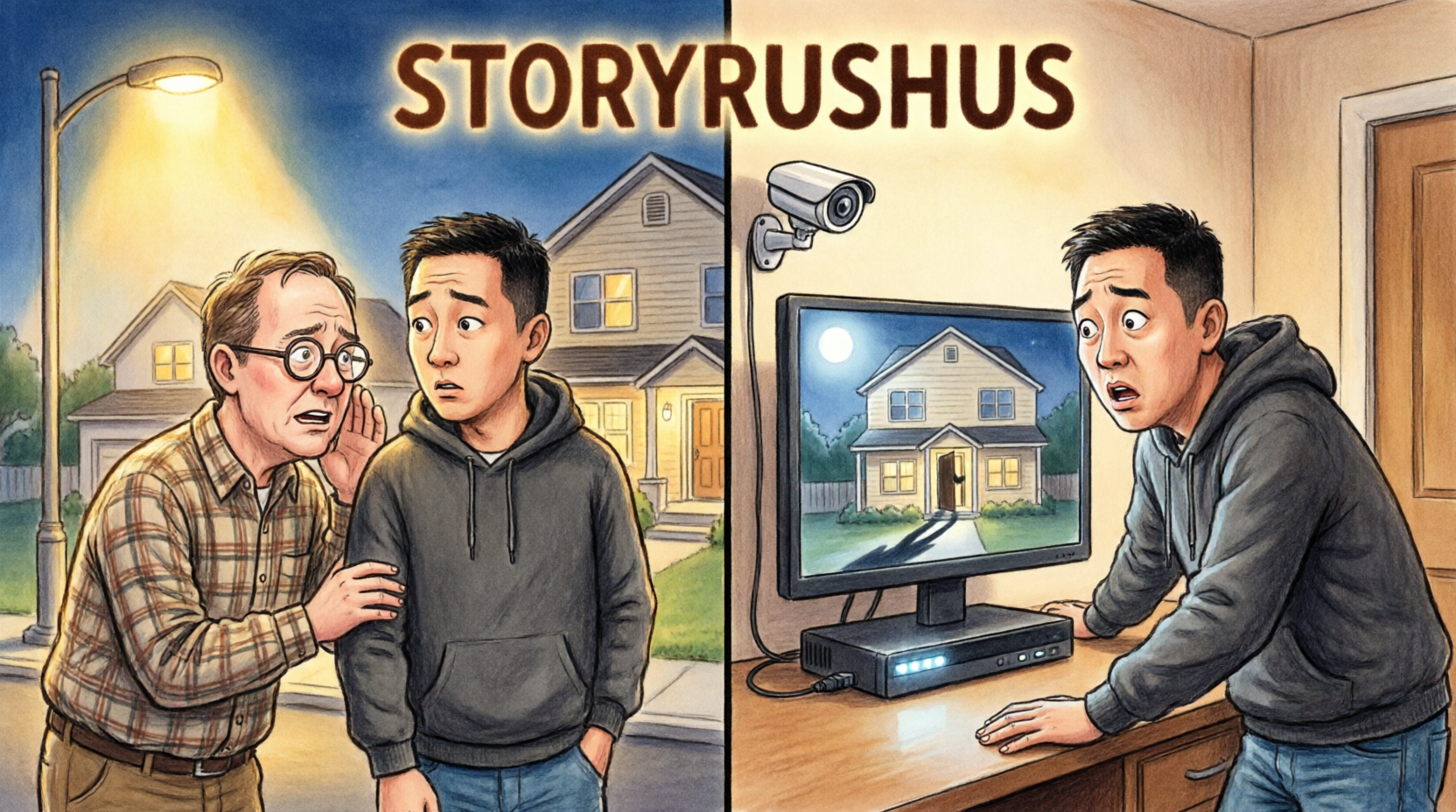
For a second, I honestly thought I had misheard him. The morning was too ordinary for a sentence like that. A school bus groaned around the corner. Somewhere, a dog barked behind a cedar fence. My coffee steamed in the chilly air.
“What do you mean, someone comes to my house?”
“A man,” Mr. Thompson said. “Usually around ten at night. Sometimes a few minutes before, sometimes after. Same dark car. Same man. He leaves before dawn.”
I stared at him.
“You’re sure?”
“I didn’t want to be sure.” His jaw tightened. “But yes. I’m sure.”
My hand tightened around the trash bag.
“And Amanda?”
He looked away for half a second. That was enough.
“She opens the door for him,” he said quietly. “Most nights, she’s waiting before he even pulls into the driveway.”
The words did not hit me all at once. They entered slowly, like cold water seeping under a locked door.
I had been married to Amanda for eleven years. We had Sunday routines, shared grocery lists, Christmas ornaments from every trip we had taken, and a mortgage with both our names printed neatly at the top. We had a house with a porch swing and a two-car garage. We had framed photos in the hallway from vacations where we looked sunburned and happy. We had a life that looked, from the outside, solid enough to survive almost anything.
I stood there on the sidewalk in slippers, holding a trash bag, while my neighbor told me that my life had a second door I had never seen.
“Did you see his face?” I asked.
Mr. Thompson shook his head. “Not clearly. Hood up most nights. But I saw enough to know he wasn’t a delivery driver or a cousin passing through.”
I nodded, though I did not feel my body moving.
He touched my arm gently.
“I’m sorry, Evan. I wouldn’t have said anything if I wasn’t certain.”
“I know,” I said.
My voice sounded calm, but it belonged to someone else.
I did not ask more. I did not demand details. I did not call Amanda from the driveway. I did not storm through the front door with accusations in my mouth. I simply walked back inside, shut the door quietly behind me, and stood in the hallway.
The house was silent except for the faint hum of the refrigerator.
On the entry table sat Amanda’s sunglasses, her keys, and a folded receipt from New Seasons Market. Her beige coat hung on the hook by the door. Her perfume lingered faintly in the air, that vanilla and amber scent she wore whenever she said she wanted to feel “put together.”
Everything looked normal.
That was the first thing that frightened me.
Nothing looked broken.
By noon, I had called a licensed home security installer I knew through work. I did not tell him everything. I told him I wanted cameras after a neighbor had noticed someone near the property when I traveled. That part was true enough.
By 4:00 p.m., he had installed small cameras in the places where a person had no expectation of privacy: the front entry, the living room, the kitchen, the hallway facing the stairs, the driveway, and the back patio. No bedrooms. No bathrooms. Nothing illegal. Nothing reckless. I wanted the truth, but I wanted it clean.
Amanda came home while the installer was finishing the driveway angle.
“What’s all this?” she asked, dropping her purse on the kitchen island.
I kept my face easy.
“Mr. Thompson saw somebody near the side gate last week. Probably nothing, but I travel too much to ignore it.”
For the smallest moment, her eyes sharpened.
Then she smiled.
“That’s actually smart,” she said. “You always worry after the fact.”
She walked past me and kissed my cheek.
I smelled vanilla.
That Friday, I booked what Amanda believed was a weekend business trip to Seattle. It was not hard. I traveled often for work as a regional operations consultant, and our shared calendar was full of client names, airports, hotel confirmations, and color-coded blocks she never cared about until now.
I packed a suitcase in the bedroom while she leaned in the doorway, watching me fold shirts.
“How long this time?” she asked.
“Just through Sunday afternoon.”
“That’s not bad.”
“No,” I said. “Not bad.”
She came over and straightened the collar of a shirt I had already folded.
“You’ve been quiet this week.”
“Busy,” I said.
She studied my face, perhaps searching for a crack, perhaps searching for guilt, though I had nothing to be guilty about.
Then she smiled the way she smiled for photographs.
“Well, don’t work too hard,” she said.
I kissed her goodbye at 5:30 p.m.
She stood on the porch as I pulled out of the driveway, one arm folded across her waist, the other lifted in a small wave. She looked like a wife watching her husband leave for an ordinary work trip. She looked like a woman with nothing to hide.
That was when everything truly began.
I checked into a cheap motel two towns over, one of those highway places with a flickering sign, thin towels, and a vending machine that hummed louder than the ice maker. I did not unpack. I put my suitcase on the chair, opened my laptop on the small desk by the window, logged into the camera system, and stared at my own house from six different angles.
Entryway.
Living room.
Kitchen.
Driveway.
Back patio.
Hallway.
Each room looked too clear, too quiet, too familiar.
At 9:42 p.m., Amanda came downstairs.
She was wearing the green dress she never wore for me anymore.
I knew that dress. I had bought it for her two years earlier before our anniversary dinner downtown. She had worn it once, then said it felt “too dressy” for ordinary nights. Now she moved through the kitchen in it barefoot, pouring wine into a glass, lighting two candles near the sink, and turning on the small speaker by the window.
Jazz filled the kitchen, though I could only see her lips moving as she hummed along.
At 9:55, she poured a second glass.
My stomach tightened.
At 9:59, headlights moved across the front window.
At exactly 10:01 p.m., the front door opened.
He did not knock.
He walked in like he belonged there.
Amanda met him at the door before he had even taken two steps inside. She put both hands on his chest and leaned into him, familiar and relaxed. He dropped his keys into the little ceramic bowl beside mine.
That small gesture almost hurt more than the hug.
He knew where the keys went.
Then he turned his face toward the living room camera.
It was Jason.
Jason Miller.
My coworker. My friend. My best man.
The man who had stood behind me at the courthouse when Amanda and I signed our marriage license because our original wedding venue had flooded three days before the ceremony. The man who had cried into a beer on my back deck after his second engagement collapsed. The man I had helped through three job interviews, one minor surgery, and more late-night conversations than I cared to count.
Jason, who used to slap my shoulder and say, “You’ve got the life, man. Wife, house, steady job. Some guys get all the luck.”
Jason, who had once joked, “If you ever disappear, I’m moving in.”
Now he was in my living room, laughing with my wife.
I did not cry.
I did not shout.
I did not throw the laptop across the motel room.
I just watched.
Amanda handed him the second glass of wine. He took off his jacket and hung it over the back of my chair. They sat on my couch, too close, speaking in the easy rhythm of people who had done this many times before.
At one point, Amanda touched his cheek.
At another, Jason leaned back and put his arm along the couch behind her shoulders.
I watched for twenty-three minutes.
Then I closed the laptop.
The motel room felt airless. Outside, tires hissed along wet pavement. A couple argued softly in the room next door. Somewhere down the hall, an ice machine clattered.
I sat in the dark until my breathing slowed.
Then I opened the laptop again and began writing an email with the subject line saved but not sent.
The next morning, I showed up at the office like it was any normal Saturday.
Not everyone worked weekends, but our quarterly audit had half the operations team coming in and out, and Jason had told me two days earlier he would be there to “clean up client files.” That phrase had felt harmless then. Now every harmless thing had a shadow.
I walked in with coffee in hand and a casual smile.
“Morning,” Karen from accounting called.
“Morning,” I said.
Jason was not there yet.
I sat at my desk and opened a report I did not read. My chest felt like steel. No cracks, no heat, no drama. Just calculation.
At 9:12 a.m., Jason strolled in wearing a hoodie, sunglasses, and the careless grin of a man who had slept well in someone else’s life.
I greeted him first.
“Rough night?”
He laughed.
“Man, you have no idea.”
I smiled.
“Actually, I do.”
He stopped for half a second.
It was barely anything. A pause. A flicker. The smallest tightening around the eyes.
Then he brushed past me and pretended he had not heard.
Good.
I did not want him panicking yet.
That afternoon, I reviewed everything I could legally review.
Jason and I worked under the same corporate system. We both had access to shared travel calendars for scheduling client coverage. He had no legitimate reason to open my personal travel blocks, yet the access logs showed his employee ID had viewed them repeatedly over the last eight months. Always before I left town. Always within days of Amanda suddenly deciding she had “plans with friends.”
I printed the logs.
I saved screenshots.
I downloaded the footage from the entry and living room.
I did not send anything to the whole company. I did not embarrass myself by turning betrayal into a public spectacle. I sent one careful message to Human Resources and Legal.
I wrote that an employee appeared to have used internal scheduling access for personal purposes and that I had supporting documentation. I attached the access logs, the time-coded entry footage showing Jason entering my house during scheduled business trips, and a brief summary of dates.
No threats.
No insults.
No dramatic language.
Just precision.
By 3:00 p.m. Monday, Jason was called upstairs.
By 4:30, he was packing his desk.
I watched from my office window as he carried a cardboard box to the elevator, face pale, mouth tight, sweat darkening the collar of his shirt. He looked confused, angry, and frightened all at once.
He did not look at me.
That made it better.
When I got home that evening, Amanda was waiting in the kitchen.
Her eyes were puffy, but her makeup was perfect. She had changed into jeans and one of my old Portland Timbers hoodies, a trick she used whenever she wanted to seem small and familiar. The house smelled like garlic bread and tomato sauce, as if dinner could pull us back into a life where Monday nights were ordinary.
“I know you saw,” she said quietly.
I took off my coat and hung it by the door.
“Yes.”
She swallowed.
“I messed up.”
I said nothing.
She stepped closer.
“Can we fix this?”
I looked past her at the couch they had sat on, the kitchen where she had poured him wine, the hallway where our wedding photo still hung above the small table with the mail basket.
“That depends,” I said, “on whether you’re ready to tell the truth.”
Her face paled.
That was answer enough.
That night, I slept in the guest room.
Not because I had to. Because distance was the only thing that let me think clearly. The guest room faced the street, and through the blinds I could see the porch lights of the homes across from ours. Normal homes. Quiet homes. Families finishing dishes, turning off TVs, letting dogs out before bed.
Amanda knocked three times before midnight.
“Evan, please.”
I did not answer.
At 1:15, she knocked again.
“I made a mistake. I know that. But we can start over.”
I sat on the edge of the bed and looked at my hands.
People like Amanda always wanted to start over at the moment they were caught. Not at the first lie. Not at the second. Not on the night they opened the door for another person and smiled like the world owed them secrecy.
They wanted forgiveness only after the hiding failed.
Trust does not die in one explosion.
It dies quietly.
It dies in a wine glass poured before a man arrives.
It dies in a second set of keys dropped into your bowl.
It dies in the smile your wife gives you while counting the hours until you leave town.
The next morning, I called my attorney.
Her name was Denise Hart, and she had handled the purchase agreement on our house years earlier. She was sharp, calm, and direct in the way good attorneys are when they know emotion is expensive.
“Do not empty accounts,” she told me. “Do not destroy property. Do not threaten anyone. Document everything. Protect your credit. Separate what you can legally separate.”
“I already moved part of my paycheck to a new account.”
“Good. Keep records.”
“She thinks this is a fight.”
Denise paused.
“Then let her think that while we make it a file.”
By noon, Amanda noticed the first changes.
She stood in the doorway of my home office, holding her phone.
“Did you block the cards?”
“I removed my name from the discretionary card,” I said. “The one used for salons, subscriptions, and personal expenses. The household account is still active for household bills.”
Her eyes widened.
“What is this?”
“This,” I said calmly, “is what it feels like when someone you trusted leaves you in the dark. The difference is, I’m not sleeping in your bed while I do it.”
She stared at me as though I had become a stranger.
Maybe I had.
Or maybe, for the first time in years, I had stopped being convenient.
That evening, I reviewed more footage. Not to torture myself, but to study the truth without the fog of shock. There were patterns I had missed before. Amanda checking the front window. Jason entering through the side gate twice. The way he seemed to know which lights to turn off. The way Amanda always looked more alive after I left than she ever did when I came home.
Then the doorbell rang.
I looked at the camera feed.
Jason stood on my porch.
He wore a navy jacket and kept glancing toward the street. He had no box now, no office grin, no careless confidence. But he still had the arrogance to come to my house.
I walked to the door and opened it myself.
Jason froze.
“Hey, man,” he said. “I didn’t think you were back.”
I looked him up and down.
“Clearly.”
His gaze moved past my shoulder.
“Is Amanda home?”
I stepped aside.
“Come in.”
He hesitated.
Then pride, stupidity, or fear pushed him forward. He stepped into my entryway like a man entering a room he had already claimed.
Amanda appeared at the top of the stairs barefoot, one hand gripping the railing.
Her eyes widened when she saw both of us.
“You didn’t tell me he was back,” Jason said to her.
“I didn’t know,” she whispered.
I closed the door.
The sound was soft, but both of them flinched.
I walked to the media console and picked up the remote.
The television lit up with security footage from Friday night. Black and white. Time-coded. Clear.
Jason entering my house.
Amanda putting her hands on him.
Jason hanging his jacket over my chair.
The two of them sitting on my couch, drinking from our glasses beneath the framed photo from our anniversary trip to Cannon Beach.
Silence filled the room.
Jason turned pale.
Amanda sat slowly on the stairs.
“Please don’t,” she whispered.
I kept my eyes on Jason.
“You walked into my home,” I said. “You used company access to track when I would be gone. You sat in my living room, drank my whiskey, and smiled at my wife under my roof.”
Jason opened his mouth.
“Listen, I didn’t mean—”
“You meant every second of it.”
He looked at Amanda, then back at me.
“Man, this doesn’t need to get messy.”
I smiled, but there was no warmth in it.
“It already was messy. I’m cleaning it up.”
His face tightened.
“You sent something to HR.”
“I sent records of what you did with company systems.”
“That’s my career.”
“No,” I said. “That was your decision.”
For the first time since I had known him, Jason had no joke ready. No hand on my shoulder. No brotherly tone. Nothing.
He took one step back.
I opened the door.
He looked like he wanted to say something final, something that might make him less small.
He found nothing.
He walked out.
I closed the door behind him.
Amanda stayed seated on the stairs, shaking.
“I told you,” I said, turning toward her. “I watched everything. Now it’s your turn to listen.”
She did not interrupt.
Not once.
I opened my laptop on the coffee table and showed her the dates. The travel calendar access. The messages I had recovered from the cloud account she forgot was still linked to our shared desktop. I did not show her anything cruelly. I did not raise my voice. I simply laid out the truth in order.
Jason was not the first lie.
That was what changed the air in the room.
There were messages from someone named Mark from her yoga studio. Nothing explicit enough to matter legally, but enough to know. There were deleted dinner reservations on nights I was in Boise, Spokane, San Francisco. There were hotel bar receipts she had told me were “client lunches with Linda.” There were little betrayals folded inside bigger ones.
Amanda covered her mouth.
“I never thought you’d find all that.”
I looked at her.
“That is not the same as being sorry.”
Tears slid down her face.
“I was lonely.”
I nodded once.
“So was I.”
She looked up quickly, as if my answer surprised her.
I continued.
“I was lonely in airports. Lonely in hotel rooms. Lonely sitting across from you at dinner while you answered texts with your phone tilted away from me. Lonely in my own house beside a woman who had already left but still wanted the mortgage paid on time.”
She lowered her eyes.
“I don’t know what happened to us.”
“I do,” I said. “You started living two lives and expected me to finance both.”
She flinched.
I went to the kitchen drawer and pulled out a thin envelope.
Her eyes followed it.
Inside were divorce papers. Not final, not magic, not cinematic. Just paper. The ordinary kind that ends extraordinary lies.
“I’m not here for revenge,” I said. “I’m here for closure.”
She stared at the envelope as though it might burn her fingers.
“But where will I go?”
That question told me more than any apology could have.
Not “How did I hurt you?”
Not “What can I do to repair this?”
Not even “Do you still love me?”
Where will I go?
I tilted my head.
“Start with the people you kept inviting into our home.”
Her lips trembled.
“That’s cruel.”
“No,” I said. “Cruel was making me kiss you goodbye while you waited for him to arrive.”
She reached for me.
I stepped back.
“Amanda, Devon is outside.”
Her face changed.
“Who is Devon?”
“A private security consultant. He’ll stay while you pack a few personal things. Clothing. Medication. Toiletries. Anything clearly yours. Everything else goes through attorneys.”
She stared at me like I had slapped her, though I had not touched her.
“You planned this.”
“I protected myself.”
“You’re kicking me out of my own home.”
“Our home,” I corrected. “And temporarily, you are leaving because I will not share space with you while we separate. Denise will contact your attorney about access and property division.”
“I don’t have an attorney.”
“You should get one.”
For a long moment, she stood perfectly still.
Then she looked around the house.
The photos on the wall.
The dining table we had refinished together one summer in the garage.
The couch she had not sat on with me in months.
The blue ceramic bowl by the entry where Jason had dropped his keys.
Her face collapsed, but by then I understood something painful and necessary.
She was not grieving the marriage.
She was grieving the loss of control.
Devon knocked once and entered when I opened the door. He was calm, professional, and polite. He did not look at Amanda with judgment. He simply stood near the hallway while she went upstairs and packed a duffel bag.
I stayed in the kitchen.
I listened to drawers open and close. I heard her crying once, then the quick silence of someone swallowing it down. I heard the closet door slide, hangers scrape, bottles drop into a toiletry bag.
Twenty minutes later, she came downstairs.
She looked smaller, but not innocent.
At the door, she turned back.
“Did you ever love me?” she asked.
The question landed harder than I expected.
I thought of our first apartment with the radiator that clanged all winter. I thought of Amanda barefoot on the kitchen tile, dancing to old Motown while pasta boiled over. I thought of the night her father died and she folded herself against me in the hospital parking lot, shaking so hard I had to hold her upright. I thought of the woman I had married and the woman standing in front of me now.
“Yes,” I said. “That’s why this took so long to hurt.”
She closed her eyes.
Then she walked out.
I locked the door behind her.
For several minutes, I did not move.
The house settled around me with small familiar sounds: the refrigerator hum, the heater clicking on, rain tapping softly against the front windows. On the coffee table, the remote still sat beside my laptop. On the TV screen, the frozen camera footage showed an empty living room.
My living room.
My house.
My quiet.
I turned off the cameras.
Not all of them. The outside security stayed on, because I was no longer foolish enough to confuse peace with safety. But I turned off the interior feed. I did not want to live as a guard inside my own life.
Then I took a deep breath.
Not broken.
Not bitter.
Just awake.
The days after Amanda left were not dramatic in the way people imagine.
There were no screaming scenes on the lawn. No shattered dishes. No revenge posts online. No late-night speeches that changed anyone’s heart.
There were emails.
There were legal forms.
There were bank appointments and password resets and the strange, humiliating work of separating a life that had been braided together for more than a decade.
Denise handled most of the communication. Amanda did get an attorney, a sharp-looking man from downtown who sent letters with phrases like emotional distress and improper exclusion and marital standard of living. Denise answered each one with dates, documents, and a tone so dry it could have started a brush fire.
Jason tried calling me twice.
I did not answer.
Then he sent one text.
You didn’t have to ruin me.
I stared at it for a long time before deleting it.
People like Jason always think consequences are something done to them, not something they built with their own hands.
At work, the office shifted around me. Nobody said much directly. Karen from accounting left a coffee on my desk one morning and said, “Black, no sugar, right?”
I nodded.
She touched the edge of the cup.
“For what it’s worth,” she said, “he’d been acting strange for months.”
That was how betrayal worked. After the truth came out, everyone had seen something. Everyone had noticed a detail. Everyone had a small piece of the picture, but no one wanted to be the person who said it first.
Except Mr. Thompson.
On Thursday evening, I walked next door with a six-pack of root beer. He did not drink anymore, but he loved old-fashioned root beer from the grocery store near the post office.
He opened the door and looked at the bottles, then at me.
“You doing all right?”
“No,” I said honestly. “But better than I was.”
He nodded and stepped aside.
We sat on his porch while the sky darkened over the neighborhood. His small American flag moved gently in the damp wind. Across the street, a teenager dragged a basketball hoop back from the curb. Somewhere nearby, someone was grilling even though it was too cold for it.
“I hated telling you,” Mr. Thompson said.
“I know.”
“Almost didn’t.”
“I’m glad you did.”
He looked out toward my house.
“Truth is a hard favor.”
I laughed once, quietly.
“That sounds like something a retired Navy man would say.”
“It’s still true.”
We sat in silence for a while.
Then he said, “When my wife passed, I thought quiet would kill me. Turns out quiet only hurts until you stop expecting it to answer back.”
I looked at him.
He did not look at me when he said it. He kept his eyes on the street, giving me the dignity of not being watched while I understood.
That night, I went home and took down one photograph.
Not all of them. Just one.
It was from our wedding day. Amanda and I stood outside the courthouse under a gray sky, laughing because the wind had nearly taken her veil into traffic. Jason stood behind me, one hand on my shoulder, grinning like a brother.
I removed it from the frame, folded it once, and put it in a drawer.
The empty frame stayed on the table for three days before I replaced the photo with a picture of the Oregon coast I had taken years earlier. No people. Just waves hitting black rock under a wide, clean sky.
It felt honest.
Amanda came back once with her attorney’s permission to collect more belongings. Devon was there. So was Denise’s assistant, because I had learned that witnesses are not rude when trust is gone. They are necessary.
Amanda moved through the house with a cardboard box, taking sweaters, books, framed prints, a jewelry case, and a ceramic mug from Cannon Beach.
When she reached the kitchen, she paused by the island.
“I keep thinking about that morning,” she said.
I did not answer.
“The morning you left for Seattle.”
I looked at her then.
“I didn’t go to Seattle.”
“I know that now.”
Her fingers rested on the edge of the counter.
“You kissed me goodbye.”
“Yes.”
“How could you do that if you knew?”
The question was so strange that I almost smiled.
“I wanted to understand who you were when you thought I was blind.”
She looked down.
“And now?”
“Now I do.”
She nodded slowly, as if some final door had closed inside her.
Before she left, she said, “Jason won’t speak to me.”
I let the silence answer first.
Then I said, “That must be difficult.”
Her eyes flashed with something like anger.
“You don’t care.”
“I cared for eleven years,” I said. “I’m resting.”
She left without another word.
The divorce did not happen quickly, but it moved. That was enough.
Amanda fought at first, then negotiated. Jason filed an appeal through HR, then withdrew it. I heard he moved to Vancouver, Washington, and took a sales job with a smaller company where nobody knew why he had left the old one. Maybe he told them a story where he was misunderstood. Maybe he told them nothing.
It no longer mattered.
What mattered were the mornings.
At first, they were brutal.
I would wake before my alarm, reaching unconsciously toward the empty side of the bed. Then I would remember. The remembering always arrived like weather, heavy and gray, settling over my chest before I could stop it.
I learned to get up anyway.
I made coffee.
I opened the blinds.
I took walks before work through the neighborhood while sprinklers clicked over small lawns and school buses sighed at corners. I learned the names of dogs I had passed for years without noticing. I learned that Mrs. Alvarez on the corner grew tomatoes in raised beds behind her garage. I learned that the bakery on Main Street sold cinnamon rolls on Saturdays that were too sweet and exactly right.
Little by little, my life stopped feeling like the wreckage of a marriage and started feeling like a house after a storm: damaged in places, but still standing.
One Friday evening, almost two months after Mr. Thompson crossed the sidewalk, I stayed late at work finishing a report. The office had emptied, and the city outside the windows glowed with that wet Portland shine, traffic lights smeared red and green across the pavement.
My phone buzzed.
A number I did not recognize.
I almost ignored it, but something made me answer.
“Evan Porter?”
“Yes.”
“This is Marcy Bell. I’m calling from the front desk at the Hawthorne Suites. I apologize, but your number is listed as the emergency contact for Amanda Porter.”
For a second, the old instinct rose in me.
Fear. Responsibility. Husband.
“What happened?”
“She’s okay,” Marcy said quickly. “She’s not injured. But she’s very upset, and she asked us to call you.”
I closed my eyes.
“What does she need?”
There was a pause.
“I think she wants you to come here.”
I looked at the dark reflection of myself in the office window.
“No,” I said.
The word surprised even me. Not because it was cruel, but because it was clean.
“I’m sorry?” Marcy said.
“I’m no longer the right person to call. Please give her the number for a cab company, or contact a friend or family member.”
“She said you’re her husband.”
“We’re separated and represented by attorneys.”
Another pause.
“I understand.”
“Thank you.”
I hung up.
My hand shook afterward, but not from regret.
From the effort of breaking an old pattern.
For eleven years, Amanda’s distress had been a command. If she was upset, I fixed it. If she was afraid, I softened. If she cried, I forgot what she had done five minutes earlier. That night, sitting alone under fluorescent office lights, I understood that love without boundaries had made me easy to use.
I packed my bag and went home.
The house was dark when I arrived. For the first time in weeks, I did not turn on every light. I turned on the small lamp in the living room, the one beside the chair I had started using instead of the couch.
I made a sandwich.
I watched the Mariners lose a game they should have won.
I slept through the night.
In late spring, the divorce settlement was finalized.
The house stayed with me. Amanda received her share through structured payments after the valuation, handled through attorneys and the bank. No shouting. No courtroom spectacle. No dramatic collapse. Just signatures, stamped pages, and the quiet end of a story that had once promised forever.
On the day everything was final, I drove to the courthouse alone.
Denise met me outside afterward.
“You okay?” she asked.
I looked at the courthouse steps, the people moving in and out with folders under their arms, each carrying some private disaster or victory.
“I don’t know yet.”
“That’s a fair answer.”
She handed me a copy of the final documents.
“You handled this better than most.”
“I don’t feel like I handled it well.”
“You handled it legally,” she said. “Sometimes that’s the miracle.”
I laughed softly.
Then I drove home without turning on the radio.
When I pulled into the driveway, Mr. Thompson was outside watering the strip of grass by his mailbox.
He lifted one hand.
I lifted mine back.
The house looked different that afternoon, though almost nothing had changed. Same porch. Same windows. Same maple tree near the curb. Same driveway where Jason’s headlights had once swept across the camera.
But the air around it felt lighter.
Inside, I placed the final divorce papers in a folder and put them in the filing cabinet. Not on the kitchen table. Not somewhere I would see them every day. A file. A record. A finished thing.
Then I walked through each room slowly.
The entryway.
The living room.
The kitchen.
The hallway.
For months, those rooms had existed in my mind as evidence. Angles. Footage. Proof. Betrayal captured in black and white.
Now they were rooms again.
So I reclaimed them.
I moved the couch to the other wall. I bought a new rug, nothing expensive, just a blue-and-gray one from Costco that made the living room feel less like a stage. I replaced the vanilla candles with cedar ones. I cleaned out the cabinet where Amanda used to keep wine glasses and filled it with coffee mugs, root beer, and the good tea Mr. Thompson liked.
On Saturday, I painted the hallway.
Soft white.
Simple.
Clean.
Halfway through, my phone buzzed with a message from Amanda.
I stared at her name for a moment.
Then I opened it.
I found an old photo of us today. I’m sorry for everything. I don’t expect forgiveness. I just wanted you to know I finally understand what I destroyed.
I read it twice.
There was a time when those words would have pulled me back into the past like a rope around my chest. I would have wondered if understanding meant change, if apology meant repair, if sorrow meant I owed her another chance.
But peace teaches a man the difference between a door and a window.
I could see the past.
I did not have to walk back into it.
I typed one sentence.
I hope you build a better life from here.
Then I blocked the number.
Not out of hatred.
Out of mercy for the version of me who had already survived enough.
That evening, I invited Mr. Thompson over for dinner.
I made burgers on the grill even though the sky threatened rain. He brought potato salad from the deli and acted like he had made it himself until the grocery sticker on the lid betrayed him.
We ate at the kitchen island.
The same island where Amanda had once asked if we could fix what she had broken.
The same island where I had signed refinancing papers, birthday cards, grocery lists, and eventually divorce documents.
Mr. Thompson took one bite of his burger and nodded with grave approval.
“Not bad.”
“That’s high praise from you.”
“Don’t let it go to your head.”
Rain began tapping against the windows.
For the first time in a long time, the sound did not make the house feel lonely. It made it feel sealed. Safe. Mine.
After dinner, Mr. Thompson helped me carry plates to the sink. Then he paused in the living room, looking at the new rug, the shifted furniture, the coastal photograph in the frame where my wedding picture used to be.
“Looks good,” he said.
“Feels strange.”
“Good strange or bad strange?”
I thought about it.
“New strange.”
He nodded.
“That’s the best kind you get after something ugly.”
When he left, I stood on the porch for a while and watched him cross back to his house. The streetlights glowed on wet pavement. A minivan rolled slowly past. Somewhere down the block, a family laughed loudly as they unloaded groceries from the back of an SUV.
Ordinary life.
For months, I had thought ordinary life had been stolen from me. But that was not true. Amanda had stolen trust. Jason had stolen friendship. Together, they had stolen the illusion that my home was safe.
But ordinary life had been waiting underneath all of it.
Coffee in the morning.
Clean sheets.
A quiet kitchen.
Neighbors who told hard truths.
A house that no longer needed to pretend.
I went back inside and locked the door.
The ceramic bowl still sat on the entry table. For a while, I had considered throwing it away because I could not look at it without seeing Jason’s keys dropping into it like he had earned a place there.
But that night, I picked it up, washed it carefully, dried it with a clean towel, and placed it back on the table.
Then I dropped my own keys into it.
The sound was small.
Clear.
Final.
I turned off the porch light and walked into the living room.
The house was quiet.
Not empty.
Quiet.
And for the first time in years, I did not feel like I was losing anything.
I felt like I had finally come home.