Olivia felt the faintest shift in the air the moment those words left the speaker.
“Are you here for the project follow-up meeting?”
For a split second, the elegant lobby, the polished marble floors, the artificial waterfall—all of it seemed to fade into the background.
“Yes,” Olivia replied calmly, her voice steady and clear. “I just arrived. But there appears to be a small issue with my check-in.”
There was a brief pause on the line.
“I see,” the voice said, now sharper, more attentive. “Please stay where you are. I’ll be there in less than two minutes.”
Olivia smiled slightly.
“Thank you, Daniel.”
She ended the call.
Ramona’s eyes narrowed just enough to betray the tension she was trying so hard to hide.
“Who exactly did you just call?” she asked, her tone still sweet but now carrying an edge.
Olivia slipped her phone back into her bag.
“Management,” she said simply.
Tomás finally turned his attention away from the ceiling.
“What’s going on?” he asked, frowning slightly.
“Nothing,” Olivia replied gently. “Just fixing a misunderstanding.”
But inside, she could feel her heartbeat steady—not racing, not anxious. Controlled.
Because this moment… this exact moment… she had imagined it before.
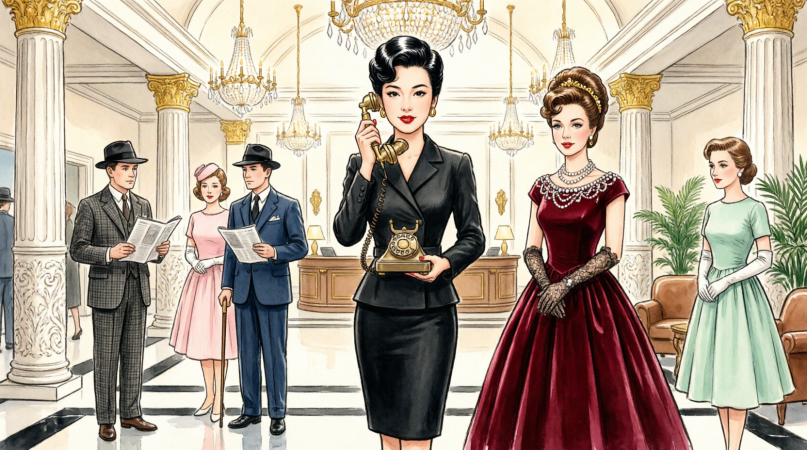
Four months earlier, when Ramona had first announced the trip, Olivia had noticed something strange.
Not just the avoidance. Not just the vague answers.
But the hotel itself.
Coral B Resort.
The name had struck something in her memory.
At first, she couldn’t place it. But that night, after Tomás had fallen asleep, she opened her laptop and searched for it.
And when the homepage loaded… she froze.
Because she recognized it immediately.
Not as a guest.
But as a project.
Three years ago, Olivia had been part of a confidential development initiative—a complete restructuring of Coral B’s operational systems. Not just IT, but guest experience analytics, high-tier client management, and discreet VIP protocols.
She hadn’t told anyone in the family.
Not Tomás.
Not Ramona.
Because every time she had tried to share even a small success in the past, it had been dismissed, minimized, or twisted into something else.
So she stopped sharing.
And quietly… she grew.
Back then, she hadn’t just worked on the project.
She had led the final phase.
And Daniel Herrera—the general manager of Coral B—had personally thanked her for transforming the resort’s internal system into one of the most advanced in the region.
They had stayed in contact.
Not frequently.
But enough.
Enough for him to remember her name.
—
Back in the present, the elevator doors opened with a soft chime.
A tall man in a tailored suit stepped out, scanning the lobby with purpose.
His eyes landed on Olivia immediately.
And his expression changed.
Warmth. Recognition.
“Olivia!”
He walked toward her without hesitation.
“Daniel,” she said, smiling politely.
He extended his hand, but instead of a formal shake, his tone carried genuine respect.
“It’s been too long,” he said. “You should have told me you were coming.”
Ramona stiffened beside them.
Tomás blinked, clearly confused.
“This is…” he began, looking between them.
“Daniel Herrera,” Daniel introduced himself, turning briefly to the others. “General Manager of Coral B.”
Ramona’s posture straightened instantly.
“Oh! What a pleasure,” she said, her voice suddenly brighter, more refined. “We’re here celebrating my birthday. I arranged everything personally.”
Daniel nodded politely—but his attention returned to Olivia almost immediately.
“You mentioned a problem with your check-in?” he asked.
Olivia tilted her head slightly.
“I was informed that there wasn’t a reservation suitable for me,” she said calmly.
Daniel’s expression shifted.
Not dramatically.
But enough.
“I see,” he said quietly.
He turned to the front desk staff.
“Could you please pull up Ms. Olivia Mendoza’s profile?”
The receptionist typed quickly.
A moment later, her eyes widened slightly.
“Sir… she’s listed under—”
“I know,” Daniel said gently.
He looked back at Olivia.
“You’re not just a guest here,” he said. “You’re registered as a priority partner.”
Silence fell over the group.
Ramona’s smile froze completely.
Tomás stared at Olivia as if seeing her for the first time.
“A… partner?” he repeated.
Olivia said nothing.
She simply stood there, composed, letting the moment unfold.
Daniel continued, his tone now more formal—but still warm.
“When Ms. Mendoza worked with us, she implemented systems that significantly elevated our guest experience standards. We extended a lifetime VIP status to her as part of that collaboration.”
He paused.
“And that includes access to our executive suites.”
The receptionist swallowed softly.
“Sir… the executive level is fully booked.”
Daniel didn’t hesitate.
“Then we’ll make room,” he said.
He turned back to Olivia.
“I sincerely apologize for any inconvenience,” he added. “This should have been handled the moment you walked in.”
Olivia nodded slightly.
“Thank you, Daniel,” she said. “I appreciate it.”
—
Ramona’s voice cut in, tighter now.
“There must be some mistake,” she said, forcing a small laugh. “Olivia has never mentioned anything like this before.”
Daniel looked at her politely.
“There’s no mistake,” he said calmly.
Ramona’s fingers tightened around her purse.
“But I arranged all the rooms,” she insisted. “And there was no mention of—of special status.”
Daniel’s gaze remained steady.
“Respectfully,” he said, “Ms. Mendoza’s status does not depend on third-party reservations.”
That was when the shift became undeniable.
Not loud.
Not dramatic.
But irreversible.
Tomás turned slowly toward Olivia.
“Why didn’t you tell me?” he asked, his voice softer now.
Olivia looked at him.
For a moment, there was no anger in her eyes.
Just honesty.
“Because every time I tried to share something important,” she said quietly, “it was either dismissed… or used against me.”
Tomás lowered his gaze.
He didn’t argue.
Because he knew.
—
Within minutes, a staff member approached with a new set of keys.
“Ms. Mendoza,” she said respectfully. “Your suite is ready.”
Olivia took the keycard.
“Thank you.”
Daniel smiled.
“If you need anything at all, you have my direct line,” he said.
“I know,” she replied.
—
As she turned to leave, she paused.
Not for long.
Just enough to look back at the group.
At Ramona, who now stood perfectly still, her carefully constructed confidence unraveling in quiet pieces.
At Mónica, who finally met Olivia’s eyes with something that looked like relief.
At Roberto, who suddenly found nothing interesting about the luggage anymore.
And at Tomás.
Who looked… different.
Not confused anymore.
Not distracted.
But thoughtful.
“Enjoy the resort,” Olivia said softly.
Then she walked toward the elevator.
—
The suite was everything Ramona had described—and more.
Wide windows overlooking the ocean.
A private terrace.
Silence.
Real silence.
Olivia placed her bag down and stood still for a moment.
Not because she was overwhelmed.
But because she wasn’t.
For the first time in a long time, she didn’t feel the need to prove anything.
Not to Ramona.
Not to anyone.
That evening, there was a knock on the door.
Olivia opened it.
Tomás stood there.
Alone.
“Can I come in?” he asked quietly.
She stepped aside.
He walked in slowly, taking in the space.
“This is…” he began, then stopped.
“Yeah,” Olivia said gently.
He turned to her.
“I didn’t know,” he admitted.
“I know,” she replied.
He hesitated.
Then said, “That’s not an excuse.”
Olivia didn’t respond immediately.
She just listened.
“I should have paid more attention,” he continued. “Not just today. For years.”
There was no defensiveness in his voice.
Only realization.
“I thought keeping the peace meant staying quiet,” he said. “But I see now… it just meant you were the one carrying everything.”
Olivia crossed her arms lightly—not closed off, just thoughtful.
“It wasn’t just about today,” she said.
“I know,” he replied.
They stood there in silence for a moment.
Not uncomfortable.
Just honest.
“What happens now?” he asked.
Olivia looked out toward the ocean.
The sun was setting, casting golden light across the water.
“I don’t know yet,” she said.
Then she turned back to him.
“But I do know one thing.”
Tomás waited.
“I’m not shrinking myself anymore,” she said calmly.
He nodded.
“You shouldn’t,” he said.
—
Over the next few days, something subtle began to change.
Ramona remained polite—but quieter.
More careful.
As if she was finally aware that the ground beneath her control wasn’t as solid as she had believed.
Mónica began speaking more freely with Olivia.
Small conversations at first.
Then longer ones.
Roberto even asked Olivia about her work one afternoon—genuinely.
And Tomás…
Tomás listened.
Really listened.
—
On the last night of the trip, as the family gathered for Ramona’s birthday dinner, Olivia sat at the table—not at the edge, not as an afterthought.
But as part of it.
Not because someone gave her permission.
But because she no longer needed it.
Ramona raised her glass.
“To family,” she said.
Her eyes briefly met Olivia’s.
There was something new there.
Not warmth.
Not yet.
But… respect.
And maybe, just maybe…
a quiet understanding.
Olivia lifted her glass too.
Not out of obligation.
But out of choice.
And as the ocean waves echoed softly in the distance, she realized something she hadn’t fully understood before:
Sometimes, the most powerful thing you can do…
is not to fight louder—
but to stand calmly in your truth,
and let the world adjust to you.
Part 2: The Birthday Dinner
The shift in the atmosphere didn’t happen all at once. It was subtle, like the tide coming in—quiet, persistent, and impossible to stop once it had begun.
That evening, we gathered for Ramona’s birthday dinner at the resort’s flagship restaurant, La Mar. It was a stunning space, open-air with views of the Pacific, lit by hundreds of hanging lanterns that swayed gently in the ocean breeze. Normally, Ramona would have commanded the head of the table, directing the servers, ordering wine, and ensuring everyone knew this was her celebration.
Tonight, however, the head waiter approached the table and bypassed Ramona entirely. He walked straight to me.
“Ms. Mendoza,” he said, placing a menu in front of me that was different from the others. It was bound in leather, not laminated. “Chef Marco has prepared a special tasting menu for our VIP guests. Would you like to select the wine pairing, or shall I recommend the sommelier’s choice?”
The table went silent. Ramona’s fork hovered halfway to her mouth. Tomás looked down at his own laminated menu, then at mine.
“The sommelier’s choice is fine,” I said calmly. “But please ensure my mother-in-law receives the bottle of Cabernet she prefers. The 2015 Napa Valley, if you have it.”
I hadn’t shouted. I hadn’t made a scene. I had simply taken charge of the situation with the same efficiency I used in the boardroom.
Ramona stiffened. “I didn’t order that,” she said, her voice tight.
“I know,” I replied, meeting her eyes. “But it’s your birthday. And I know you like it.”
It was a power move, disguised as generosity. I was showing her that I knew her preferences better than she knew my status. I was showing her that I could provide for her, even after she had tried to exclude me.
She didn’t argue. She simply nodded, a slight dip of her chin, and placed her menu on the table.
Throughout the meal, the dynamic continued to shift. When Tomás reached for his wallet to pay the bill—a gesture he always made to appease his mother—I placed my hand gently on his arm.
“It’s on the room,” I said quietly. “Part of the partnership package.”
Tomás paused. He looked at my hand on his arm, then at my face. He slowly withdrew his hand and leaned back in his chair. He didn’t argue. He didn’t insist. He just let me handle it.
Later, as we walked back to the suites along the illuminated boardwalk, the ocean crashing softly to our left, Tomás finally spoke.
“I feel like I don’t know you,” he said. His voice wasn’t accusatory. It was filled with a kind of weary wonder.
I stopped walking and turned to face him. The moonlight caught the silver in my hair, the same hair Ramona had criticized last year for having “too many grays.”
“You know me, Tomás,” I said. “You just stopped looking.”
He looked down at the sand. “I thought… I thought keeping the peace meant keeping you quiet. I thought if I didn’t engage with her criticisms, they would stop hurting you.”
“Silence doesn’t stop the pain,” I said. “It just isolates the person suffering it. I needed you to stand beside me, not in front of me, and not behind me. Beside me.”
He nodded slowly. “I can do that.”
“Can you?” I asked. “Because this isn’t just about hotel rooms. This is about every Sunday dinner. Every holiday. Every time she comments on my weight, my job, or my choices. Are you ready to stop being the peacekeeper and start being a partner?”
He looked up, and for the first time in five years, I saw resolve in his eyes. “Yes,” he said. “I am.”
We walked the rest of the way in silence, but it wasn’t the heavy silence of resentment. It was the quiet understanding of two people who had finally agreed on the same truth.
Part 3: The Return to Reality
The vacation ended, as all things do. We returned to the city, to the routine, to the familiar pressures of work and family obligations. I expected Ramona to revert to form once we were back on her territory. I expected the comments to resume, the subtle digs to return once the buffer of the hotel staff was gone.
For the first month, she was cautious. She called less frequently. She asked about my work with a tentative curiosity that felt foreign coming from her. But old habits are deeply rooted, and by the second month, the cracks began to show.
It happened at a Sunday brunch at Ramona’s house. The whole family was there—Mónica, Roberto, their spouses, and the cousins. Ramona was holding court in the kitchen, directing the catering staff she had hired for the occasion.
I was sitting in the living room, helping Mónica arrange flowers. She had been visiting me more often since the trip, usually to ask for advice about her own career. She was a graphic designer who had let her skills stagnate while raising her children, and she was finally ready to pick up her portfolio again.
“Olivia,” Ramona called from the kitchen. Her voice had regained some of its old sharpness. “Can you come here for a moment? The caterers are asking about the seating chart, and I need you to move the cousins to the back table. They’re too noisy.”
I wiped my hands on a towel and walked into the kitchen. The caterers were waiting, clipboards in hand.
“Actually,” I said, addressing the head caterer directly. “The seating chart works fine as it is. The cousins can stay where they are. Please ensure the children’s menu is delivered to table four first, so the parents can eat in peace.”
Ramona stepped forward, her eyes flashing. “I said move them, Olivia.”
I turned to her. I didn’t raise my voice. I didn’t smile. I just looked at her with the same calm authority I had used with the hotel manager.
“Ramona,” I said. “This is your party. But I am paying for the catering. So the seating arrangements are mine to make.”
The room went quiet. Mónica stopped arranging flowers. Roberto looked up from his phone. Tomás, who was pouring coffee nearby, froze.
Ramona’s mouth opened, then closed. She looked around the room, searching for an ally, but found only expectant silence. She realized, finally, that the dynamic had fundamentally changed. I wasn’t the daughter-in-law who could be managed anymore. I was the benefactor.
“Fine,” she said stiffly. “Do whatever you want.”
She turned back to the stove, her shoulders rigid. But she didn’t argue again.
Later, as we were leaving, Tomás caught up to me in the driveway.
“That was… direct,” he said.
“It was necessary,” I replied. “If I let her start today, she’ll never stop. I need you to know that I won’t be paying for family events if I’m treated like staff.”
Tomás nodded. “I understand. And… I’m proud of you.”
Those words hung in the air between us. I’m proud of you. Not I’m sorry. Not Please don’t make a scene. He was acknowledging my strength, not apologizing for his mother’s weakness.
“Thank you,” I said.
Part 4: The Professional Peak
Three months after the vacation, I received the call I had been working toward for a decade. My firm was offering me a partnership track. It meant more responsibility, more travel, and significantly more equity in the company. It was the culmination of years of late nights, missed dinners, and quiet perseverance.
I came home that evening with the contract in my bag. Tomás was in the living room, grading papers. He was a professor, a job he loved but which didn’t pay nearly as much as mine. In the past, this disparity had been a source of tension, often weaponized by Ramona to suggest I was “neglecting my home duties” because I worked too much.
I sat down on the couch beside him. “I have news,” I said.
He put his pen down. “Good news?”
“I made partner,” I said.
He smiled, a genuine, bright smile that reached his eyes. “Olivia, that’s incredible. I knew you would.”
“It means I’ll be traveling more,” I said. “Maybe once a month. Sometimes more.”
He didn’t hesitate. “Then we’ll make it work. I’ll adjust my schedule. We’ll hire help for the house if we need it. But you’re not slowing down for this.”
I felt a lump in my throat. This was the support I had been waiting for. Not the begrudging acceptance of my income, but the enthusiastic support of my ambition.
“Ramona isn’t going to like it,” I warned him.
“Ramona doesn’t sign my paycheck,” Tomás said dryly. “And she doesn’t live in our house. Let her say what she wants.”
A week later, we had dinner with the family to celebrate. I didn’t make a big announcement. I simply let the news come out organically. When Roberto asked how work was, I mentioned the promotion.
Ramona’s reaction was immediate. “More travel? Who will take care of Tomás? Who will manage the house?”
“I will,” Tomás said firmly. He didn’t look at his mother. He looked at me. “And we have a housekeeper. Olivia’s success benefits all of us.”
Ramona opened her mouth to argue, but then she stopped. She looked at Tomás, really looked at him, and saw that he wasn’t asking for permission. He was stating a fact.
She sighed, a sound of surrender. “Well,” she said, picking up her wine glass. “I suppose congratulations are in order.”
“Thank you, Ramona,” I said.
It wasn’t a warm moment. It wasn’t a hug. But it was an acknowledgment. And after years of being invisible, acknowledgment was enough.
Part 5: The New Normal
A year passed. The changes in our lives were not dramatic explosions, but steady evolutions. Mónica launched her design business, using some of the strategies I had taught her during our late-night phone calls. She hired her first employee last month. Roberto stopped borrowing money from his parents and started contributing to the family gift fund instead.
Ramona remained… Ramona. She still had opinions. She still had criticisms. But the sting was gone. Her words bounced off me now, like rain on a waterproof jacket. I had built a life that was too solid to be shaken by her disapproval.
The true test came during the holidays. Traditionally, we hosted Christmas at our house. It was a massive undertaking, one I had dreadeds for years because Ramona would arrive early and critique every decoration, every dish, every arrangement.
This year, I decided to do something different.
“Tomás,” I said in November. “Let’s not host Christmas.”
He looked up from his book. “Oh?”
“Let’s go away. Just us. Maybe a cabin. No family. No obligations. Just quiet.”
He smiled. “I think that’s the best idea you’ve had all year.”
We told the family in early December. Ramona was not pleased. “But who will host? Where will we go?”
“You can host at your house,” I suggested. “Or we can do a restaurant. But we won’t be hosting.”
There was a pause. Then, surprisingly, Ramona agreed. “Fine,” she said. “We’ll do a restaurant. But I expect you to contribute to the cost.”
“Of course,” I said. “I’ll send the money today.”
And I did. But I sent it with a note: For the restaurant booking. Please send the receipt.
It was a small thing. But it established a boundary. I was contributing financially, but not emotionally or physically. I was buying my freedom, and it was worth every penny.
Christmas day was peaceful. Tomás and I sat by a fire in a cabin in the mountains. No phones. No emails. No expectations. We drank wine. We talked about the future. We talked about adopting a dog. We talked about nothing at all.
For the first time in my life, I didn’t feel guilty for not being where everyone else was. I didn’t feel the phantom vibration of my phone demanding my attention. I was present. I was enough.
Part 6: Epilogue – The View from the Top
Two years after the incident at the Coral B Resort, I found myself back in a hotel lobby. This time, it was in London, for a global conference of industry leaders. I was giving the keynote speech on operational restructuring.
As I waited in the green room, my phone buzzed. It was a text from Tomás. Break a leg. We’re watching the stream. Proud of you.
I smiled. I put the phone in my pocket and walked out onto the stage. The lights were bright. The audience was vast. I spoke for forty minutes about resilience, about systems, about the importance of knowing your own value before you ask others to recognize it.
When I finished, the applause was thunderous. I walked off the stage, my heart pounding, not from fear, but from exhilaration.
In the lobby afterward, a young woman approached me. She looked nervous, clutching a notebook to her chest.
“Ms. Mendoza?” she asked.
“Yes?”
“I just wanted to say… your talk changed how I see my career. I was thinking of quitting. But you made me realize I don’t need to leave. I just need to demand better.”
I looked at her. I saw myself in her eyes. The hesitation. The hope. The fear.
“Don’t just demand better,” I said gently. “Build it. Create the value they can’t ignore. And when they try to exclude you… smile. And call the manager.”
She laughed, a surprised, relieved sound. “Thank you.”
She walked away, her head held higher than when she had arrived.
I stood there for a moment, watching her go. Then I walked out into the London street. The air was cool, filled with the smell of rain and exhaust and life.
I thought about Ramona. I wondered if she ever thought about that day at the resort. I wondered if she realized that by trying to push me down, she had actually pushed me up. She had forced me to stop asking for a seat at her table and start building my own.
I hailed a cab. I gave the driver the address of my hotel. As we drove through the city, passing landmarks I had only seen in pictures, I realized something profound.
The victory wasn’t the suite. It wasn’t the promotion. It wasn’t even the respect of my mother-in-law.
The victory was the silence.
The silence of no longer needing to explain myself. The silence of no longer waiting for permission. The silence of knowing that I was safe, not because someone else protected me, but because I had become strong enough to protect myself.
I leaned back in the seat. I closed my eyes.
I was Olivia Mendoza. I was a partner. I was a wife. I was a daughter-in-law who had survived the fire.
And I was finally, completely, free.
The End.