I raised my daughter on my own. At her wedding, she humiliated me in front of 300 guests. She said, “My mom is lonely and bitter—I don’t want to end up miserable like her.” I just smiled and stood up.
“Let me tell you who I really am,” I said.
And then a video started playing.
My daughter’s face went pale.
I raised my daughter alone after her father died in a workplace accident. At her wedding, in front of 300 guests, she stood up and called me bitter, obsessed, and stuck in the past. The guests applauded.
Then I stood up and said, “Before you celebrate, let me tell you who I really am.”
The room fell silent, because I was about to expose the truth that her husband’s family had spent twenty-three years hiding. My daughter sat frozen at the head table. She already knew. She had just chosen their money over her father’s grave.
Thank you for being here. I don’t take that lightly. Before we move forward, drop a comment below and tell me where you’re watching from. Your perspective adds meaning to what comes next.
And just to be clear, this story includes fictionalized elements woven in for storytelling and learning. Any similarities to real names or situations are coincidental, but the message remains deeply relevant.
The champagne in my glass had gone warm an hour ago. I hadn’t touched it.
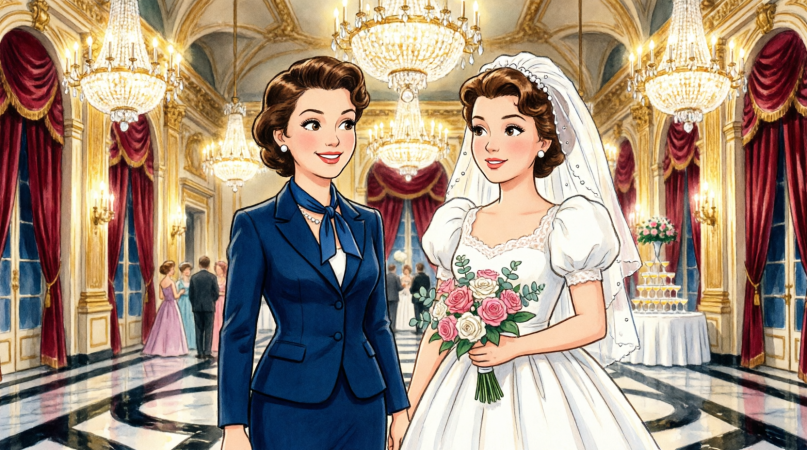
Around me, 300 guests laughed and clinked their glasses, their voices swirling together into a sound I couldn’t quite name. Celebration, maybe. Or something pretending to be. The chandeliers overhead threw soft gold light across the ballroom of the Moundsville Grand Hotel, the kind of light that made everything look prettier than it was.
I sat at table twelve. Not the family table. Not close enough to matter, but not far enough to disappear.
That had been Sarah’s choice, and I’d said nothing. What was there to say?
At the head table, my daughter smiled at her new husband. Andrew Caldwell, twenty-nine years old, vice president of development at his father’s company. Just as smooth as you’d expect from a man raised to believe the world owed him something.
He leaned toward Sarah and whispered something I couldn’t hear. She laughed that practiced, delicate laugh I’d never heard from her until she met him. The kind that came from the throat, not the chest. The kind that didn’t reach her eyes.
Her wedding dress cost more than I’d made in six months. White silk, hand-beaded, with a train that seemed to go on forever. She’d chosen it without me.
I’d raised her better than this.
Or maybe I hadn’t.
My fingers found the chain around my neck, the one I’d worn every day for twenty-three years. At the end of it hung a ring, simple gold, with an inscription on the inside: forever and always.
Robert’s wedding ring.
They’d found it after the explosion, along with his hard hat and the thermos he carried every morning to the Riverside Power Station. I’d buried the thermos with him. The ring, I’d kept.
I pressed it against my palm, the metal warm now from my skin, and tried to remember the man who’d worn it. The way he’d smiled at me across the breakfast table. The way he’d kissed Sarah’s forehead every night before his shift. The way he’d believed, truly believed, that if you worked hard and did right by people, the world would do right by you.
He’d been wrong.
Across the room, Harrison Caldwell sat beside the bride and groom, silver-haired and sharp-eyed, wearing a suit that probably cost more than my car. He smiled at the guests, at his son, at Sarah. He didn’t look at me.
He didn’t need to.
I knew what he’d done.
I’d spent two decades searching for the truth about what happened at Riverside. Two decades piecing together maintenance logs and cost-cutting memos and forged safety reports.
Two decades learning that the man who’d approved those cuts, who’d saved his company a little over half a million dollars by replacing high-grade pressure valves with cheaper ones, had changed his name and built an empire on the graves of fourteen men.
One of those men had been my husband.
And now my daughter had married into that family, had taken their money, had signed her name to the same kind of lies that had taken her father from her.
Sarah stood up from the head table, picked up her champagne glass, and tapped it with a fork until the room quieted.
“I’d like to say something,” she said, her voice clear and confident.
Sarah caught my eye from across the room. For a moment, I thought I saw something there. Hesitation, maybe. Regret.
But then her expression hardened.
She was about to speak, and I knew—knew in my bones—that whatever she was about to say, it wasn’t going to be kind.
I let her speak.
And when she was done, I’d stand.
August 13, 2001.
I was nine months pregnant, sitting in the kitchen of our small house on Maple Street, waiting for Robert to come home from his shift at Riverside Power Station. He’d kissed my belly that morning before he left.
“I’ll be home by seven,” he’d said. “We’ll finish painting the nursery.”
Seven o’clock came and went.
I called the plant. No answer.
I called his supervisor. The line was busy.
By eight, I felt the first flutter of real fear.
At 9:47, Sheriff Morgan knocked on my door.
I knew before he opened his mouth. I knew from the way he took off his hat, from the way his hands shook, from the way he couldn’t meet my eyes.
“Mrs. Warren,” he said, “there’s been an accident at the plant.”
The word accident felt wrong. Too small. Too clean.
“Unit Three boiler,” he continued. “This morning at 6:47.”
My legs gave out. Sheriff Morgan caught me before I hit the floor.
“Robert,” I whispered.
He shook his head.
“Fourteen men,” he said quietly. “Fourteen men didn’t make it.”
I went into labor five days later. The doctor said it was the stress. I didn’t care what caused it. I just wanted it to be over.
Sarah came into the world screaming. I held her against my chest and felt nothing but emptiness.
Robert should have been there. He should have been the one cutting the cord, the one crying with joy, the one whispering her name for the first time.
Instead, I was alone.
The funeral was three days after that. Fourteen caskets. Fourteen widows. Fourteen families shattered in an instant.
I stood there with Sarah in my arms, staring at Robert’s casket, and I made myself a promise.
I would find out what happened.
I would find out why.
Two weeks after the funeral, I drove back to Riverside. The plant was still standing, but Unit Three was a blackened shell. Yellow tape surrounded the site. Signs read: AUTHORIZED PERSONNEL ONLY.
I parked near the gate. Jimmy was there, the security guard who’d worked with Robert for fifteen years. His eyes were red. He looked like he hadn’t slept in weeks.
“Mrs. Warren,” he said quietly, “you shouldn’t be here.”
“I need to see where it happened,” I said.
He looked around. Then he reached into his jacket and pulled out a manila envelope.
“I took these before they locked everything down,” he said, his voice barely above a whisper. “The maintenance logs for Unit Three. The real ones, before they got cleaned up.”
I stared at the envelope in his hands.
“They’re already covering it up,” Jimmy said. “They’re going to say it was an equipment failure, an accident. But it wasn’t. Someone signed off on running that boiler past its limits. Someone knew it wasn’t safe.”
He pressed the envelope into my hands.
“Don’t let them get away with it,” he said. “Robert deserves better than that.”
I opened the envelope later that night. Inside were photocopies of maintenance reports, inspection logs, and approval forms. Dates crossed out. Signatures forged. Notes in red ink. Approved for continued use. Replacement deferred.
At the bottom of one page was a signature I didn’t recognize.
Harold Brennan, VP of Operations.
I didn’t know who Harold Brennan was. Not yet.
But I had proof, and I wasn’t going to let it go.
The paperwork arrived six weeks after the explosion. I was sitting at the kitchen table nursing Sarah when the envelope came, thick and official. The return address read: Brennan Energy Corporation, Legal Department.
Inside was a settlement offer. One hundred ten thousand dollars. A six-page nondisclosure agreement. And a letter expressing the company’s deepest condolences for this tragic and unforeseeable accident.
Unforeseeable.
I read that word three times before I understood what they were doing.
They were buying our silence.
The other families signed. I don’t blame them. Most of them had kids to feed, mortgages to pay, medical bills piling up. One hundred ten thousand dollars wasn’t enough to replace a husband, a father, a son, but it was enough to keep the lights on.
I signed too.
I had Sarah. I had no choice.
But I’d already hidden the original maintenance logs in a safety deposit box at a bank two towns over.
The NDA barred me from speaking to the media or filing civil suits. It didn’t prevent me from gathering evidence for potential criminal prosecution. As long as I didn’t publish anything or sue them directly, I was technically within my rights.
Barely.
I knew if they found out, I’d lose everything. But they’d have to admit to the cover-up to sue me, and they weren’t willing to do that.
Not yet.
I spent the next three years piecing together what really happened. I called lawyers. Most of them hung up when I mentioned the NDA. I filed Freedom of Information requests. I tracked down former Brennan Energy employees through union directories and outdated phone books.
Most of them wouldn’t talk to me.
Then I found Tom Mitchell.
He’d been on shift that morning, but had been working in a different section when Unit Three went up. I found him living in a trailer park outside Wheeling in the spring of 2003. He was fifty-four and looked seventy. Lung damage from the explosion had left him on disability.
“I don’t talk about Riverside,” he said when I told him who I was.
“I just need to know what happened,” I said. “Please.”
He stared at me for a long moment. Then he stepped aside and let me in.
We sat at his tiny kitchen table. He poured himself a whiskey with shaking hands.
“They paid us off,” he said finally. “Most of us. The ones who survived. Two hundred thousand, double what the families got. We were told to keep our mouths shut.”
“Did you know the equipment was faulty?” I asked.
He nodded slowly.
“The pressure relief valves on Unit Three were rated for 2200 PSI. But they were running the boiler at 3100. We told management it wasn’t safe. They said we just needed to push through until the new equipment came in.”
“It never came, did it?”
“No,” Tom said quietly. “It never came. Brennan signed off on it. Saved the company over half a million dollars by deferring the replacement.”
“Harold Brennan?”
Tom nodded. “VP of operations. He approved everything. He knew the risks. He just didn’t care.”
I left Tom’s trailer with a name and a motive.
But when I tried to find Harold Brennan, he disappeared.
It took me another year to piece together what happened. Brennan Energy filed for bankruptcy two months after the explosion. Harold Brennan executed a legal name change through a corporate merger in Delaware, exploiting a loophole in West Virginia law that allowed him to erase his name from public records tied to the disaster.
By 2004, he’d rebranded.
New company. New name. New state.
Pinnacle Power Corporation.
CEO: Harrison Caldwell.
I found a photo of him at a gala in Pittsburgh. Same face. Same eyes. Same thin-lipped smile.
Harold Brennan had become Harrison Caldwell.
And he was thriving.
I kept the original maintenance logs hidden. I kept gathering evidence. I kept building a case piece by piece, year by year. I thought I had time. I thought I could take him down on my terms.
I didn’t know he was already planning his revenge.
And I didn’t know he’d use my daughter to do it.
I raised Sarah alone. Single mother, full-time job as a safety inspector, part-time investigator chasing a ghost named Harrison Caldwell. It wasn’t easy. It was never easy.
But I made sure Sarah knew her father.
Not the way most kids know their parents through memories, through stories told at bedtime. Sarah never met Robert, but she knew him through the values he stood for. Integrity. Honesty. Responsibility.
When Sarah was seven, I started teaching her about what Robert did. I’d show her blueprints and explain how power plants worked. I’d talk about safety protocols and why they mattered.
“An engineer’s signature is a promise,” I told her. “When you sign off on something, you’re saying it’s safe. You’re putting your name, your word, behind it. If something goes wrong because you cut corners, people get hurt. People die.”
Sarah listened. She always listened.
When she was twelve, I took her to a construction site where I was conducting an inspection. I showed her faulty wiring, improper scaffolding, missing safety harnesses.
“This is what happens when people don’t do their jobs right,” I said. “Someone could fall. Someone could die. And it would be because someone decided saving money was more important than saving lives.”
Sarah looked at the site with serious eyes.
“Like what happened to Dad?” she said.
“Yes,” I said. “Like what happened to your father.”
She was quiet for a long time. Then she said, “I want to be an engineer like Dad. I want to make sure it never happens to anyone else.”
I hugged her so tight I thought my heart would break.
By the time Sarah was in high school, she was taking advanced physics and calculus. She joined the engineering club. She did internships at local firms, writing safety reports and learning how to read technical drawings.
She was good. Really good.
Her professors at WVU said she had a gift for systems thinking. She could look at a complex process and spot the weak points, the places where things could go wrong.
“She’s going to be an excellent engineer,” one of them told me at Parents Weekend. “She has integrity. She cares about doing things right, not just doing things fast.”
I was so proud.
But there was always a distance between us. A space I couldn’t cross.
Sarah grew up watching me chase Harrison Caldwell. She grew up hearing about Riverside, about the fourteen men, about the cover-up. She never complained, but I saw the way she looked at me sometimes, like she was tired of living in the shadow of a man she’d never met.
When she turned eighteen, she asked me if I’d ever thought about letting it go.
“Letting what go?” I asked.
“The investigation. The obsession.”
She wouldn’t look at me.
“Dad’s been gone for eighteen years, Mom. Don’t you think it’s time to move on?”
I stared at her.
“Move on, Sarah? The man who killed your father is still out there. He’s still running a company. He’s still putting people at risk.”
“You don’t know that,” she said quietly. “You have theories. You have suspicions. But you don’t have proof.”
“I have proof,” I said. “I’ve always had proof.”
She shook her head.
“You have old documents. You have a name that might not even be the same person. You’re chasing a ghost, Mom.”
We didn’t talk about it again after that.
Sarah went to college. She studied hard. She got good grades. She called me every Sunday, but the conversations were short, polite, distant.
I told myself it was normal. That’s what kids did. They grew up. They pulled away. I told myself she’d understand someday, when she was older, when she saw how the world really worked.
I thought I’d raised her right.
I thought I’d taught her about integrity and responsibility and standing up for what’s right.
I was wrong.
Sarah called me in late March of 2022.
“I’m bringing someone to dinner this weekend,” she said. “Someone important.”
She sounded happy, lighter than I’d heard her in years. She’d graduated from WVU the previous spring and had been struggling to find work. The job market for entry-level engineers was brutal.
“I met him at a networking event in Charleston,” she said. “His name is Andrew. Andrew Caldwell.”
The name hit me like a punch to the chest.
“Caldwell? What does he do?” I asked, trying to keep my voice steady.
“He works in energy development. His family owns a company. Pinnacle Power.”
I gripped the phone so hard my knuckles went white.
“Mom, you there?”
“I’m here,” I said. “I’ll see you Saturday.”
Andrew Caldwell was handsome, polite, and charming. He showed up at my door on Saturday evening with a bottle of wine and a smile that didn’t quite reach his eyes.
“Mrs. Warren,” he said, shaking my hand. “Sarah’s told me so much about you.”
“I bet she has.”
We sat down for dinner. Sarah had made lasagna, Robert’s favorite. I wondered if she remembered that.
Andrew talked about his work, about Pinnacle’s expansion into renewable energy, about their commitment to safety and sustainability. He used all the right words, all the corporate buzzwords that sounded good but meant nothing.
“My father built the company from the ground up,” Andrew said. “He’s always believed that energy development and environmental responsibility can go hand in hand.”
“Your father,” I said carefully. “What’s his name?”
“Harrison Caldwell,” Andrew said. “He’s the CEO. I’m hoping to follow in his footsteps someday.”
I forced myself to smile, to nod, to play the role of the interested mother.
But inside, I was screaming.
Harrison Caldwell. The name I’d been tracking for twenty years.
And now he was sitting at my dinner table in the form of his son, holding my daughter’s hand.
After they left, I went straight to my computer. I typed Harrison Caldwell Pinnacle Power into the search engine, clicked through pages of press releases, corporate filings, photographs.
Then I found it.
A photo from a corporate gala in Pittsburgh. Harrison Caldwell standing at a podium mid-speech, wearing a tuxedo and that same thin-lipped smile I’d seen in the archived photos from Brennan Energy.
I pulled up the old photo from 2001.
Harold Brennan, vice president of operations, standing outside the Riverside plant.
I put the two images side by side on my screen.
Same face. Same eyes. Same scar above his left eyebrow.
It was him.
Harold Brennan. Harrison Caldwell. The same man.
The man who’d signed off on the faulty equipment that killed Robert. The man who’d let fourteen men die to save half a million dollars.
And now his son was dating my daughter.
I called Sarah the next morning.
“We need to talk,” I said. “About Andrew’s father.”
She came over that afternoon. I showed her everything. The old maintenance logs, the photographs, the paper trail showing how Harold Brennan had become Harrison Caldwell.
“His father is the man who killed yours,” I said. “The man I’ve been tracking for twenty-three years.”
Sarah stared at the evidence spread across my kitchen table. Then she looked at me.
“This is insane,” she said quietly.
“Sarah—”
“Andrew is not his father,” she said, her voice rising. “You can’t blame him for something that happened before he was even born.”
“I’m not blaming him,” I said. “I’m warning you. Harrison Caldwell is dangerous. He’s a liar. He’s—”
“You’re obsessed,” Sarah said. “You see conspiracy everywhere. You’ve spent my entire life chasing ghosts.”
“They’re not ghosts,” I said. “The evidence is right here.”
Sarah shook her head.
“Andrew told me his father made mistakes early in his career, that he spent decades trying to do better, that Pinnacle has the best safety record in the industry now.”
“He’s lying to you.”
“No, Mom. You’re lying to yourself.”
Sarah stood up.
“You can’t accept that maybe, just maybe, people can change. That maybe Harrison Caldwell isn’t the monster you’ve built him up to be in your head.”
“Sarah, please.”
She picked up her jacket.
“I’m going to prove you wrong, Mom. I’m going to work for them. I’m going to show you that Andrew’s family is nothing like what you think they are.”
“Don’t do this,” I said.
But she was already walking out the door.
Sarah applied to Pinnacle Power three days after our fight. I didn’t know about it until two weeks later, when she called to tell me she had an interview.
“I’m going to prove you wrong,” she said. “I’m going to see for myself what kind of man Harrison Caldwell really is.”
“Sarah, please don’t do this.”
She hung up.
The interview was at Pinnacle’s headquarters in Pittsburgh. Sarah told me later that Harrison himself had conducted it.
“He was kind,” she said. “Professional. He asked about my education, my goals, my values. He said his company was built on integrity and safety. He said he spent his entire career trying to make sure what happened at places like Riverside never happens again.”
I wanted to scream.
Instead, I said, “He’s lying to you.”
“You don’t know that,” Sarah said. “You just can’t accept that maybe, just maybe, you’ve been wrong about him.”
Pinnacle hired Sarah as a junior engineer. The starting salary was thirty-eight thousand dollars a year, barely enough to cover her student loans and rent.
But Sarah didn’t care. She was determined to prove me wrong.
She worked hard. Long hours, weekends. She reviewed safety protocols, assisted senior engineers, ran compliance checks on equipment installations.
Harrison noticed.
He started calling her into his office, asking for her input on projects, praising her attention to detail.
“You remind me of your father,” he told her once.
Sarah told me about it over the phone, her voice bright with pride.
“He said Dad was one of the best engineers he’d ever worked with. He said it was a tragedy what happened.”
I felt sick.
Three months after Sarah started at Pinnacle, Harrison called her into his office with a proposal.
“We’re breaking ground on a new project,” he said. “The Horizon Energy Complex, a natural gas facility just outside Moundsville. It’s going to be one of the largest in the state.”
Sarah listened.
“I need someone I can trust to handle the environmental compliance,” Harrison continued. “Someone with integrity. Someone who understands that cutting corners isn’t worth the risk.”
He slid a folder across his desk.
“I’d like to offer you a consulting contract. Senior Environmental Consultant. Eighteen months. Total compensation: $850,000.”
Sarah stared at the number.
“That’s more than I’d make in twenty years at my current salary,” she said.
“You’re worth it,” Harrison said. “You’re talented, Sarah. You care about doing things right. That’s rare in this industry.”
Sarah looked at the contract, at the number, at Harrison’s kind, encouraging smile.
“There’s one thing,” Harrison said. “The project is on a tight timeline. We need someone who can move fast, review documents quickly, sign off on compliance reports without getting bogged down in bureaucracy.”
“I’d never sign off on something unsafe,” Sarah said.
“Of course not,” Harrison said. “I wouldn’t ask you to. But sometimes the regulatory process is overly cautious. Sometimes you have to use your judgment. Trust your expertise.”
Sarah hesitated.
“I know your mother has concerns about me,” Harrison said gently. “About my past. I understand that. I made mistakes early in my career. I’ve spent twenty years trying to make up for them. But I can’t change the past. All I can do is try to do better.”
He looked at her with those sincere, lying eyes.
“I’m offering you this opportunity because I believe in you,” he said. “Because I think you’re the kind of engineer who will do the right thing. But if you’d rather not work with me because of your mother’s theories, I understand.”
Sarah looked at the contract again.
Eight hundred fifty thousand dollars.
She thought about her student loans, her tiny apartment, the years she’d spent watching her mother obsess over the past. She thought about proving me wrong.
“When do I start?” she said.
Harrison smiled.
“I’ll have the paperwork ready by the end of the week.”
Sarah called me that night.
“I took the job,” she said. “The Horizon project. I’m going to be the senior environmental consultant.”
“Sarah, no—”
“I signed the contract, Mom. Two hundred thousand up front. I’m doing this.”
And then she hung up.
Linda Crawford called me on a Tuesday afternoon in early November 2023.
“Elizabeth,” she said, her voice low. “There’s been a deposit into Sarah’s account. A large one.”
My stomach dropped.
“How large?”
“Two hundred thousand. From Pinnacle Power Corporation.”
I hung up and opened my laptop. It took me less than an hour to piece it together. Sarah had been hired as a senior environmental consultant for something called the Horizon Energy Complex, a new natural gas facility Pinnacle was building just outside Moundsville, three miles from where Riverside used to stand.
The contract was worth $850,000 total. Two hundred thousand up front. Three hundred thousand after initial deliverables. The rest upon project completion.
For a twenty-two-year-old with barely a year of experience.
I pulled up the EPA public database and searched for Horizon Energy Complex. Seventeen filings had been submitted over the past six months. Environmental impact assessments. Air quality certifications. Water discharge permits. Soil contamination reports.
Every single one of them was signed by Sarah Warren Caldwell.
I clicked through the documents, my hands shaking.
The emissions data didn’t make sense. Readings that were impossibly clean. Water quality reports that contradicted other public records. Compliance certifications for equipment that hadn’t even been installed yet.
They were fake.
And Sarah had signed them.
I kept counting, kept clicking through the database.
Fourteen documents. Fourteen forged certifications. Fourteen signatures.
I sat back in my chair, staring at the screen.
Fourteen.
The same number of men who died at Riverside.
I pulled up the original site plan for Horizon Energy Complex, the one filed with the State Planning Commission eighteen months earlier. Companies always filed preliminary plans before construction.
The original plan showed twelve operational zones: four turbines, three compressor stations, two storage facilities, two control centers, one maintenance building.
Twelve zones.
Standard for a facility this size.
But the compliance documents showed fourteen zones.
I cross-referenced the maps. Harrison had split the two control centers into four separate units. There was no technical reason to do that. Control centers were always managed as single units. Splitting them created redundant paperwork, additional inspections, higher costs.
Unless he wanted exactly fourteen zones.
Fourteen zones requiring fourteen compliance reports.
Fourteen reports requiring fourteen signatures.
One for every man who died at Riverside.
He’d engineered it deliberately. He’d redesigned the entire compliance structure around that number.
It wasn’t a coincidence.
It was a message.
Harrison knew who Sarah was. He’d known all along.
And this was his revenge.
Making my daughter complicit in the same kind of cover-up that had killed her father. Making her sign her name fourteen times, once for each man who died because of him.
It was cruel. It was calculated.
And Sarah had walked right into it.
I picked up my phone and called her.
No answer.
I called again. Voicemail.
I tried five more times over the next two hours. Then I texted: I know about Horizon. I know about the money. We need to talk now.
She didn’t respond.
I called Linda back. “Can you check if there have been other deposits?”
Linda hesitated. “Liz, I could lose my job.”
“Please.”
She sighed. I heard keyboard clicks.
“There was another deposit three weeks ago,” Linda said quietly. “Three hundred thousand. Same source.”
Five hundred thousand.
Sarah had already received more than half the contract.
“If this goes to trial, she’s going to prison,” I said. “Harrison set her up.”
“Then you need to stop her,” Linda said. “Before it’s too late.”
I tried calling Sarah again.
Nothing.
I drove to her apartment in Morgantown. She wasn’t there. I waited outside for two hours. She never came home. I called Andrew. He didn’t pick up either.
By the time I got back to my house, it was past midnight. I sat at the kitchen table staring at the documents.
Fourteen documents for fourteen men.
Harrison had taken my daughter the same way he’d taken my husband.
I called Sarah one last time before I went to bed. The phone rang and rang and rang.
She never answered anymore.
I finally got Sarah to meet me three days later. Not at my house, not at hers. At Giovanni’s, a small Italian restaurant in downtown Morgantown. Neutral ground.
She was twenty minutes late.
When she walked in, she looked tired. Older than twenty-two.
She sat down across from me without smiling.
“You said it was urgent,” she said.
I slid the folder across the table. Bank statements. EPA filings. Copies of the fourteen forged documents, each one bearing her signature.
“You need to stop,” I said. “Right now, before this gets worse.”
Sarah opened the folder, looked through the papers. Her face didn’t change.
“I know what I signed,” she said quietly.
The words hit me like a slap.
“You know?”
“Sarah, these are fake. The emissions data, the water quality reports, none of it is real.”
“They won’t find out,” Sarah said. “Harrison knows what he’s doing. The project is safe. The reports are just streamlined.”
“Streamlined?”
I stared at her.
“Sarah, you signed off on compliance certifications for equipment that doesn’t exist. You falsified federal documents. That’s a felony.”
“It’s not falsified,” Sarah said. “It’s preemptive. The equipment will be installed before anyone checks.”
“And if it’s not? If something goes wrong? If someone gets hurt?”
Sarah looked away.
“That’s not going to happen.”
“That’s what they said at Riverside,” I said. “That’s what your father believed. And then fourteen men died.”
Sarah flinched, but she didn’t back down.
“This isn’t Riverside,” she said. “Harrison has changed. Pinnacle has the best safety record in the industry. You’re so obsessed with the past that you can’t see that people can change.”
“He hasn’t changed,” I said. “Sarah, he hired you specifically to set you up. Don’t you see? Fourteen documents, fourteen signatures, one for each man who died at Riverside. He’s using you. If this project fails, you’re the one who goes to prison, not him.”
Sarah shook her head.
“You’re paranoid.”
“I’m trying to save you,” I said, my voice breaking. “Sarah, please. If you stop now, if you come forward as a whistleblower, I can protect you. There’s someone at Pinnacle—Harrison’s own son, Marcus—who wants to help. The FBI will give you immunity if you cooperate.”
Sarah stared at me.
“You want me to destroy my career before it even starts?”
“I want you to stay out of prison.”
“I’m not going to prison,” Sarah said, “because I didn’t do anything wrong.”
“You signed false documents.”
“I signed documents that Harrison Caldwell asked me to sign,” Sarah said. “I trusted him. If there’s a problem, it’s his responsibility, not mine.”
I felt something crack inside me.
“That’s not how it works,” I said quietly. “When you put your signature on something, you’re responsible. You’re the engineer of record. That’s what I taught you. That’s what your father believed.”
“My father is dead,” Sarah said, her voice cold. “He’s been dead for twenty-three years, and you’ve spent every single one of those years making his death the center of your life.”
“The center of my life—Sarah—”
“I don’t want to be like you, Mom.”
Her eyes were wet now, but her voice was steady.
“I don’t want to spend my life chasing ghosts. I don’t want to end up alone and bitter, obsessed with something I can’t change.”
She stood up, started putting on her jacket.
“Sarah, wait.”
“I made my choice,” she said. “Now you have to make yours. You can let this go and have a relationship with your daughter, or you can keep chasing your conspiracy theories and lose me forever.”
I looked at her, at this stranger wearing my daughter’s face.
“I can’t let this go,” I said. “Sarah, if I don’t stop him, more people will die. Your father died because people stayed silent. I can’t. I won’t do that.”
“Then I guess you’ve made your choice,” Sarah said.
She walked out of the restaurant, didn’t look back.
I sat there alone, staring at the folder on the table, and felt the weight of what I’d just done.
I’d chosen justice over my daughter. I’d chosen the fourteen men over the one person I loved most in the world. I’d chosen Robert over Sarah, and I didn’t know if I’d ever be able to forgive myself.
If you’re still here with me, leave any number from one to nine in the comments, just so I know you’re still walking this road with me. And tell me this: if you were in my place, knowing your child chose money over the truth, would you stay silent to protect them? Or would you speak up, even if it meant losing them forever?
Before we continue, a quick note. The next part of this story includes dramatized elements woven in for storytelling. Some details may not be entirely real. So if this isn’t something you want to hear, you’re free to stop watching here.
Marcus Caldwell called me two days after the confrontation at Giovanni’s. I didn’t recognize the number. Almost didn’t answer.
“Mrs. Warren,” he said, “my name is Marcus Caldwell. I’m Harrison’s son. I need to talk to you.”
I froze.
“If this is some kind of—”
“It’s not,” he said quickly. “I know what my father did at Riverside and at Horizon. I want to help you take him down.”
We met at a coffee shop in Wheeling the next morning. Marcus was thirty-six, tall, with his father’s eyes but none of his coldness. He looked tired, worn down.
“I’ve known about Riverside for five years,” he said quietly. “I found the old records when I was promoted to COO. My father kept everything. Every document, every cover-up. He’s arrogant enough to think no one would ever find them.”
“Then why haven’t you gone to the authorities?” I asked.
“Because I’m his son,” Marcus said. “Anything I hand over, his lawyers will claim I fabricated it. They’ll say I’m trying to take over the company. They’ll say I have a financial motive. The evidence has to come from someone else.”
“From me,” I said.
He nodded.
“You’ve been investigating him for twenty years. You’re credible. You’re the widow of one of the Riverside victims. If you expose him, people will listen.”
“I don’t have enough evidence,” I said. “The maintenance logs I have are old. The new documents, the Horizon files—they’re on Sarah, not on Harrison.”
“That’s why I’m here,” Marcus said.
He slid a small object across the table.
A key card.
“The evidence you need is in my father’s office,” he said. “In his personal safe. Internal memos, cost-benefit analyses showing he knew the Horizon certifications were false. Emails between him and Andrew about using Sarah as a scapegoat. Everything.”
I stared at the key card.
“You want me to break into Pinnacle headquarters?”
“I can’t give you the documents myself,” Marcus said. “If I do, it’s theft. It’s inadmissible. His lawyers will bury it. But if you take them, if you find them during the course of your private investigation, they’ll hold up in court.”
“That’s still breaking and entering,” I said.
“Only if you get caught,” Marcus said. “I’ll disable the security cameras on the executive floor. I’ll make sure the overnight guard is on a different floor. I’ll give you the safe combination and a map of the building. All you have to do is go in, open the safe, photograph the documents, and leave.”
He pulled out a piece of paper with a hand-drawn map. Marked the route from the parking garage to Harrison’s office. Wrote down the safe combination.
“Sunday night. Three a.m. The building will be empty except for one guard, and I’ll make sure he’s nowhere near the executive offices.”
I looked at the key card, at the map, at the combination.
“This is insane,” I said.
“It’s the only way,” Marcus said.
“Why are you doing this? He’s your father.”
Marcus was quiet for a long moment.
“Five years ago, I found a file in the archives,” he said. “Compensation records from 2001. Fourteen families, one hundred ten thousand each. Hush money. I saw the names. I read the settlement agreements. I realized my father had let fourteen people die to save money.”
He looked at me with tired eyes.
“I confronted him. Asked him if it was true. He didn’t deny it. He said business is about making hard choices. Sometimes people get hurt. That’s the cost of progress.”
Marcus’s hands were shaking.
“I’ve tried to reform the company from the inside,” he said. “New safety protocols, independent audits. But he’s still cutting corners, still putting profit over people. And now he’s using your daughter to do it.”
“Why now?” I asked. “Why wait five years?”
“Because I thought I could change him,” Marcus said. “I thought if I worked hard enough, if I proved the company could be successful and ethical, he’d listen. But he won’t. He’ll never change. And if I don’t stop him now, more people are going to die.”
He pushed the key card closer to me.
“Sunday night. Three a.m. This is your chance. The only chance.”
I picked up the key card.
“If I get caught—”
“You won’t,” Marcus said. “I’ll make sure of it.”
I looked at him. At this man who was betraying his father to do the right thing.
“Thank you,” I said quietly.
Marcus shook his head.
“Don’t thank me. Just stop him.”
I woke up at five on the morning of December 14. The sun wouldn’t rise for another two hours, but I couldn’t sleep.
I stood in front of my bathroom mirror, buttoning the simple navy dress I’d bought for the occasion, and tried not to think about the last time I’d been to a wedding.
Mine. Thirty-nine years ago.
Robert in a rented tux. Me in my mother’s dress. Both of us so young, we didn’t know what we were promising each other.
I reached for the chain around my neck. Robert’s ring was still there, warm against my skin.
I’m doing this for you, I thought. I’m doing this for all of them.
The folder sat on my kitchen table. Twenty-three years of research, printed and organized into sections. Maintenance logs from Riverside. Corporate memos approving cost cuts. EPA filings for Horizon with Sarah’s forged signatures. And Marcus’s USB drive tucked into the inside pocket of the folder like a talisman.
I’d gone through it all a hundred times in the past year. Made copies. Sent everything to Agent Jennifer Williams, the FBI agent Marcus had connected me with.
She’d promised they’d be ready.
My phone buzzed.
A text from an unknown number: We’re in position. Plain clothes. Three agents. Wait for your signal after the toast. —JW
Agent Williams.
I typed back: Understood.
Another text. This one from Marcus.
Good luck today. You’re doing the right thing.
I didn’t respond. I wasn’t sure I believed him.
By noon, I was standing in the lobby of the Moundsville Grand Hotel, watching 300 guests filter into the ballroom. Politicians in expensive suits. Business executives. Women in designer dresses and diamonds.
Harrison Caldwell’s world. The one he’d built on shortcuts and lies, and the lives of men like Robert.
I clutched my purse. The folder was inside, along with a USB drive.
Everything I needed to destroy him. And everything I needed to destroy Sarah’s life.
A voice in my head whispered that.
I pushed it away.
I found my seat. Table twelve, just like Marcus had told me. Not the family table. I hadn’t expected that, but close enough to see everything. Close enough to act when the moment came.
Linda Crawford squeezed my hand as I sat down. She’d driven two hours to be here, even though I’d told her she didn’t have to come.
“You okay?” she whispered.
I nodded.
I wasn’t, but there was nothing she could do about that.
The ceremony started at one o’clock. I watched from the tenth row as Sarah walked down the aisle in her white silk dress, hand-beaded and perfect, the train flowing behind her like water.
She looked beautiful. She looked happy.
She didn’t look at me.
Andrew stood at the altar, smiling like he’d won something.
Maybe he had.
Harrison sat in the front row, gray-haired and dignified, playing the role of proud father. I wanted to stand up right then, to scream the truth in front of everyone.
But I didn’t.
I waited.
The officiant spoke. Sarah and Andrew exchanged vows.
I love you. I promise. Forever.
Words I’d said once to a man who’d believed in doing the right thing, even when it cost him everything. Words Sarah was saying to the son of the man who’d taken Robert from me.
I closed my eyes. Tried to breathe. Tried to hold on.
When I opened them, Sarah was kissing Andrew.
The guests applauded.
It was done.
She was married.
And I was about to ruin her life.
The reception started at two. The ballroom filled with champagne and laughter, and the kind of easy confidence that came from never having to worry about money or consequences. I sat at my table and watched Harrison move through the crowd, shaking hands, accepting congratulations, waiting for his moment.
Linda leaned close.
“You don’t have to do this,” she said quietly.
I looked at her.
“Yes, I do.”
She nodded. She understood.
Across the room, Sarah laughed at something Andrew whispered in her ear. She glowed. She looked like she’d never been happier.
I thought about the fourteen men who didn’t get to see their daughters grow up. I thought about Robert, who’d never hold his little girl, never walk her down the aisle, never get to see the woman she’d become.
I thought about the choice I was about to make.
The ceremony had been brief, painless. The reception would be longer.
Dinner was over by seven. The plates had been cleared, the champagne refilled, and the ballroom hummed with that easy, satisfied energy that came after good food and expensive wine.
At the head table, Sarah leaned into Andrew, both of them smiling like they’d won something.
Then she stood, picked up her glass.
The room quieted.
“I’d like to say a few words,” Sarah said, her voice warm and charming.
She looked beautiful standing there in her wedding dress, the chandelier light making her glow.
“About family.”
She smiled at Andrew. At Harrison. Then her eyes found me at table twelve.
“Growing up, I had a mother who loved me very much,” she began. “A mother who worked hard, who sacrificed, who taught me about integrity and standing up for what’s right.”
A few people nodded. I felt Linda tense beside me.
“But I also had a mother who couldn’t let go of the past.”
Sarah’s tone shifted just slightly, still sweet but with an edge.
“A mother who spent my entire childhood obsessed with something that happened before I was even born.”
Uncomfortable laughter rippled through the crowd.
“My father passed away in a workplace accident when my mother was pregnant with me. It was tragic. It was terrible. And I grew up hearing about it every single day.”
She paused.
“Every birthday, every holiday, every achievement—it was always about him, about what happened, about how unfair the world was.”
I sat perfectly still. My hands were shaking, but I kept them folded in my lap.
“I love my mother,” Sarah continued, and her voice had that false sympathy I’d heard from lawyers and HR representatives. “But at some point, you have to move forward. You have to accept that holding on to anger and bitterness doesn’t bring people back. It just poisons everything around you.”
More nods from the crowd. Some people were looking at me now, their expressions a mix of pity and judgment.
“When I met Andrew, when I met his family, I finally understood what it meant to look toward the future instead of dwelling in the past.”
Sarah raised her glass toward Harrison.
“The Caldwells taught me that success isn’t about pointing fingers or assigning blame. It’s about building something new. Something better.”
Harrison smiled, nodded approvingly.
“My mother tried to convince me that Andrew’s family was somehow responsible for my father’s accident twenty-three years ago.”
Sarah’s laugh was light, dismissive.
“She tried to tell me that the man who built one of the most successful energy companies in West Virginia, who employs thousands of people, who contributes millions to this community, was some kind of criminal.”
The crowd murmured. Some people shook their heads.
“She couldn’t accept that I’d found happiness. That I’d found a family that actually knows how to move forward instead of staying stuck in grief and conspiracy theories.”
Sarah looked directly at me.
“I’m sorry, Mom. I know you did your best, but I’m not going to spend my life the way you spent yours—alone, bitter, and convinced the world owes you something.”
A few people clapped. Not many, but enough.
“So I’d like to raise a glass,” Sarah said, her voice brightening, “to letting go of the past. To building a future based on love and success, not anger and blame. To family—the one you’re born into and the one you choose.”
She looked at Andrew, at Harrison, then away from me entirely.
“To the future,” Sarah said.
“To the future,” the crowd echoed.
Sarah and Andrew raised their glasses, smiling. Harrison stood and embraced her.
“Well said, my dear.”
Three hundred people applauded. They clinked glasses. They celebrated my daughter’s wisdom in choosing success over her mother’s bitterness.
Sarah sat down, her hand in Andrew’s, her back to me.
I stood up.
The applause faltered.
The room went quiet. Not all at once. It started with the people nearest to me, who turned and stared, then the tables beyond them, then the ones at the front. The music kept playing for a few more seconds, then cut off.
Sarah turned in her seat, saw me standing.
Her smile froze.
I picked up the folder from my lap, held it against my chest.
Three hundred people stared at me, waiting.
Linda stood beside me, silent support.
Harrison’s expression was wary now.
I took a breath.
“Do you know who I am?” I said, my voice carrying across the silent ballroom.
And then I told them.
I stood up. Three hundred pairs of eyes turned toward me. Sarah’s smile froze. Harrison’s hand, still holding his champagne glass, went still.
I walked to the front of the room. Marcus had set up the projector exactly where we’d planned. My laptop sat on the table, connected and ready.
I turned to face the crowd.
“Do you know who I am?” I asked.
My voice didn’t shake.
Not anymore.
“My name is Elizabeth Warren. Twenty-three years ago, my husband, Robert, died in an explosion at Riverside Power Station. Thirteen other men died with him. Fourteen families lost everything because someone decided their lives were worth less than $520,000.”
I clicked the remote.
The screen behind me lit up.
“This is the maintenance log from Unit Three at Riverside. The pressure relief valves were rated for 2200 PSI, but the boiler was running at 3100 PSI. Someone signed off on it.”
I clicked again.
A signature appeared.
“Harold Brennan, vice president of operations, Brennan Energy. That man up there”—I pointed at Harrison—“is Harold Brennan. He changed his name after Riverside. He’s the same man who let fourteen men die so he could save money.”
The room was silent.
I clicked again.
Bank statements appeared.
“Two years ago, Harrison Caldwell approached my daughter Sarah with a consulting contract. $850,000. Two hundred thousand up front. Three hundred thousand after she signed fourteen documents.”
I clicked.
The forged certifications filled the screen.
“These are fake. Harrison had Sarah sign fourteen equipment inspection reports for fourteen operational zones. But the original site plan only had twelve zones. He deliberately split two control centers into four units, creating extra paperwork for no technical reason. So there would be exactly fourteen signatures.”
I turned to look at Sarah.
“Fourteen documents. Fourteen signatures. One for every man who died at Riverside.”
I looked at her white face, at the horror finally settling in.
“He didn’t just want a scapegoat. He wanted it to be you. He wanted you to sign your name on the graves of fourteen men, including your father.”
Sarah’s face went white.
“It’s evidence,” I said. “And the FBI has all of it.”
Agent Jennifer Williams stepped forward from the back of the room.
“Mr. Caldwell,” she said calmly, “we have evidence from your chief operating officer that you booked a one-way flight to the Cayman Islands departing at four a.m. tomorrow. You’re under arrest for securities fraud, forgery, bribery, and fourteen counts of criminally negligent homicide.”
She pulled out handcuffs.
Harrison’s face went red.
“You can’t—”
“You have the right to remain silent.”
The ballroom erupted. Guests shouted. Cameras flashed.
Harrison was led away.
Then Agent Williams turned to Sarah.
“Miss Caldwell, we need you to come with us for questioning regarding the Horizon compliance filings.”
Sarah’s face drained of color. She reached for Andrew’s hand.
He stepped back.
“Andrew,” her voice cracked.
Andrew looked at Agent Williams.
“I told her to be careful with those numbers. I told her to double-check everything. I’m not involved in the compliance side. That was all her.”
Sarah stared at him.
“What?”
“You signed those documents,” Andrew said, looking away. “Not me.”
He turned to his lawyer, a man in an expensive suit who had materialized from the crowd. They walked toward the exit together.
Sarah stood there frozen.
“Andrew,” she screamed. “Andrew, please.”
He didn’t turn around.
She turned to me, eyes wild.
“Mom—”
“I tried to warn you,” I said quietly.
“Mom, please. You have to tell them I didn’t know.”
“But you did know,” I said. “You told me yourself. You said, ‘I know what I signed.’”
Sarah’s face crumpled.
Agent Williams placed a hand on Sarah’s arm.
“We need you to come with us.”
Sarah didn’t resist. She let them lead her out, still in her wedding dress, mascara running down her face. She looked back at me once, not with anger, but with the hollow, broken expression of someone who’d lost everything.
Marcus appeared at my side.
“You did it,” he said quietly.
I’d won. I’d exposed the truth.
So why did I feel like I’d just lost everything?
They took Harrison out through the kitchen. Agent Williams didn’t want the media getting photos. Not yet. Not until they’d processed him at the federal building downtown. I watched from across the ballroom as they led him past the catering staff, past the ice sculptures and the untouched wedding cake, his hands cuffed behind his back.
He didn’t look at me.
Sarah was next. Agent Williams approached her at the head table, spoke quietly. I couldn’t hear what she said, but I saw Sarah’s face go pale, saw her shake her head, saw Andrew reach for her hand.
“Mrs. Caldwell,” Agent Williams said louder now, “we need you to come with us for questioning.”
“I didn’t do anything wrong,” Sarah said.
“Then you won’t mind answering a few questions.”
Agent Williams gestured toward the door.
“We can do this quietly, or we can do it in front of everyone. Your choice.”
Sarah stood. She looked across the room at me one last time. Her eyes were full of something I couldn’t name. Not love. Not forgiveness. Just anger, and maybe fear.
They took her out through the main entrance. I heard cameras clicking as she passed.
Andrew tried to leave through a side exit. Two agents stopped him at the door.
“Andrew Caldwell.”
“I have nothing to do with this.”
“Sir, we need you to come with us.”
He didn’t fight. Just let them lead him away, his face blank.
Marcus appeared beside me. I hadn’t seen him during the speech. Hadn’t looked for him. But he’d been there, watching, waiting.
“I’m going to the FBI office,” he said quietly. “To give them everything else I have. Financial records. Emails. Five years’ worth.”
I nodded.
“Thank you.”
“Don’t thank me. I should have done this years ago.”
He hesitated.
“For what it’s worth, you did the right thing.”
I didn’t answer. I wasn’t sure I believed him.
The ballroom emptied fast. Guests didn’t want to be associated with what they’d just seen. Politicians slipped out side doors. Business executives made phone calls to their lawyers. Within twenty minutes, the space was nearly empty, just overturned chairs and abandoned champagne glasses and the projection screen still showing Sarah’s forged signatures.
Linda found me standing by the stage.
“Let me drive you home,” she said.
“I’m fine, Liz. I need to be alone.”
She looked at me for a long moment, then nodded.
“Call me when you get home, please.”
“I will.”
I walked to my car alone. The December air was cold, sharp. Christmas lights hung from the hotel’s eaves, blinking red and green. Someone had left the front doors open, and I could hear music still playing inside. The DJ hadn’t gotten the memo that the reception was over.
I sat in my car for a while before starting the engine.
Looked up at the hotel.
Thought about Sarah walking down the aisle that afternoon. Thought about Harrison’s toast. Thought about the moment I’d stood up and spoken the truth I’d been carrying for twenty-three years.
I’d won.
Harrison was in custody. The truth was out. Justice was coming.
So why did I feel like I’d lost everything?
I started the car and drove home through empty streets, and I didn’t have an answer.
The trial took eight months. Eight months of testimony and evidence and lawyers arguing over details I’d spent twenty-three years uncovering. Eight months of sitting in a courtroom that smelled like old wood and stale coffee, watching my daughter sit at the defense table, refusing to look at me.
I testified in April. Sat in the witness box and told the jury about Robert, about Riverside, about the fourteen men who didn’t come home.
When I was done, Harrison’s lawyer asked if I was doing this for justice or revenge.
I looked him in the eye.
“Both,” I said.
The families testified too. Thirteen widows and children and siblings, one after another, describing what it meant to lose someone to corporate greed. Carol Martinez broke down halfway through. She couldn’t finish. The judge called a recess.
I watched Harrison during their testimony.
He sat perfectly still, hands folded, face blank. No remorse. No shame. Just faint irritation.
He looked at those families and felt nothing.
Marcus testified in June. Walked the jury through five years of documents. Showed them how his father had built an empire on cost-cutting and lies. Harrison stared at his son the entire time, not with anger, but with disappointment.
Sarah took a plea deal.
She agreed to testify against Harrison in exchange for a reduced sentence.
I watched her on the stand in July, answering questions in that careful, practiced voice.
Yes, she’d signed the documents.
Yes, she’d known they were false.
But when the prosecutor asked why she’d cooperated now, Sarah’s answer was simple.
“Because Andrew told the FBI I acted alone. He said he didn’t know anything about the forged documents. He said I must have done it for the money.”
Her voice was flat, empty.
“I realized he never loved me. I was just a tool, a way to hurt my mother. And when I wasn’t useful anymore, he threw me away.”
The jury gave her credit for cooperating.
Andrew didn’t cooperate. He sat silent, his lawyer arguing he’d been caught between his father and his wife, that he hadn’t known the extent of the fraud.
It didn’t matter.
The evidence was overwhelming.
The sentencing hearing was in September. I sat in the back row and listened as the judge read the verdicts.
Harrison Caldwell: twenty-five years in federal prison. Fourteen counts of criminally negligent homicide. Multiple counts of fraud, forgery, and bribery. He’d be ninety-three when he got out, if he lived that long.
Sarah Warren Caldwell: six years. With good behavior, she’d be out in four.
Andrew Caldwell: twelve years.
I watched as the bailiffs led Harrison away first. He walked with his head high, shoulders back, like he was walking into a board meeting.
Then they came for Sarah.
She stood slowly. The bailiffs stepped forward with handcuffs. I watched as they clasped them around her wrists.
My daughter. My only child. The girl I’d raised alone for twenty-three years.
She looked small. Young. Scared.
For a moment, I thought she might look back at me, might say something.
She didn’t.
She walked out with her head down, and I felt something inside me shatter.
I’d won. Harrison was going to prison. Justice had been served.
But I’d just watched my daughter get handcuffed and led away.
Was this winning?
Pinnacle Power was fined seventy million dollars. Marcus became interim CEO. He promised reforms, new safety protocols, transparency. I didn’t know if he’d succeed, but at least he was trying.
Sarah’s letter came six months later.
Handwritten on prison stationery.
Mom,
You won. Harrison lost his empire. Andrew lost his freedom. And I lost my twenties.
I hate you for being right, but I hate myself more for being so greedy. Andrew told the FBI I acted alone. He threw me away the second I stopped being useful.
You tried to warn me at Giovanni’s. You offered me a way out. I chose Andrew. I chose the money. I chose to believe you were the crazy one.
I was wrong.
I signed those documents knowing they were false. I told myself it was fine. I told myself I was smarter than you. But I wasn’t smarter. I was just more selfish.
I signed my name fourteen times. Once for every man who died at Riverside. Once for every life.
Dad’s death was supposed to mean something to me. Harrison engineered it that way. He wanted me to sign my name on their graves. And I did it for money.
Don’t come visit me. I can’t look at you. I can’t look at myself. Every time I close my eyes, I see Dad’s face. The man whose memory I betrayed for $850,000.
I need time to figure out how to live with what I’ve done. Time to look at my hands without hating what they helped do. Maybe one day I’ll be able to face you, but not now.
Sarah.
I read it once, put it in a drawer, and didn’t write back.
There was nothing left to say.
I accepted that.
Twenty-five years since Robert left me. Two years since I stood up at that wedding. One year since the judge handed down the sentences.
Spring came late to Moundsville in 2026. The ground was still cold when we gathered at the old Riverside site on the first Saturday in April. The power plant had been demolished five years earlier, and the land had been turned into a memorial park.
Fourteen plots of earth arranged in a circle.
Fourteen families. Fourteen aspen trees.
The sky was overcast, heavy with clouds that threatened rain but never delivered. The Ohio River moved slowly in the distance, dark and quiet.
This place had taken so much from us.
Now we were here to give something back.
Linda stood beside me, her hand resting gently on my shoulder. She’d been with me through all of it. The investigation. The trial. The sleepless nights when I wondered if I’d made the right choice.
“You ready?” she asked quietly.
I nodded.
I wasn’t sure if I was ready.
But it was time.
The families arrived one by one.
Carol Martinez was first. Her husband had worked the overnight shift with Robert. She brought her son Michael, thirty-eight now, with gray at his temples and his father’s hands. He carried a young aspen sapling wrapped in burlap.
“For my father,” he said as he knelt to plant it.
His voice cracked.
Carol knelt beside him, her hand on his back.
Next came the Johnsons. Their father had been fifty-two when he died. His widow was seventy-seven now, leaning on a cane, but she insisted on planting the tree herself. Her daughters helped her dig the hole, their hands moving in unison.
The Harrises. The Thompsons. The Bennetts. The Patels.
One by one, the families planted their trees. Fourteen saplings in a careful circle. Their roots would grow together over time, intertwined beneath the soil, holding each other up the way their fathers had held each other up in life.
I waited until they were all done.
Then I stepped forward with the last tree.
Robert’s tree.
Linda walked with me to the center of the circle. I knelt in the dirt, my knees protesting, and began to dig. The soil was cold and dense. My hands ached.
Linda tried to take the shovel from me.
“Let me help,” she said.
I shook my head.
“I need to do this.”
She understood. She always did.
When the hole was deep enough, I placed the sapling inside and covered the roots with soil, pressing it down firmly with my hands. I could feel the grit under my fingernails, the weight of the earth.
Then I reached up and unclasped the chain around my neck.
The chain I’d worn for twenty-three years.
Robert’s wedding ring hung from it, still warm from my skin.
I held it in my palm for a long moment, feeling its weight, remembering the day he’d slipped it onto his finger. The day we’d promised forever.
Forever had turned out to be shorter than we’d thought.
I buried the ring at the base of the tree.
“Forever and always,” I whispered.
Linda knelt beside me and placed a bronze plaque at the base of the trunk.
It read: Robert Warren, 1971 to 2001. Forever and always.
I stood slowly, brushing the dirt from my hands.
The other families gathered around us. We formed a circle, silent, each of us lost in our own memories.
That’s when Marcus Caldwell arrived.
He stood at the edge of the circle, holding a bouquet of white lilies. He looked older than I remembered, tired, worn down by the weight of what his father had done.
He didn’t say anything.
He just walked forward, laid the flowers at the base of Robert’s tree, and stepped back.
He’d testified against his father. He’d handed over every document, every email, every piece of evidence that had brought Harrison down. Pinnacle Power was being restructured under his leadership. Now he was trying to make things right.
It wouldn’t bring anyone back.
But it was something.
The sun broke through the clouds as we stood there. Light filtered through the bare branches of the aspens, casting long shadows across the grass. The wind moved through the trees, soft and steady, like breath.
In a few years, these trees would be tall and strong. Their leaves would turn gold every fall. Their roots would hold the soil together, preventing erosion, preventing collapse.
They would outlive all of us.
I thought about Sarah. She was in a federal facility in Ohio serving her six-year sentence. She hadn’t spoken to me since the trial. Maybe she never would.
I’d saved lives. I’d gotten justice.
But I’d lost my daughter in the process.
Still, standing there in that circle of trees, surrounded by families who’d lost just as much as I had, I felt something I hadn’t felt in years.
Peace.
Not happiness. Not closure.
Peace.
New life from tragedy.
I could live with that.
It’s been just over a year since that wedding, and I’m still learning how to live with the choices I made. These family drama stories teach us that sometimes doing the right thing costs everything. Family drama stories like mine show that truth doesn’t always heal. Sometimes it just reveals who people really are. And family drama stories about mothers and daughters remind us that love isn’t always enough to bridge the gap between right and wrong.
If you’re facing a choice like I did—between protecting someone you love and exposing a truth that needs to be told—don’t do what I did without counting the cost. I got justice. I saved lives. But I lost my daughter, maybe forever.
Maybe there was another way. Maybe if I’d been gentler, smarter, less consumed by my twenty-three-year quest, Sarah would have listened.
Maybe not.
I’ll never know.
What I do know is this: silence protects the guilty.
When you know the truth, when you have proof that someone in power is hurting people, you have a responsibility to speak. Not just for yourself, but for everyone who can’t.
Grandma stories aren’t supposed to end like this. Grandma stories usually teach about forgiveness and second chances. But real grandma stories, the ones lived, not imagined, teach harder lessons. Like how you can love someone and still hold them accountable. How justice and family don’t always align. How some bridges, once burned, take years to rebuild, if they ever do.
I’m building something now.
The Warren Foundation for Industrial Safety.
It’s small, but it’s growing. We’re starting to inspect work sites, advocate for stronger safety laws, support families who’ve lost loved ones to corporate negligence.
It won’t bring Robert back.
It won’t fix what’s broken between me and Sarah.
But it’s something that will last beyond my anger, beyond my grief, beyond this fight.
God knows I’m not perfect. I made mistakes. I was obsessed, driven, maybe even cruel in my single-mindedness. But I hope—I pray—that what I’m building now is worth the price I paid.
If you know the truth, speak it.
Don’t wait twenty-three years like I did.
Don’t let silence protect those who profit from other people’s pain.
Build to last.
Not on lies, but on truth.
Not on shortcuts, but on foundations that can hold.
That’s my story. That’s my life as I’m living it right now.
I don’t regret it.
But I wish it had cost me less.
A final note: this content contains dramatized storytelling elements for educational purposes. Some details are fictionalized, but the lessons and messages remain valuable. If this style doesn’t suit you, that’s okay. Please seek content that better fits your needs.
THE END.