On The Day Of Grandpa’s Will Reading, My Stepmother Was Celebrating The Millions She Inherited. But Instead Of A Check, I Received Only A Yellowed Envelope. Inside, There Was A Phone Number. “It’s Probably His Unpaid Medical Bills!” She Said, Laughing. But When I Called… A Voice Said, “I’ve Been Waiting For Your Call Madam Chairwoman.”
Part 1
The red wine hit me before I saw the glass tilt.
It splashed across my chest, cold at first, then sticky as it soaked into the only black dress I owned. The smell came up sharp and sour, like crushed berries and vinegar, and for one ridiculous second all I could think was, Of course she aimed for the heart.
Caitlyn lowered her empty glass and smiled with all her teeth. “Oops,” she said. “At least now you’ve got some color. You were looking as faded as Grandpa’s love for you.”
Around us, the funeral reception went quiet in that hungry, awful way rich people go quiet. Not because they’re shocked. Because they don’t want to miss a thing.
Brenda’s voice snapped across the room before I could even reach for a napkin. “Don’t just stand there dripping, Jazelle.”
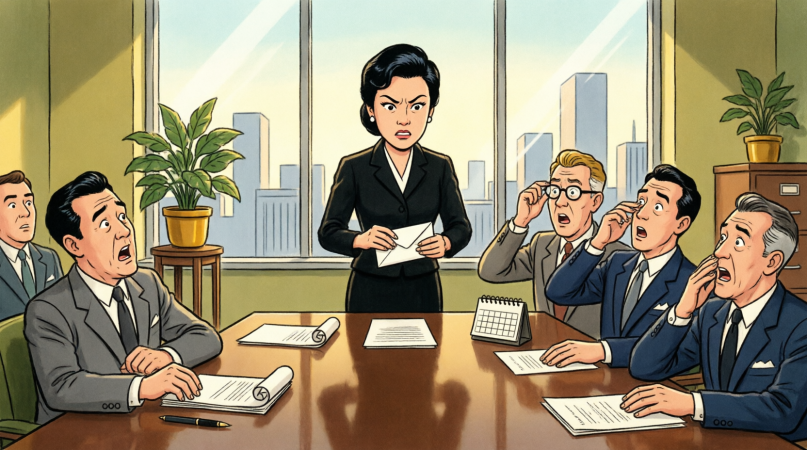
I turned. My grandfather’s widow was standing beside the long buffet table, one hand wrapped around a champagne flute, the other gripping a silver tray so hard her diamond bracelet flashed like a little warning light. Her black dress fit like it had been stitched directly onto her body. Not a wrinkle. Not a tear. Not one sign she had spent the last week in the same house as a dying man.
She pushed the tray into my hands. “If you’re going to look like the help, you may as well act like it. Serve the champagne. Guests are thirsty.”
Nobody laughed, but a few people smirked into their drinks. That was worse.
I took the tray because I had spent five years learning that sometimes the fastest way out of humiliation was through it. The crystal stems clicked softly against one another as I turned. My hands were steady. It was the only part of me that was.
The kitchen door swung shut behind me, cutting off the low murmur of the reception like a blade. In the kitchen, everything smelled like lemon polish, steel, and coffee that had been sitting too long on a warmer. The counters gleamed. The floor was cool under my flats. This room had been more mine than any bedroom in that mansion.
I set the tray down and stood at the sink, staring at the stain blooming across the dress. The club soda fizzed when I poured it on, tiny frantic bubbles racing over the fabric and dying there. The red didn’t move. It just spread, darker at the edges.
I caught my reflection in the brushed steel of the refrigerator. Twenty-five years old. Hair pulled back so tight my temples ached. A business management degree I earned at night one class at a time. A face that always looked too tired and too serious next to women like Brenda and Caitlyn, who floated through life glossy and effortless as magazine paper.
To the people in the other room, I was the leftover girl. The inconvenient one. The one who had stayed in the house not because I belonged there, but because old men needed medicine, meals, oxygen tanks changed at 2 a.m., and somebody had to do it.
But Grandpa Arthur had known better.
I could still see him in bed upstairs, skin papery and warm, one hand curled around the blanket while I read him market reports because he hated dying in ignorance. He liked the cadence of numbers. He liked hearing what steel was doing in Asia, what shipping costs were doing in Rotterdam, which CEO had lied on an earnings call. Some days, when the morphine nightmares had left him shaky, he’d close his eyes and just listen to my voice like it anchored him.
Brenda hated those moments.
For years I had asked myself why she and Caitlyn needed to grind me down every chance they got. Why the hallway shoulder checks. Why the fake sweetness in front of outsiders and the private venom once doors closed. Why they acted like my breathing in their direction was an insult.
Standing there with wine drying on my skin, I finally understood it in the plainest possible way.
It wasn’t because I was weak.
It was because I wasn’t.
Parasites hate anything that reminds them the host can still feel.
I dried my hands on a dish towel and picked the tray back up. Timothy, the junior associate from Sterling Legal, was due to read the will in ten minutes. I didn’t expect money. I didn’t expect the house. Grandpa and I had made our peace long before his last breath. But Arthur Sterling had never done anything without a reason, and the only thing I knew for certain was that he would not have let Brenda script the whole ending.
The library doors were closed when I got there. Heavy oak. Brass handles polished bright. I nudged one open with my shoulder and stepped inside.
The room smelled like old paper, cigar smoke trapped in leather, and greed. Not metaphorically. Greed had a smell if you sat around enough rich people. It smelled like expensive cologne poured over panic.
Timothy sat at the end of the mahogany table, thin and pale inside a charcoal suit that looked too old for him. He was shuffling papers like they might bite. Brenda sat to his right, composed and dry-eyed, already draped in widowhood like it was one more accessory. Caitlyn was beside her, scrolling on her phone with one glossy nude nail tapping the screen.
I stayed near the door.
Timothy cleared his throat. “We are gathered to read the last will and testament of Arthur James Sterling.”
It went the way they expected at first.
“To Caitlyn Mercer,” he read, “Arthur Sterling leaves five million dollars in liquid assets, to be distributed immediately.”
Caitlyn looked up, yawned, and said, “Cool.” Then she went back to her phone.
Timothy swallowed and kept reading. “To Brenda Sterling, he leaves the Manhattan penthouse and a life estate in the Connecticut residence.”
Brenda smiled then. Not a sad smile. A winner’s smile. Sharp and small. “He knew I couldn’t bear to leave our home,” she said softly.
Our home. She had spent every winter in St. Barts and called the hallways drafty.
Timothy shifted in his chair. His eyes flicked toward me, and something like pity moved across his face.
“And to Jazelle Sterling…”
The room changed. Not louder. Not quieter. Just tighter.
Brenda turned in her chair to look at me. “Go on,” she said. “Let’s hear what he left the help.”
Timothy reached into his briefcase and pulled out a single yellow envelope. It was thin, old-fashioned, sealed with cloudy Scotch tape. No legal stamp. No impressive folder. No ribbon. Just one cheap envelope like something rescued from the back of a junk drawer.
“He left you this,” Timothy said.
I walked forward and picked it up. It weighed almost nothing.
Before I could even turn it over, Brenda plucked it from my fingers. She held it up toward the chandelier, squinting theatrically. Then she barked out a laugh that scraped all the way down my spine.
“It’s probably his unpaid medical bills,” she said. “Or a list of chores he forgot to assign you.”
Caitlyn snorted.
Brenda tossed the envelope back onto the table. “He didn’t leave you money because he knew exactly what you were. A servant. Loyal, maybe, but not quality. He loved being taken care of. That doesn’t mean he loved you.”
That one landed. Not because it was true. Because some bruised, frightened part of me had always been afraid it might be.
My face stayed still. My lungs did not.
Brenda took a slow sip of champagne. “Don’t look so tragic. We’ll let you stay in the servant’s quarters for a few weeks while you figure out a shelter.”
Then she reached for the envelope again. “Actually, let me throw that out for you. Trash attracts rats.”
My body moved before my thoughts caught up. I snatched it off the table so fast her fingers closed on air.
“Don’t touch it,” I said.
The room froze.
Brenda’s chin lifted. “Excuse me?”
I stared at her. My hand was shaking, but my voice came out low and clean. “I said don’t touch it.”
For the first time in years, she looked surprised.
I turned and left before she could recover enough to weaponize the moment. Caitlyn laughed behind me and said something about the pantry and tears, but she was only half wrong.
I didn’t go to my room. I went to the butler’s pantry, the narrow room between the kitchen and dining room where I had spent hours polishing silver until I could see my face in every spoon. I locked the door, leaned against the counter, and broke the tape with my thumbnail.
Inside was a single white index card.
On it, in my grandfather’s jagged handwriting, were ten digits and one sentence.
Call when the wolves show their teeth.
I stared at the words until the room seemed to tilt around me.
Then I pulled out my cracked phone and dialed.
Who had Grandpa trusted enough to answer that number, and why did it feel like I’d just put my hand on the trigger of something huge?
Part 2
The call rang once.
“Sterling Legal,” a man said.
The voice on the other end was deep, roughened by age and cigarettes, and so familiar it made my spine straighten before I even placed it. Charles Sterling. My grandfather’s chief legal counsel. His oldest friend. The man Brenda had spent months trying to charm into meetings he never granted.
I swallowed. “This is Jazelle.”
There was a pause. Not confusion. Recognition.
“I know who it is,” Charles said. His tone changed on the last word, lowering into something almost formal. “I’ve been waiting for your call, Madam Chairwoman.”
My hand tightened around the phone. “You’ve been waiting for my what?”
“The transfer documents are ready. Security is on standby. We can be at the house in six minutes.”
The pantry suddenly felt too small. Too bright. The lemon polish smell turned sour in my nose. “Charles, I think you have the wrong—”
“I do not.” Papers shuffled on his end. “Arthur transferred the controlling shares of Sterling Group and the Connecticut estate into a blind trust six months ago. The sole trustee and beneficiary is you. Brenda received the penthouse and a cash distribution. Caitlyn received liquid assets. You received the company, the real property, and Arthur’s voting control.”
I couldn’t speak.
He kept going, brisk now, like the facts themselves would hold me upright if he got enough of them into the air quickly. “Arthur did not want the public filings triggered until your call activated the release. The yellow envelope was the final condition. Until the wolves showed their teeth, as he put it, the documents stayed sealed.”
“You’re telling me I own the house.”
“Yes.”
“And the company.”
“Yes.”
I looked at the pantry door. On the other side of it, Brenda was drinking champagne in my library and talking about temporary mercy in my house.
Charles lowered his voice. “Jazelle, Arthur spent months preparing you in ways I suspect you only half noticed. The market reports. The board packets. The questions at bedside. He was not passing time. He was training his successor.”
My throat burned.
“I’m still wearing a wine-stained funeral dress,” I said, because it was the stupidest true thing I could think of.
“That can be dealt with later,” Charles said. “Are you ready to take your seat at the head of the table?”
I looked down at the index card in my hand, at the pressure marks where Grandpa’s pen had dug into the paper. He had known. He had known exactly what they would do the minute his body was cold enough for the flowers to seem appropriate.
He had known, and he had not left me helpless.
“Yes,” I said.
When I stepped back into the hallway, I caught my reflection in the gilt mirror near the library door. My hair was still yanked into the practical knot I wore when I expected to be lifting oxygen tanks. The wine stain still sat over my heart. I looked tired and plain and furious. But the frightened girl who had run to the pantry was gone.
I pushed open the library doors.
Caitlyn was on some luxury dealership website, comparing two white convertibles like she was picking lip gloss. Brenda was on speakerphone, telling someone named Muffy that Arthur had “done the right thing in the end.” Timothy sat rigid and miserable at the far end of the table.
Brenda glanced up and, without breaking her sentence, held out her empty flute toward me and snapped her fingers.
“Finally. Top me off, Jazelle. And be careful—this carpet is silk.”
I stood at the head of the table.
“No,” I said.
Her phone went silent in her hand. Slowly, very slowly, she lowered it.
“What did you just say?”
I let the quiet stretch until even Caitlyn looked up.
“I said no.” My voice sounded calm, which surprised me. “I’m done serving you, Brenda.”
For a second, I saw the old version of myself reflected in her eyes—the one who flinched, apologized, folded in on herself. When that version didn’t show up, her face hardened.
“You ungrateful little leech,” she said, standing. “You think because Arthur left you a scrap of paper you can raise your voice in my house? Get out.”
“That won’t be necessary,” Charles Sterling said from the doorway.
The double doors swung wider.
Charles walked in with the easy authority of a man who had spent forty years making judges regret underestimating him. He wore a navy overcoat over a dark suit, silver hair combed straight back, not one step wasted. Behind him came four security men in black, not the decorative event staff Brenda hired for parties, but the kind who looked like they knew exactly how much force a wrist could take before it broke.
Timothy nearly half stood. “Mr. Sterling—sir—I didn’t know—”
Charles ignored him. He crossed the room, stopped beside me, and dipped his head the slightest fraction.
“Madam Chairwoman.”
Caitlyn actually laughed. It came out too high and too thin. “Okay, what is this? Some prank? She’s the maid.”
Charles opened a leather portfolio and placed a document on the table. Crisp white paper. State seal. Signatures.
“This,” he said, “is the deed of transfer executed six months ago by Arthur James Sterling, together with the trust instruments assigning ninety percent of his voting control in Sterling Group to a blind trust.”
Brenda planted both hands on the table. “And who controls the trust?”
Charles looked at her with the same expression a surgeon might wear before explaining why gangrene could not be negotiated with.
“Jazelle Sterling.”
Caitlyn’s mouth fell open.
Brenda stared at the paper, then at me, then back again, like reality might change if she blinked hard enough. “No,” she said. “No. I’m his wife.”
“You were his wife,” Charles corrected. “Arthur provided for you generously. The penthouse, liquid cash, personal effects as designated. But his legacy, his estate, and his controlling interest were not entrusted to you.”
I could feel my heartbeat in my teeth.
Brenda’s face went white, then flushed red so quickly it was almost theatrical. “This is a forgery. Arthur was medicated. He couldn’t possibly have known what he was signing.”
“He knew exactly what he was signing,” Charles said.
I stepped closer to the table. My knees felt weak, but my voice didn’t. “He wanted you comfortable while you left, Brenda. He just didn’t trust you with anything that mattered.”
Her eyes snapped to me, glassy and vicious. “This is my house.”
I picked up the champagne bottle sitting beside her place setting and tilted it. The pale gold liquid poured in a shining arc straight onto the cream silk carpet. The smell rose sweet and yeasty. Bubbles hissed into the fibers.
Brenda recoiled like I’d struck her.
“No,” I said quietly. “This is my house.”
For one beautiful second, it was over. I could see it on Caitlyn’s face, on Timothy’s, even on one of the security men who looked like he had seen dozens of ugly domestic scenes and still knew a reversal when it happened.
Then Brenda’s expression changed.
The panic drained out of it. In its place came calculation.
She reached into her clutch, pulled out her copy of the will, and flipped pages so fast the paper made a dry, angry flutter.
“Paragraph seven,” she said.
Charles did not move.
Brenda’s nail jabbed the page. “Read it.”
Timothy, still half standing, swallowed and read in a shaky voice. “Regardless of ownership transfer, Brenda Sterling retains a life estate in the primary residence for the duration of her natural life.”
Brenda smiled slowly. “You may own the deed, Jazelle, but I have the legal right to live here until I die.”
My stomach dropped.
She leaned back in her chair, relaxed now, almost glowing with fresh malice. “So here’s what’s going to happen. You can play little chairwoman at the office, but in this house? You’ll see me every morning at breakfast. Every night in the hallway. I’ll host parties in your rooms and laugh when you hear them from upstairs. I’m going to stay right here and make your life hell.”
Charles’s jaw tightened, but he gave the smallest nod.
On paper, she was right.
Brenda saw that nod and something hungry lit up in her face. The moment she realized she could still contaminate the one place Grandpa had tried to make safe, she almost looked happy again.
Her gaze slid across the room and landed on the tall Ming vase by the fireplace.
I knew that look. I had seen it when she broke my mother’s teacup and called it an accident. When she “misplaced” my acceptance letter. When she smiled too calmly right before choosing the cruelest thing available.
She rose from her chair and reached for the vase.
And in that instant, I understood that winning wasn’t enough for Brenda. She always had to ruin something on the way out.
Part 3
The vase was taller than my torso, cream porcelain painted with blue cranes lifting out of reeds. Grandpa used to joke that it looked too elegant for the rest of us and that one day he’d leave it to a museum where nobody with a pulse could breathe near it.
Brenda wrapped both hands around it and lifted.
“Brenda—” I started.
She looked right at me and let it go.
The crash was enormous. Ceramic exploded across the marble in white-and-blue shards. A few pieces skidded under the table. One spun in a tight bright circle before settling near my shoe. The sound hit the bookshelves and came back twice.
Caitlyn screamed. Timothy flinched so hard his chair tipped.
Brenda breathed hard through her nose, cheeks flushed, chest rising and falling. She looked almost triumphant. “Oops,” she said, and there it was again—that same stupid word, that same childish little excuse put on like lipstick after violence.
She wanted me to cry.
Instead, Charles turned one page in the file with slow, deliberate fingers.
“I was hoping,” he said dryly, “you’d have enough self-control to avoid this.”
Brenda’s smile twitched.
Charles looked at Timothy. “Read the conditional clause attached to the life estate.”
Timothy righted his chair and bent over the documents. His face lost what little color it had left. “The life estate shall be void immediately in the event of deliberate destruction, removal, or sale of any item included in the Sterling Collection inventory.”
Charles folded his hands behind his back. “The vase you just destroyed is inventory item one.”
For a second, Brenda didn’t understand. I saw it happen in pieces. Her eyes moved from Timothy to Charles to the ruined porcelain at her feet. I watched the meaning arrive and hollow her out from the inside.
“No,” she said. “That’s absurd. It was a vase.”
“It was catalogued, appraised, insured, and specifically listed,” Charles said. “And the library is covered by four separate cameras.”
One of the security men held up a tablet. On the screen, frozen under the timestamp, was Brenda with the vase in both hands and malice written all over her face.
Caitlyn made a choking sound. “Mom?”
Brenda turned on Charles with a fury so pure it almost looked like fear. “You smug old bastard. You planned this.”
“No,” Charles said. “Arthur planned this.”
The police arrived eight minutes later. I know because the grandfather clock by the fireplace ticked through every one of them, and each click felt like the house taking itself back.
Brenda did not go quietly.
She shouted that I was a thief. That Charles was senile. That the officers were humiliating a grieving widow. When one of them read out felony destruction of property, her voice cracked on the last word she tried to scream. She twisted hard enough that one heel snapped, leaving a black stiletto bent sideways on the carpet like a dead insect.
Caitlyn backed toward the door, one hand over her mouth. Her eyes kept darting to me, then to the officers, then to the front hall as if she were calculating distances. When one officer asked her to remain for a statement, she bolted.
Actually bolted.
The slam of the front door echoed through the house.
Nobody chased her immediately. Brenda was enough chaos for one minute, then two. By the time the police got her into the cruiser, the sun had dropped lower over the back lawn, staining the windows amber. The reception flowers in the foyer had started to smell too sweet, like rot wrapped in perfume.
When the last cruiser rolled down the drive and the house finally went quiet, the silence rang in my ears.
Charles stood with me in the library while staff began sweeping. “You don’t have to stay in here,” he said.
“I do,” I answered.
He studied me, then nodded once and left me alone.
I crouched beside the broken vase before the cleaning crew could gather the pieces. The marble floor was cold through my dress. Tiny ceramic fragments bit into my fingertips as I moved them aside. Under one curved shard, face down and dusty at the edges, was a square of old film.
A Polaroid.
My breath caught.
I picked it up carefully.
It was me as a baby, pink and furious and wrapped in a blanket with ducks on it. Grandpa Arthur held me against his chest, thirty years younger, dark-haired, grinning crookedly at the camera while I wailed like the world had offended me personally. On the back, in his jagged handwriting, were six words.
My greatest treasure came first.
That did it.
I sat back on my heels among the ceramic debris and cried so hard I had to press the heel of my hand against my mouth to keep from making noise. Not because he’d left me money. Not because I owned the house now. Because that one sentence reached straight into the oldest bruise I had and named it a lie.
He had loved me.
Not politely. Not conditionally. Not because I was useful.
First.
By the time I washed my face, changed into one of Grandpa’s old cashmere cardigans over leggings, and went up to his study, dusk had deepened into a blue-gray evening. The room smelled like cedar drawers, tobacco ghosts, and the faint medicinal bitterness of the creams I used to rub into his hands. His reading glasses were still on the side table beside a half-finished crossword. A yellow legal pad lay on the desk with his blocky handwriting scrawled across the top line: ask J about rail margins.
I touched the page and had to close my eyes for a second.
My phone buzzed on the desk.
It was an email from Charles with one line in the subject field: Tomorrow, 8:00 a.m. Boardroom.
Before I could open it, a news alert flashed across the screen.
STERLING GROUP SHARES DIP ON RUMORS OF SUCCESSION CHAOS
Another message came in almost immediately, this one from an unknown number.
Congrats on the house. The company won’t be that easy.
I stared at the text while the last light drained out of the windows.
Somebody had moved faster than grief, faster than the lawyers, faster than me—and suddenly I knew the wolves were bigger than Brenda.
Part 4
I barely slept.
Every time I closed my eyes, I saw different versions of the same thing: Brenda’s hands on the vase, Grandpa’s Polaroid under the shards, the text message glowing cold in the dark. By four-thirty the house had settled into that thin pre-dawn stillness where even the pipes sounded cautious. I gave up, got dressed, and went downstairs.
The coffee machine in the kitchen hissed like it disapproved of me. I stood there in a navy suit I’d bought for job interviews I never got to take, staring out at the back lawn while the first bitter smell of coffee rose into the room. Mist hung low over the grass. Somewhere near the hedges, a bird gave one irritated chirp and shut up.
At seven, a black sedan pulled into the drive.
Charles sent a driver, but he came with the car anyway. He got out wearing a charcoal suit and the expression of a man bracing for institutional stupidity.
“You eat?” he asked as soon as I slid into the back seat.
“Coffee.”
“That’s not food.”
“It was hot.”
He gave me a look and handed me a paper bag from the front seat. Inside was a still-warm egg sandwich wrapped in wax paper. I almost laughed. “You travel with emergency breakfast?”
“I travel with emergency everything.”
The city rose around us in glass and steel. Sterling Group headquarters stood on Madison like it had been built to outstare the neighboring buildings. Blue-black windows. Bronze trim. A lobby big enough to make ordinary people lower their voices. I had been there before, always through side entrances, always bringing documents Grandpa wanted or picking up briefing binders from assistants who looked through me.
This time the front doors opened.
The lobby smelled like polished stone, espresso, and money newly pressed into suits. My heels clicked too loudly across the floor. I hated that I noticed. Receptionists lifted their heads. Security straightened. A man by the elevators whispered into his earpiece.
“Ms. Sterling,” a woman said, stepping toward me.
She was in her sixties, silver hair in a sleek French twist, gray suit immaculate. Elena Alvarez, Arthur’s longtime executive assistant. The keeper of his calendar, his moods, his impossible standards. When Grandpa was still strong enough to come in twice a week, Elena had run the building around him with the calm brutality of air traffic control.
She held out a hand. “Your grandfather told me if this day came, I was to stand on your left and bring antacids.”
I shook her hand. Her grip was firm. “Do you have the antacids?”
“In my purse and in my desk.”
For the first time that morning, I smiled.
The boardroom on forty-two smelled like chilled air, leather chairs, and the faint lemon bite of furniture polish. Floor-to-ceiling windows looked over the city, but nobody was enjoying the view. Seven board members sat around the table, all some variation of expensive, controlled, and already suspicious. The seat at the head of the table waited empty.
Victor Dane stood near the windows speaking softly into his phone.
He ended the call when we walked in and turned with a smooth concern that would have impressed me if Grandpa hadn’t once described him as “the kind of man who irons his lies before he tells them.” Victor was Sterling Group’s COO, mid-fifties, silver at the temples, handsome in a catalog way. He had the patient eyes of a doctor and the soul of a knife drawer.
“Jazelle,” he said warmly, coming toward me. “I’m so sorry. Arthur thought very highly of you.”
He held my hand a fraction too long.
“I appreciate that,” I said.
His eyes flicked over my suit, my shoes, my face, assessing. “This is a difficult morning. The board is rattled. Best thing you can do is keep calm and let us help.”
Us.
The old instinct rose fast—nod, make yourself smaller, let the professionals speak. I felt it in my shoulders before I felt it in my thoughts.
Then I remembered Grandpa asking me, on a Tuesday night while I changed the battery in his oxygen monitor, what I thought about their shipping exposure in the Gulf. I remembered him listening, really listening, then asking me what I would do if everyone in the room underestimated me because I looked like support staff.
“Use it,” he’d said before I could answer. “People who misread you give away the map.”
I took the head seat.
The room noticed.
Victor’s smile thinned so slightly most people would have missed it. Elena did not. She put a folder in front of me and took the chair to my left.
The meeting started ugly and got uglier.
One director wanted “temporary stewardship” while the board “evaluated transition risk.” Another asked, too casually, whether Arthur had been “fully lucid” during his final months. On screen, dialed in from some tasteful office with beige walls, Brenda’s attorney asked for a pause in governance pending a challenge to the trust.
I let them talk.
There was power in watching people reveal themselves before you started answering.
When the questions came to me, I answered.
I knew the debt load on our manufacturing arm because I had read the covenants aloud to Grandpa three times when morphine made the print swim for him. I knew the last quarter’s margin compression in consumer goods because he’d made me explain it back to him in plain English. I knew which board member had pushed hardest for an overvalued acquisition two years ago because Grandpa had once muttered, while I rubbed heat into his knees, “If Whitmore says synergy one more time, I’ll buy him a thesaurus and a muzzle.”
By the time I finished outlining the company’s exposure, pending litigation, and the three cost centers most vulnerable to media panic, nobody in the room was looking at me like the maid anymore.
Victor folded his hands. “Impressive. But knowledge isn’t governance. Arthur’s death creates a vacuum, and markets hate vacuums. We need stability.”
“Agreed,” I said.
He looked relieved for half a second.
“That’s why I’m authorizing an independent forensic audit of discretionary spending across executive offices, outside vendor relationships, and charitable foundations tied to Sterling Group over the last eighteen months.”
Silence.
Actual, delicious silence.
Whitmore blinked. Someone’s pen stopped moving.
Victor’s expression did not change, but something sharpened behind his eyes. “That seems unnecessarily aggressive.”
“Does it?” I asked. “We have succession rumors, market jitters, and a challenge from an heir who was provided millions and a penthouse but somehow still feels cheated. An audit is the calmest thing I can think of.”
Elena slid prepared resolutions to the board before anyone recovered enough to object.
The vote was not unanimous. It didn’t need to be. Arthur’s shares were mine.
When the meeting adjourned, the room emptied in clusters of cologne and whispers. Victor paused at my chair.
“You handled yourself well,” he said. “Just be careful you don’t mistake suspicion for strategy.”
“Thank you,” I said. “I’ll try not to.”
He smiled. It looked expensive and bloodless. “Arthur trusted me for twenty years.”
“Then you should have nothing to worry about.”
After he walked out, Timothy appeared at the door looking like he’d been poured into his suit by someone with shaky hands. “Ms. Sterling?”
He was holding a slim gray folder.
“What is it?” I asked.
He closed the door behind him. “These were duplicate invoices flagged during archival review. I—I wasn’t sure they mattered at first, but after this morning…” He handed me the folder. “They route through a media consultancy called Aurelian Strategies.”
I opened it.
The first invoice was for six hundred thousand dollars in “brand alignment services.” The second for eight hundred thousand. The third for nearly a million. Same vague language. Same approval path through the COO’s office. Same receiving entity: Aurelian Strategies LLC.
A sticky note on the front had one line in Timothy’s cramped handwriting.
Caitlyn Mercer listed as owner.
My pulse kicked.
There was one more document at the back: a medical competency affidavit signed by a Dr. Neil Rourke, dated two days before Arthur transferred the trust.
I stared at the signature.
“I took care of Arthur every day,” I said slowly. “He never saw any Dr. Neil Rourke.”
Timothy’s face had gone shiny with sweat. “That’s what I thought.”
A fake doctor. Fake money. And someone inside the company trying to erase the trail before I could even sit down in Grandpa’s chair.
When I looked up, Timothy was already backing toward the door like he regretted his own courage.
And I couldn’t stop thinking the same thing: if that affidavit was forged, what else had they already buried?
Part 5
By noon, my office smelled like paper, printer toner, and the headache I was trying not to admit I had.
It used to be Arthur’s office. The desk was the same broad slab of walnut with a nick along the left edge where he’d once slammed a stapler during a bad earnings call. The shelves were lined with annual reports, framed photographs, and the exact same brass ship clock he used to squint at before saying, “Well, if they’re late, let them be late with confidence.”
I should have felt comfort in the room.
Instead, I felt watched.
Every surface in there carried him, but none of it could tell me which wolf had already climbed through the walls.
Charles wanted to move carefully. “Let the audit start. Build your record. Don’t fire accusations into the wind.”
I understood why. Courts liked clean facts and hated dramatic instincts. But dramatic instincts were what had kept me alive in Brenda’s house. You learned to read danger in tiny shifts: the silence before the insult, the smile before the shove, the weirdly cheerful tone right before something disappeared from your room.
“Who handles internal systems?” I asked.
Elena, seated on the sofa with a legal pad balanced on one knee, answered immediately. “Gabe Henson. Cybersecurity. Arthur liked him because he was rude to vice presidents.”
“Perfect,” I said.
Gabe turned out to be thirty-something, broad-shouldered, sleep-deprived, and wearing a tie that looked personally offended to be on him. He came into the office with a laptop under one arm and burnt coffee in a paper cup. His eyes flicked to my face, then to Charles, then back again.
“You really want the live logs?” he asked.
“I really do.”
He set up at the conference table in the corner. The screen filled with lines of activity so fast they looked like rain. Access points. Login times. File pulls. Deleted packets. He talked in clipped sentences while his fingers moved.
Aurelian Strategies wasn’t a real operating firm. It was a shell with a polished website, two fake employees, and a billing address that led to a co-working space in SoHo. The company account receiving funds was linked through two intermediary entities before landing in a private portfolio tied to Caitlyn Mercer.
Not gifts. Not inheritance advances.
Theft, laundered through lipstick branding language.
“Who approved the payments?” I asked.
“Digitally?” Gabe said. “Victor Dane’s office credentials on most. Two from Brenda’s foundation liaison account. One weird late-night override from Arthur’s executive terminal—but the timing’s wrong.”
Elena leaned forward. “Wrong how?”
Gabe clicked into the metadata. “The override happened at 2:14 a.m. six weeks ago. Arthur’s terminal was used with a local password, not biometric confirmation. Security badge entry says he was in the house hospice suite all night.”
I felt the temperature in the room shift.
Somebody had used Grandpa’s name like a deadbolt key.
My phone buzzed. Victor.
I looked at the screen until it stopped, then started again.
“Take it,” Charles said quietly. “Better to know the shape of his lie.”
Victor suggested lunch in the executive dining room. “So we can get aligned,” he said.
Aligned, I had noticed, was the word people used when they wanted you to agree before you understood.
The dining room looked like a hotel restaurant designed by men who had never once thought about comfort. White tablecloths. Gray carpeting. Art too expensive to look at. Victor ordered sparkling water and grilled salmon. I ordered coffee because I didn’t trust my stomach.
He folded his napkin with the precision of a man used to being watched. “You made waves this morning.”
“Good.”
One side of his mouth lifted. “Arthur liked that answer in theory more than in practice.”
“Did he?”
Victor studied me. “You should know there are people around you right now who will feed your suspicion for their own reasons. Timothy, for example. Nervous young men love relevance.”
There it was. A nudge. A test. A suggested direction.
“I prefer evidence to gossip,” I said.
“As do I.” He cut into his salmon. “Aurelian handled discreet media placements for the foundation. Caitlyn’s name being on paperwork is sloppy, but not necessarily sinister. Brenda liked to keep things in the family.”
Family. He said it with a straight face.
I watched him lift his fork. Gold cufflinks flashed at his wrists. Dark blue enamel, ringed in silver. An odd design—two crossed cranes.
Something in my memory tugged.
Not the symbol. The color.
The same deep blue I’d seen in a mirror selfie Caitlyn posted three months ago, standing in Brenda’s penthouse bathroom with a man cropped carefully out of frame except for one wrist and one expensive cufflink.
I smiled at Victor. “You’re probably right.”
His eyes warmed a degree. He thought he’d soothed me.
When I got back to the office, I asked Gabe to pull building access for Victor’s office after hours and Elena to send me everything the company had ever paid through Brenda’s foundation. By six, I had a headache sharp as a nail and a stack of printouts thick enough to injure someone.
I took them home.
The mansion was too quiet without Grandpa’s machines. No low hum from the oxygen concentrator. No intermittent cough from upstairs. Just the creak of old wood, the faint chill smell of stone in the foyer, and the occasional far-off clink from staff resetting the house after disaster.
I went straight to Grandpa’s study.
The desk drawers held the usual things: fountain pens, old receipts, hand lotion, a packet of peppermints he pretended not to like. But behind a row of annual reports on the lower shelf, I found a narrow panel that gave under pressure.
Inside was a tin box.
In it lay a brass key, a folded note, and a page torn from one of Grandpa’s legal pads.
The note was only one line.
If they push too neatly, they planned it messy.
The page beneath it was worse. A handwritten list of account numbers, dates, and initials. B.S. C.M. V.D.
Brenda Sterling. Caitlyn Mercer. Victor Dane.
My pulse thudded hard enough to make my fingertips buzz.
A sharp electronic chirp sounded somewhere in the house.
Then another.
The security system.
A minute later there was a knock at the study door, quick and controlled. I opened it to find Lucas Reed, head of estate security, tall and broad in a dark suit with rain on the shoulders.
“Motion tripped in the greenhouse,” he said. “Back corner camera caught movement.”
I looked past him down the hall. The house felt suddenly alive in the wrong way.
“Show me.”
The greenhouse sat beyond the formal gardens, all glass panes and black iron ribs shining wet under the security lights. Rain tapped softly overhead when we stepped inside. The air smelled like wet soil, tomato vines, and the sharp green bite of crushed basil.
Something moved behind the potting bench.
Lucas went left. I went right.
A heel snapped against tile, then a body straightened too fast.
Caitlyn.
Her mascara was smudged. Her cashmere coat hung open over a silk slip dress like she’d come out in a hurry. In one hand she held a stack of old photo envelopes. In the other—clutched so tight her knuckles went white—was a black key card.
She saw me and froze.
Then she dropped the photo envelopes, spun, and ran for the side door.
The key card skidded across the wet tile and landed at my feet.
I bent, picked it up, and turned it over under the greenhouse light.
STERLING GROUP — EXECUTIVE ACCESS
V. DANE
Why was Caitlyn sneaking through my grandfather’s greenhouse with Victor Dane’s key card, and what had she come to steal before I caught her?
Part 6
“Caitlyn!”
My voice cracked across the greenhouse glass, but she was already out the side door, heels slipping on wet stone. Lucas lunged after her. I followed more carefully, one hand on the iron frame because the flagstones were slick with rain and moss.
The night smelled like mud and boxwood and something metal-rich carried in on the storm. Somewhere down by the hedges, a sensor light clicked on hard and white.
Caitlyn made it as far as the yew maze before one of her shoes gave up on her completely. She kicked it off, stumbled, and Lucas caught her by the elbow before she hit the gravel.
She twisted around with a hiss. “Get off me!”
“Stop moving,” Lucas said evenly.
I reached them a second later, breathing hard. Rain had darkened Caitlyn’s hair around her face. Up close she looked younger than she usually did, less finished, less expensive. Fear had a way of smudging people back toward the truth.
“What were you doing in the greenhouse?” I asked.
She yanked her arm free from Lucas and hugged herself. “I came for pictures.”
“With Victor’s access card?”
Her gaze flicked to my hand where I still held it. “I borrowed it.”
“From Victor?” I asked.
She looked away. The silence answered for her.
Lucas stepped back half a pace, giving me room but not enough that Caitlyn could bolt again. Rain tapped softly on the clipped yew walls around us. Somewhere deeper in the garden, wind chimes clinked in a pattern Grandpa always said sounded like nervous teeth.
“What pictures?” I asked.
She swallowed. “Old ones. Before Brenda. Before everything got… weird.”
The word almost made me laugh.
“Weird,” I said. “Is that what we’re calling felony theft, forged invoices, and your mother trying to terrorize me out of my own home?”
Caitlyn winced, and for one wild moment I thought maybe shame had finally found her.
Then she set her jaw. “You don’t understand anything. Mom said Arthur promised to take care of us.”
“He did,” I said. “He gave you five million dollars.”
“You think money was the point?” she shot back.
That stopped me.
Not because I believed her. Because she sounded insulted by her own motive, as if greed were too simple for what she wanted. People like Caitlyn were never satisfied by comfort. They wanted placement. Ranking. Proof they mattered more than someone else.
She exhaled shakily and looked past me toward the dark house. “I came for a folder.”
My skin prickled. “What folder?”
She bit her lip hard enough to blanch it, then glanced around like Brenda might step out of the hedges. “Blue. Arthur kept it somewhere in the study. Mom said if you found it first, we were done.”
Lucas and I exchanged a look.
“What’s in it?” I asked.
“I don’t know exactly.” Her voice dropped. “Medication notes, maybe. Something about his nights. Victor said it was nothing, just old-man paranoia, but Mom wouldn’t stop talking about it.”
The rain seemed louder all at once.
“What nights?” I said.
Caitlyn shook her head too fast. “I shouldn’t be here.”
“You’re right,” I said. “You shouldn’t.”
Her face hardened again, fear curdling back into meanness because that was the language she knew best. “You really think he chose you because you’re special? He chose you because you were convenient. You were already there changing his sheets.”
I stepped closer until she had to look at me.
“Maybe,” I said. “And he still chose me.”
That landed better than any slap could have.
Her eyes flashed with something ugly and wet. “You’re enjoying this.”
“No,” I said. “I’m finally seeing clearly.”
Lucas’s radio crackled at his shoulder. One of the security officers had found a burner phone under the potting bench in the greenhouse. Bagged. Still powered on.
Caitlyn went still.
“Did you leave that there?” I asked.
She didn’t answer.
Lucas looked at me. “I can have local police pick her up now.”
Caitlyn’s head snapped up. “No. No police.”
“Then start talking.”
She rubbed her bare arms and stared at the gravel. “Mom told me to get in, find the folder, and get out. She said the cameras were mostly dead because half the system still needed resetting after the funeral reception. She said Victor had access. That’s all.”
“That’s not all,” I said.
Her silence stretched.
Then, so softly I almost missed it, she said, “The last week Arthur was alive, Mom kept saying he was writing things down. She hated when he wrote things down.”
Back inside, the burner phone gave us more.
Gabe, patched in remotely from his apartment with the distracted intensity of a man eating takeout over a keyboard, broke into it in twelve minutes. The message thread was mostly between Caitlyn and a number saved only as B.
Get the blue folder before she finds Arthur’s medication notes.
Check the greenhouse bench.
Use Victor’s card, not yours.
If you see the yellow envelope, bring that too.
The last message had been sent less than an hour before Caitlyn showed up.
I felt cold all through.
Charles arrived just after ten with a probate specialist and the expression of a man who had expected a quiet evening and gotten family rot instead. We searched Grandpa’s study wall to wall.
The blue folder was not in the desk. Not in the file cabinets. Not in the credenza where he kept tax binders and old fountain pen ink.
It was in the wall safe behind a landscape painting of the Maine coast.
The brass key from the tin box opened it.
Inside were three things: a leather journal, a thick packet of letters tied with faded green ribbon, and a blue folder.
My hands shook when I opened the journal.
Arthur’s handwriting slanted across the page in dark, impatient lines.
Brenda has become reckless. Victor covers too quickly. C. sees more than she understands. J. sees what matters.
Another page.
Call button unplugged again. Brenda says nurse must have kicked cord loose. Not possible.
Another.
If I mention the blue bottle directly, they’ll hide it. Must document first. Must keep J. away from this until it breaks open.
I turned pages faster, heart hammering.
He had known the money was bleeding. He had known Victor was helping. He had known Brenda was meddling with his room at night. Not enough to prove murder, not enough even to prove intent—just a pattern of tampering, control, and fear.
Tucked in the back flap of the journal was a note in fresher ink.
If I am gone before we speak, ask Nurse Marisol about the blue bottle.
I looked up from the page. Charles had gone very still. Lucas swore quietly under his breath.
Medication notes. A call button unplugged. A nurse. A blue bottle.
Grandpa had not just been planning for a fight over money.
He had been trying to leave me a trail to something much darker.
Part 7
Nurse Marisol agreed to meet me at a diner off I-95 that still had a pie carousel by the register and chrome napkin holders on the tables.
I got there early. The place smelled like coffee, bacon grease, and the lemon disinfectant they used too heavily on the counters. A waitress in pink lipstick kept topping off my mug like caffeine could fix what was coming.
Marisol arrived in navy scrubs under a quilted coat, hair twisted up in a clip, eyes ringed with exhaustion. She looked around before sliding into the booth across from me.
“I shouldn’t be here,” she said.
“I know.”
“I could lose my license.”
“I know.”
She held my gaze a second, deciding whether I was worth the risk. Then she set her purse on the seat beside her and leaned in.
“Your grandfather was dying,” she said. “I want to be careful with that because people hear one suspicious thing and suddenly everything becomes a murder mystery. He was dying, Jazelle. But he was also being handled.”
The coffee turned sour in my stomach.
“By Brenda?”
Marisol nodded once. “And sometimes Mr. Dane. He came by late in the evenings more than made sense for a COO. Not board stuff. Personal stuff. Whispering, door half shut.”
“Did you ever see them give Arthur anything?”
“Not directly. But twice I found medications moved from where I’d logged them. Once the call cord was unplugged. Once his overnight water had crushed sedatives in it that I had not dispensed.” She exhaled sharply through her nose. “That was the blue bottle. No label. Brenda said they were herbal sleep drops from Switzerland. I threw the first bottle away because I thought she was just being ridiculous. After that I started writing everything down.”
I thought of Grandpa’s journal. Of the blue folder in the safe. Of Brenda saying old-man paranoia like his fear had been an inconvenience.
“Do you still have your notes?”
Marisol gave a humorless smile. “I’m a hospice nurse. We survive because we keep notes.” She slid a photocopied packet across the table. Dates. Times. Dosages. Observations. On one page, highlighted in yellow, were the words: Patient unusually unresponsive after spouse-administered ‘supplement.’ Cord from bedside call unit found disconnected at wall.
“Why didn’t you report it?” I asked.
“I did.” Her eyes hardened. “To the doctor on file. Dr. Rourke.”
The fake name from Timothy’s folder hit me like cold water.
Marisol saw it on my face. “So you know about him.”
“I know Grandpa never saw him.”
“He came once,” she said. “Didn’t examine Arthur. Spoke to Brenda in the hall. Left fifteen minutes later.” She picked at the paper sleeve around her coffee cup. “A week later I was told not to return. Brenda said the family wanted ‘more privacy.’”
Outside the diner windows, trucks hissed over wet pavement. A little boy in a red raincoat dragged his mother toward the pie case. Ordinary life kept happening, rude as sunlight.
I tucked the packet into my bag. “Thank you.”
Marisol looked at me for a long moment. “Your grandfather knew what was happening around him more often than they thought. He was weak, not stupid.”
I laughed once, bitter and short. “That sounds like him.”
Before I left, she caught my wrist. “Be careful who panics now that you know this.”
Back at headquarters, I did exactly what Grandpa would have done.
I baited the trap.
Gabe set up a decoy memo in the executive system—a fabricated instruction authorizing the movement of reserve funds into a temporary holding account pending acquisition review. It looked real enough to panic anyone already stealing or desperate to cover tracks. We seeded it where only a handful of top-level accounts could see it.
Then I hosted the annual Sterling Foundation gala that night at the mansion because canceling it would spook the market and because sometimes the best place to watch liars is under bright lights and string quartets.
By six, the house smelled like beeswax candles, expensive perfume, and food carried past on silver trays. The front hall glittered. The staircase rail gleamed. Society women who hadn’t said ten words to me in five years suddenly wanted to tell me how resilient I looked.
I wore a navy dress Elena chose because she said black would make me look like grief and red would make me look like revenge. “Navy says competence,” she’d announced, zipping me into it while I stood there dazed in the dressing room like a department store mannequin with trauma.
The library, where Brenda had tried to bury me two days earlier, now hummed with donors, board members, and the practiced laughter of people who could smell hierarchy shifts like weather. Victor moved through the room with easy grace, reassuring investors, patting shoulders, creating the impression of stability simply by existing near expensive art.
He caught my eye from across the room and lifted his glass slightly.
I smiled back like I had forgotten how wolves worked.
At seven-thirty, Gabe texted.
Bait accessed. Victor credentials. Source IP: Brenda penthouse.
I stared at the screen.
Victor was standing fifteen feet away, currently charming a biotech founder and a senator’s wife beside the fireplace.
So either he was very talented, or someone else was using his access in Brenda’s penthouse.
Before I could process that, Caitlyn appeared at my elbow in an ivory dress that made her look like a badly edited apology.
“Can we talk?” she asked.
“No.”
Her mouth tightened. “You’re making a mistake.”
“That’s usually your family’s specialty.”
A flash of hurt crossed her face, then vanished. She leaned closer, perfume heavy and floral. “Check the piano bench in the music room before Victor leaves tonight.”
I turned to her fully. “Why?”
But she was already stepping away into the crowd, swallowed by tuxedos and candlelight.
My phone buzzed again. Lucas this time.
Music room cleared. Found something under bench. Looks old. Want me to bring it?
I looked toward the corridor beyond the ballroom, pulse kicking higher.
Yes, I typed.
A minute later Lucas handed me a small cassette recorder, scuffed and silver, with one unlabeled tape inside.
Grandpa had left me another voice.
And suddenly the glittering room around me felt less like a gala and more like a stage set built over a sinkhole.
Part 8
I slipped into the music room and locked the door.
The sounds of the gala dimmed at once, reduced to soft bass and laughter through thick walls. The room smelled faintly of old varnish and roses. Moonlight lay across the grand piano in a pale stripe, catching dust on the lacquer.
Lucas stood by the door, arms folded, keeping watch while I turned the cassette recorder over in my hands. It was one of Grandpa’s old dictation machines, the kind he used before everything went digital because, as he liked to say, “Tape doesn’t ask for a software update in the middle of a thought.”
My fingers felt clumsy.
“Want me to—?” Lucas started.
“I’ve got it.”
The play button stuck halfway before sinking with a soft click.
For a second there was only hiss.
Then Grandpa’s voice filled the room—thinner than I remembered, roughened by illness, but unmistakably him.
If you’re hearing this, Jazelle, then either I’m dead or technology has finally offended me beyond repair.
My throat closed.
He coughed, waited, then kept going.
I am making this because paper can be hidden and legal things can be delayed, but people tell the truth differently when they think they’re only speaking to themselves. If the house is loud and everyone is pretending to mourn, you’ll need clean lines.
Another rustle. Breathing. The scrape of a glass on wood.
Brenda is taking money. That part is obvious. What matters is who is teaching her where to put it. Victor smiles too easily when I mention audits. Caitlyn is involved, though I suspect she understands the least and spends the fastest. Charles knows enough to be useful. Timothy is green but clean. Elena knows nothing and should stay that way until necessary.
I closed my eyes.
Grandpa gave one bitter little laugh. It ended in another cough.
If they challenge my mind, know this: I have known exactly what I was doing. I chose you because you notice things that selfish people edit out. Room temperature. Tremors. Hesitation. Guilt. You don’t chase attention, which means you can still see.
I pressed my free hand hard against my ribs.
The tape hissed.
Three nights ago I woke unable to call for help because the cord had been unplugged again. I heard Brenda in the hall. I heard Victor with her. Then later, lighter steps—Caitlyn. Crying. She is weaker than her mother. Weak people can still do damage, but they also crack first.
He paused for so long I thought the tape had ended.
If Brenda ever offers tears, remember they arrived after the choice, not before it.
The tape clicked off.
I stood there staring at the recorder while the moonlight pooled white over my knuckles.
Lucas was quiet beside the door. He had the kind of stillness that never felt empty. “That enough for you?” he asked softly.
“No,” I said. “But it’s a start.”
My phone vibrated in my hand before I could think further. An unknown local number.
I answered.
It was Caitlyn, and she was crying so hard she could barely get words out.
“Please,” she said. “Please don’t hang up. My mother’s here. She says if I talk, she’ll bury me with Victor.”
“Where are you?”
A wet, shaky breath. “The penthouse.”
I looked at Lucas. He already had his phone out, already moving.
Forty minutes later we were in Manhattan, stepping out onto a private hallway that smelled like lilies and bleach. The penthouse door stood half open.
Inside, the place looked like panic had moved in and unpacked. Designer shoes scattered across the foyer. Jewelry boxes open on the console. A cashmere throw trampled on the living room floor. The city glittered huge and cold beyond the windows.
Caitlyn sat on the rug by the coffee table in bare feet, hugging a laptop to her chest like it was a flotation device. Mascara tracks streaked down both cheeks. A half-packed suitcase lay spilled beside her.
“Where’s Brenda?” I asked.
“She left.” Caitlyn laughed once, thin and ugly. “That’s what she does. She leaves.”
Lucas searched the rooms while I stayed in the living area with her. The penthouse smelled like expensive candles and stale takeout, grief and vanity failing to cover each other.
“What’s on the laptop?” I asked.
“Transfers. Emails. Victor’s instructions. The real ledgers.” She looked up at me, face blotchy and desperate. “I didn’t think it was this bad, okay? At first it was just fake consulting invoices and donor money moved around so Mom could feel important. Victor said everyone did it. He said rich companies all have soft edges if you know where to press.”
“Did you know they were stealing from Arthur?”
Her lips trembled. “I knew they were stealing around him.”
Not good enough.
She must have seen that in my face because she flinched.
“I never unplugged anything,” she blurted. “I never touched his meds. I swear to God.”
My voice came out flat. “Then who did?”
She looked down at the laptop. Her fingers tightened around it.
“The night he collapsed,” she whispered, “I was there.”
Everything in me went still.
“I came by late because Mom wanted me to sign something. Victor was in the bedroom. Arthur was trying to breathe and making this awful wet sound. I said we should call somebody.” Her eyes lifted to mine, huge and glassy. “Mom said, ‘Let him settle. The nurse overreacts.’”
I felt the room tilt.
“Victor unplugged the call cord,” Caitlyn said. “He said Arthur was confused and kept tangling himself in it.”
I could hear Grandpa’s tape in my head. Unable to call for help.
“Why are you telling me this now?” I asked.
She gave a broken little laugh. “Because Victor just texted me to wipe the laptop and disappear, and my mother told me if I loved her, I’d do it.”
Love.
That word should have been outlawed in families like ours.
Lucas came back from the hallway. “No Brenda. Building security says she left twenty minutes ago.”
My phone buzzed with an incoming call from Charles.
I answered without taking my eyes off Caitlyn.
“Federal liaison is moving,” Charles said. “Do not let anyone destroy devices. And Jazelle—Victor has called an emergency proxy meeting for tomorrow morning.”
Of course he had.
I looked at Caitlyn sitting barefoot on the rug, clutching proof and shaking like a cracked glass.
The company fight had just become a criminal one.
And now I had to decide whether the first person to crack was a witness, a liar, or both.
Part 9
By sunrise, the penthouse smelled like printer heat and fear.
Gabe worked from the marble kitchen island with Caitlyn’s laptop, three chargers, two external drives, and a look of offended fascination. “Your family commits fraud the way toddlers make macaroni art,” he muttered. “Messily and with total confidence.”
Caitlyn sat wrapped in one of the penthouse throw blankets, knees to her chest on the sofa, staring at nothing. She had cried herself into that blank, chalky calm that usually comes after panic but before consequence. Every so often she’d ask for water and then forget to drink it.
I didn’t comfort her.
Lucas stayed near the front entrance, fielding calls from building security and coordinating chain of custody for the devices. Charles arrived before six with two prosecutors from the elder abuse task force and a document retention team that moved through the apartment in gloves and evidence bags.
The laptop was worse than I expected.
Not because of the money—that part was sprawling but boring in the way crime often is, just greed spread across spreadsheets. Shell companies. Dummy invoices. Charitable “disbursements” routed back through foundations and media firms until they landed in private accounts.
What hollowed me out were the emails.
Victor coaching Brenda on how to pressure Arthur during weak hours.
Brenda complaining that the hospice nurse was “becoming observant.”
Victor instructing Caitlyn to use his credentials “only from the penthouse and only for ten minutes.”
A forwarded note from Dr. Neil Rourke’s office confirming receipt of a “consulting donation” two days before the competency affidavit.
And one message from Brenda that made my hands go numb.
If he writes down anything about the blue bottle, find it before the girl does.
The girl.
That was always what I became when she wanted to erase me.
By eight-thirty we were back at headquarters for the emergency proxy meeting. The elevator ride up felt airless. My reflection in the chrome doors looked composed enough—hair smoothed back, cream blouse, dark suit—but my body knew better. My pulse sat too high. My hands wanted motion. My mouth tasted metallic.
The conference floor was packed tighter than before. Directors, outside counsel, investor reps, communications staff. Media trucks glinted down on the street below, tiny from the forty-second floor but loud enough in implication.
Victor stood at the far end of the boardroom beside two directors who had suddenly discovered a passion for “stability.” His face was grave, sympathetic, perfectly measured.
He opened with concern.
“Given the turmoil around Arthur’s passing and the deeply troubling personal allegations now entangling family members, I believe the board must consider interim leadership while facts are reviewed.”
He said it like a favor.
Like he was stepping reluctantly into chaos with clean hands and a burdened heart.
One of the directors nodded along. Another used the phrase fiduciary confidence twice in one sentence, which was how I knew they were scared.
Then Victor turned to me with sorrow sharpened into pity. “Jazelle, no one doubts your devotion to Arthur. But devotion is not governance, and recent events suggest the trust may have been executed under conditions we do not yet fully understand.”
The room waited for me to defend my existence.
Instead, I slid a binder to Elena, who passed copies down both sides of the table with the efficiency of a woman distributing surgical instruments.
“What you’re reviewing,” I said, “is a preliminary forensic summary of unauthorized transfers routed through shell entities tied to Caitlyn Mercer, Brenda Sterling, and executive approval channels under Victor Dane’s supervision.”
Victor’s expression barely moved. “Baseless.”
“Turn to tab three.”
Pages rustled.
There were the ledgers. The login records. The foundation flows. Dr. Rourke’s donation receipt. The penthouse IP logs. Enough to stain. Not enough yet to imprison. But then Timothy stood up from the far wall where I hadn’t even seen him come in.
His voice shook on the first sentence and steadied on the second.
“I was instructed by Mr. Dane to delay filing the trust-release packet and to segregate any medical documentation referencing Dr. Rourke,” he said. “When I hesitated, he told me Arthur’s ‘girl Friday’ would be gone soon and none of it would matter.”
Victor turned slowly. The temperature in the room dropped ten degrees.
Timothy kept going, because once afraid people finally start talking, they sometimes make up for lost time. He described altered timestamps. Requests to remove routing copies. Pressure from Brenda’s attorney. Late-night calls he had documented and saved because, as he put it, “I was scared enough to keep receipts.”
Victor’s mask cracked then—not dramatically, just enough at the jaw and eyes for everyone to see the rage underneath.
“This is absurd,” he said. “A frightened junior clerk and a grieving caregiver are now running a corporation on gossip and stolen emails?”
“No,” Charles said from the doorway.
Everyone turned.
Two federal agents stepped in beside him.
“Nobody is running anything on gossip,” Charles continued. “Mr. Dane, these agents would like a word regarding financial fraud, document manipulation, and obstruction in an elder abuse inquiry.”
The room detonated into overlapping noise. Chairs scraping. Someone cursing under their breath. One director actually said, “Jesus Christ,” like he had just found religion inside a balance sheet.
Victor didn’t move at first.
Then he smiled.
It was a terrible smile. Not big. Not theatrical. Just a private little curl that said he still believed he had one more card to play.
“Before anyone gets too comfortable,” he said, looking directly at me, “you should know Brenda has information about your mother that will change how you see Arthur entirely.”
My skin went cold.
He let that hang there on purpose, a last smear before the cuffs.
One of the agents stepped closer. “Mr. Dane.”
Victor lifted his hands in surrender at last. “You can arrest me,” he said softly. “But if Brenda talks first, the family story gets uglier.”
They escorted him out.
The boardroom looked wrecked afterward even though nothing physical had broken. Papers everywhere. Water glasses untouched. A room full of people suddenly forced to understand that polite crime was still crime.
I should have felt victory.
Instead, all I could hear was Victor’s voice saying my mother.
By afternoon, Brenda had requested a meeting through her attorney.
She wanted immunity, or leniency, or whatever scraps she could still trade.
And apparently, the price of her information was my attention.
Part 10
The county detention center smelled like bleach, old coffee, and hopelessness.
I sat in the visitor room with a phone pressed to my ear, staring through scratched plexiglass at Brenda in an orange uniform. Even stripped of silk and diamonds, she still carried herself like a woman who thought someone ought to apologize for making her uncomfortable.
Her lipstick was gone. Her roots were starting to show. It gave me no pleasure at all. Some part of me had once imagined that seeing her reduced would feel healing.
It didn’t.
It just felt late.
“I want my attorney present if this becomes formal,” she said by way of hello.
“Then don’t make it formal.” My voice sounded distant to my own ears. “Say what you think you can trade.”
Brenda folded one hand over the other on the little shelf under the phone. “Your mother wrote Arthur for years.”
I said nothing.
“She was proud. Too proud. She hated asking him for help after your father drank through half of what they had.” Brenda tilted her head. “Arthur sent money sometimes. Advice. Letters. He adored her, really. But she refused to move back into his orbit.”
That much fit the shape of what I knew. My mother had loved hard and trusted carefully. She had also died when I was nineteen, taking half the explanations in my life with her.
Brenda smiled faintly. “Then after she died, Arthur tried harder with you. I didn’t like that.”
Honesty from Brenda felt obscene.
“He kept letters,” she went on. “Yours from her. His to her. Plans for a trust in your name. Plans for a caregiver foundation named after your mother, if you can believe the sentimentality.” Her mouth turned mean. “I intercepted some of them. Burned some. Hid others. You two looking at each other with all that quiet devotion—it got tiresome.”
I gripped the phone so hard the plastic creaked.
“Why tell me now?”
“Because I know where the last packet is.”
There it was. The bargain.
I let silence push against the glass between us.
Brenda’s eyes narrowed. “Don’t play noble. You want to know.”
“I do,” I said. “But not enough to forget what you are.”
For the first time, something human flickered across her face. Not remorse. Not even shame. Just the unpleasant awareness that she no longer controlled the emotional temperature of the room.
“There’s a second deposit box,” she said finally. “Downtown. Arthur rented it under an old partnership name because he didn’t trust house safes. The key is in the hem of the camel coat hanging in my penthouse closet. Combination is your birth date backwards.”
“Why keep that from me?”
She gave a dry laugh. “Because if I couldn’t have the company, I preferred the story stay ugly.”
I stood.
Brenda leaned forward, panic cracking through at last. “Jazelle, listen to me. Victor pushed harder than I wanted. He said Arthur would rewrite everything if we didn’t move first. He said you’d leave us with nothing.”
I looked at her through the scratched glass and saw, not a mastermind, but a woman who had built her life around entitlement so completely that consequences felt like persecution.
“You had millions,” I said. “You had a penthouse. You had every chance to leave with comfort. And you still chose cruelty.”
Her throat worked. “I was afraid.”
“Fear explains,” I said. “It doesn’t erase.”
She started to say my name the way people do when they want mercy to sound like intimacy.
I hung up.
The camel coat was exactly where she said it would be, hanging in the penthouse closet between two absurdly expensive winter wraps that still smelled faintly of her perfume. I cut open the hem with manicure scissors and found a small brass key sewn inside.
The deposit box was downtown in a bank with marble floors and a vault so cold it felt refrigerated. Charles came with me, but he waited by the little viewing room door after the banker set the long metal drawer in front of me and stepped out.
Inside was a thick manila packet, one sealed letter, and a cassette labeled in Grandpa’s handwriting.
FOR THE DAY THE HOUSE IS FINALLY QUIET.
I opened the letter first.
Jazelle,
If this reached you, then you have already done the hard part and discovered that love without character is just appetite in a nicer dress.
I sat down hard in the little chair bolted to the floor.
Arthur’s words went on, steady and unsentimental in that way he had when he meant something most.
I did not choose you because you were convenient. I chose you because you never once treated my weakness like your opportunity. You did not court my attention. You earned my trust every day in ways Brenda and her lot would never even recognize.
The caregiver foundation papers were there too, exactly as Brenda had said, drafted in my mother’s name. There were copies of letters she had written Arthur, full of stubborn pride, worry about bills, love for me, irritation at my father, and ordinary life details that hit me harder than any grand confession could have. Grocery lists in the margins. Ink smudges. A complaint about the landlord’s radiator. One line underlined twice: Jazelle notices everything. She always has.
I laughed and cried at the same time, which is as humiliating as it sounds inside a bank vault.
At the back of the packet was Arthur’s signed statement detailing suspected financial abuse, tampering concerns, and his reasons for structuring the trust in secrecy. It was notarized. Dated. Brutally clear.
By the time we walked out, the sky had gone the hard silver color it gets before snow.
The court hearing to uphold the trust and freeze Brenda’s remaining claims was set for the next morning. The prosecutors now had enough to widen charges. The foundation documents were real. The letters were real. The last poisoned version of the family story Brenda had tried to hoard was over.
That night I sat alone in Grandpa’s study with the sealed cassette on the desk in front of me and the house quiet around me at last.
I still hadn’t played the last recording.
And somehow I knew that whatever Arthur had saved for the quiet would matter more than the war.
Part 11
The last tape began with no joke.
No cough. No throat clearing. Just Grandpa’s voice, tired and clean in my darkened study.
If the house is finally quiet, then you won.
I sat in his chair with the lamp on low and listened while snow brushed the windows.
You will be tempted now to measure justice by punishment. Courts matter. Consequences matter. But do not let ugly people define the size of your life by the size of the damage they caused. Build something cleaner. That will offend them more than revenge ever could.
I looked around the room while he spoke. The shelves. The brass ship clock. The legal pad still waiting for rail margins. The Polaroid of him holding baby me, now in a simple frame on the desk.
Sell nothing you would miss. Keep nothing that smells like rot. And for God’s sake, do not turn into a person who needs obedience in order to feel tall.
I smiled through fresh tears.
By spring, the legal wars were mostly over.
Victor was indicted on fraud, embezzlement, obstruction, and conspiracy tied to the manipulated filings and shell companies. His face ended up on business sites that used words like disgraced and fallen with a kind of glossy delight. Brenda was charged with elder financial abuse, property destruction, and obstruction. The neglect piece stayed in harsher legal language, less dramatic than murder and maybe more accurate anyway: she had seen suffering, understood risk, and chosen herself.
Caitlyn cooperated. She got a reduced sentence and years of supervised release instead of prison time. People called that mercy. She called it betrayal, because in her world the worst thing anyone could do was stop lying on your behalf.
The trust held. The board, once it discovered fear and morality could coexist with profit, voted to keep me in the chair. Sterling Group stock recovered slowly, then strongly, once the audit results went public and the market realized the rot had names and those names were no longer in the building.
I sold the penthouse because I didn’t want one square foot of air that had held Brenda’s perfume. The proceeds, plus recovered funds from the fraud actions, seeded the Helen Sterling Caregiver Foundation—named for my mother, exactly as Grandpa had planned. We funded respite care, training grants, and emergency support for people doing the kind of invisible labor that keeps families alive while everyone else talks about inheritance.
The west wing of the house became the foundation’s first training center.
That part felt right.
The first day we opened, the old ballroom smelled like fresh paint, coffee, printer paper, and lilies from the garden instead of funeral arrangements. Folding chairs replaced vanity furniture. Whiteboards stood where Brenda used to stage winter benefit committees. Caregivers came in practical shoes and tired eyes, carrying tote bags and questions and stories nobody had listened to enough.
I stood at the front of the room and welcomed them to the house.
My house.
Not because a deed said so. Because the rooms had changed allegiance.
A week after sentencing, Caitlyn asked to see me.
I almost declined. Then I realized I wanted the clarity of saying no to her face.
We met in the foundation office, once the morning room where Brenda liked to pretend natural light improved her character. Caitlyn wore plain clothes for the first time I could remember—jeans, a sweater, no visible labels. She looked smaller without performance wrapped around her.
“I’m sorry,” she said immediately.
I believed she meant it in the way people mean pain once it reaches their own skin.
She twisted her fingers together. “I didn’t know how to be anything in that house except mean. Mom made everything a ranking. I thought if you were beneath me, I was safe.”
I let that sit.
“You’re not wrong,” I said. “That is what you did.”
Tears gathered in her eyes. “Can we ever… I don’t know. Start over?”
There it was. The late-arriving version of love people ask for once the bill comes due.
I thought about the wine on my dress. The greenhouse. The laptop. The years of hallway cruelty when I had done nothing except exist in the wrong place while loved by the wrong person.
“No,” I said.
She blinked like the word had physical force.
“I hope you build a decent life,” I told her. “I really do. But it won’t be with me. Being sorry after you’re caught is not the same as loving someone before you hurt them.”
She cried then, quietly and with some real shame in it. I didn’t comfort her. I didn’t insult her either. I just held the line. Some endings need tenderness. Some need a locked door.
After she left, Lucas appeared in the hall carrying two coffee cups and one expression that asked nothing he wasn’t ready to hear no to.
“You looked like you might need this,” he said.
I took the cup. It was hot enough to sting my palm. “You always arrive like a practical ghost.”
He leaned one shoulder against the doorframe. “Occupational hazard.”
Over the months, he had become that rare thing in my life: a presence that never demanded shrinking. We had spent long evenings going over security plans, staff transitions, foundation events, the renovation of the greenhouse Caitlyn had once crept through in the dark. Somewhere in there, without drama, I had started looking for his car in the drive.
He nodded toward the back lawn where the last snow had finally given way to green. “There’s a food truck festival in town tonight. Very low risk. Minimal board members. Possible pie.”
I laughed. It came easier these days. “Are you asking me on a date, head of security?”
“I’m asking if you’d like pie with plausible deniability.”
I looked past him toward the hallway mirror. I still saw traces of the girl from the kitchen sometimes. The one scrubbing wine out of cheap black fabric, wondering if being unloved was simply her shape. But she no longer owned the whole reflection.
“Yes,” I said. “Pie sounds good.”
That evening, before I left, I went into the library alone.
The shelves smelled like paper and polish. The repaired place on the marble floor where the Ming vase had shattered was nearly invisible unless you knew where to look. Grandpa’s Polaroid stood on the mantle now. The yellow envelope rested in the top desk drawer, not because I needed it anymore, but because some objects become part of the architecture of a life.
Call when the wolves show their teeth.
I had.
And when they did, I had learned something I wish I’d known much earlier: inheritance isn’t just money or property or control. Sometimes it’s the moment someone who truly loved you leaves behind enough truth to save your life.
I turned off the lamp, left the library, and closed the door behind me.
The house stayed quiet.
This time, the silence wasn’t lonely.
It belonged to me.
THE END!
Disclaimer: Our stories are inspired by real-life events but are carefully rewritten for entertainment. Any resemblance to actual people or situations is purely coincidental.