Not the next week.
Not after one more conversation.
Not after Anthony had time to make another speech about family obligations and how his mother was “used to a certain standard.”
The morning.
The divorce order landed in my inbox at 9:03 a.m., stamped, signed, and final.
By 9:12, I was on the phone with the card issuer.
By 9:27, Eleanor was removed as an authorized user.
By 9:34, Anthony no longer had access to the online account portal.
By 9:41, I had downloaded the final statement, saved it twice, and placed a printed copy into the folder my attorney had told me to keep.
The folder was labeled DIVORCE — FINANCIAL SEPARATION.
It looked almost boring sitting on my kitchen counter.
A black binder.
A white label.
A stack of paper.
But to me, it felt like a locked gate closing behind me.
For five years, money had been the quiet third person in my marriage.
Not because we were broke.
Not because Anthony and I were struggling to keep the lights on.
Because Eleanor treated my income like it belonged to the family the moment I married her son.
The first time it happened, it was a lunch.
A birthday lunch, she said.
She had chosen the restaurant, ordered champagne before I arrived, kissed both my cheeks like we were close, then let the bill sit between us until the waiter became uncomfortable.
Anthony looked at me with a small smile.
“Do you mind grabbing this one?” he asked. “Mom’s had a long week.”
I paid.
I told myself it was one lunch.
Then it was a salon appointment.
Then a hotel suite for a charity weekend.
Then a designer bag she described as an “investment piece” while I stood beside her pretending not to notice that the card she handed over had my name attached to the account.
Eleanor never said thank you.
She said things like, “Marissa is very practical,” as though practical meant useful but not quite impressive.
She said, “Anthony always needed a wife with structure,” as though I were a filing cabinet he had married for convenience.
At dinners, she corrected my dress.
At holidays, she corrected my recipes.
At fundraisers, she introduced me with my job title before my name, because the job was the part she respected.
Not me.
Never me.
Anthony always heard it.
He always smiled like I was supposed to be mature enough not to make a scene.
That was the rhythm of our marriage.
Eleanor took.
Anthony translated taking into tradition.
I swallowed the insult and paid the statement later.
The month before I filed for divorce, the bill came in at 11:48 p.m.
I remember the time because I had been sitting on the floor of the laundry room in an old sweatshirt, waiting for a load of towels to finish.
The dryer hummed.
The pipes clicked in the wall.
My phone lit up with the alert.
Another luxury charge.
Then another.
Then a request for a credit-line increase.
I sat there with a half-folded towel in my lap and stared at the screen until the numbers blurred.
That was the night I stopped pretending this was generosity.
Generosity is a gift.
What they wanted was access.
A gift leaves your hand freely.
Access keeps your hand tied to the door.
The next morning, I called a divorce attorney.
She was calm, efficient, and not impressed by Anthony’s family name.
She told me to document every account, every authorized user, every payment, every shared login, every recurring charge.
“Do not fight them emotionally,” she said. “Separate yourself financially.”
So I did.
I built a spreadsheet.
I pulled statements.
I saved emails.
I took screenshots of every alert.
I wrote down dates and times because dates and times do not care how charming someone sounds in a room full of witnesses.
By the final hearing, Anthony looked tired and offended, as if the divorce were something embarrassing that had happened to him rather than something he had earned.
Eleanor did not attend.
She sent a text afterward.
It said, “I hope you will handle this transition with class.”
I did not answer.
Class, to Eleanor, meant continuing to pay for her comfort while she pretended I was beneath her.
I was done mistaking silence for class.
That afternoon, I made espresso in my kitchen and let the machine hiss until the whole room smelled dark and bitter.
The apartment was quiet.
The city moved outside the windows in the usual way, taxis below, sunlight bouncing off glass, somebody’s horn rising up from the street like an argument I no longer had to join.
I had just taken the first sip when Anthony called.
His name on my screen still had the power to make my stomach tighten.
That annoyed me more than I wanted to admit.
I answered on speaker and set the phone on the counter.
“What on earth did you do, Marissa?”
His voice filled the kitchen.
Not worried.
Not ashamed.
Furious.
“My mother’s platinum card was just declined at Bergdorf Goodman,” he said. “They treated her like a common shoplifter in front of half the Upper East Side. She is completely humiliated.”
I pictured Eleanor standing under perfect lighting with a quilted Chanel bag on the counter, her face tightening as the sales associate handed the card back.
For five years, that image would have made me panic.
I would have apologized.
I would have called the bank.
I would have said there must be a mistake.
That day, I felt nothing but clarity.
“They didn’t treat her like a shoplifter,” I said.
Anthony inhaled sharply.
“They reminded her of a reality you both worked very hard to ignore. If the plastic doesn’t have your name on it, you do not have the right to swipe it.”
“Don’t talk about my mother like that.”
“She’s your mother, not mine.”
The kitchen went so still I could hear the espresso cooling in the cup.
I continued before he could interrupt.
“If she still wants quilted Chanel bags from Fifth Avenue, figure out how to pay for them yourself. The divorce is final. Eleanor is your financial responsibility now. She will never touch another dollar I earn.”
He laughed once.
A hard little laugh.
“Marissa, this is petty.”
“No,” I said. “Petty would have been canceling it in the store.”
He went quiet.
That was the first time in years I heard him run out of words.
Not because he understood.
Because he had not expected me to stop making his life convenient.
He tried again, softer this time.
“You’re angry. I get that. But humiliating Mom in public is cruel.”
The word cruel almost made me smile.
Not because it was funny.
Because it was familiar.
People who are comfortable hurting you often become very fluent in the language of pain the moment you stop cushioning theirs.
“I did not humiliate her,” I said. “Her own assumption did.”
Then I hung up.
My hand shook afterward.
I hated that.
I hated that even free, even legally separated, even with the stamped order sitting ten feet away, my body still remembered the old rules.
Answer quickly.
Stay calm.
Do not embarrass Anthony.
Do not upset Eleanor.
Fix it.
Pay it.
Smile.
Instead, I blocked his number.
Then I blocked hers.
I stood there for a long moment with my phone in my hand and the sunlight cutting across the counter.
For one ugly second, I wanted to unblock Eleanor and call her myself.
I wanted to tell her that perfume did not hide cruelty.
I wanted to tell her that a designer bag did not make her elegant.
I wanted to tell her that if she had been humiliated in public, she might finally understand what she had been doing to me in private for five years.
But I did not call.
That was the first real proof that I was changing.
Freedom did not feel like shouting.
It felt like leaving the phone face down.
That night, I opened a bottle of Amarone I had been saving for a celebration I never could name.
I poured one glass.
I made dinner.
I sat by the window and watched Manhattan glitter below me, all those small bright squares stacked on top of one another, all those lives going on without knowing mine had just split open and rearranged itself.
No one asked me for money.
No one corrected how I held my fork.
No one told me I was overreacting.
No one mentioned Eleanor.
I slept in the middle of the bed for the first time in years.
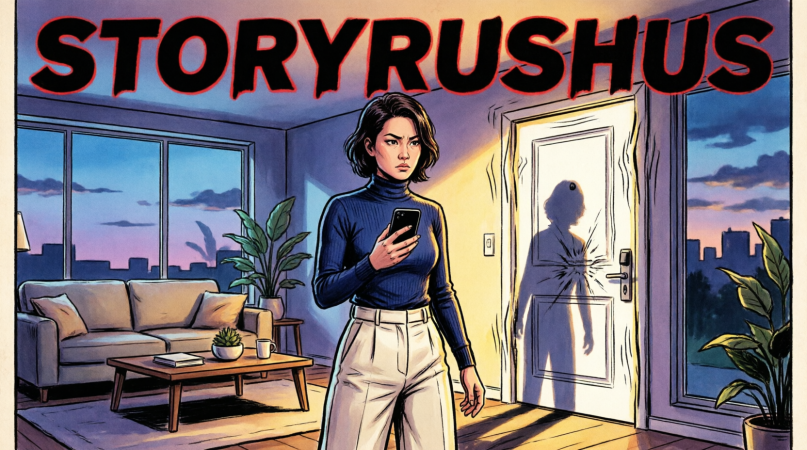
At 6:42 a.m., the pounding started.
BOOM.
BOOM.
BOOM.
It ripped me out of sleep so violently I sat up gasping.
The bedroom was gray with dawn.
The air had that early-morning chill that makes every sound sharper.
For a second, I did not know where I was.
Then the pounding came again.
BOOM.
BOOM.
BOOM.
The floorboards seemed to answer it.
My heart slammed against my ribs.
I grabbed my phone from the nightstand.
6:43 a.m.
One missed call from a blocked number.
Then another.
Then another.
I swung my feet onto the floor and stood there barefoot, listening.
Someone was not knocking.
Someone was attacking the door.
“Open this door, Marissa!”
The voice cut through the hallway.
Eleanor.
My skin went cold.
“Right this instant!” she screamed. “No ungrateful, arrogant wretch humiliates me in public and gets away with it!”
For a moment, I could not move.
That is the part people do not understand about fear after years of controlled humiliation.
It does not always make you run.
Sometimes it makes you twelve versions of yourself at once.
The wife who apologized.
The daughter-in-law who smiled.
The woman on the laundry room floor staring at another charge.
The newly divorced woman holding a phone in the gray light, finally understanding that a boundary is not a wall unless you are willing to defend it.
The pounding came again.
This time something scraped near the bottom of the door.
Metal against wood.
Low.
Slow.
I stepped backward instead of forward.
My attorney’s voice came back to me.
Document the first violation, not the worst one.
I opened the camera on my phone.
My hands were shaking, but not enough to stop me.
Through the peephole, I saw her.
Eleanor stood in the hallway in a camel coat, pearls at her throat, hair sprayed into place as if she had dressed for a luncheon instead of a breakdown.
Her face was flushed.
Her lipstick had bled slightly at one corner.
One manicured hand was raised.
The other was wrapped around the brass handle of my decorative umbrella stand.
She must have pulled it from beside the elevator.
The stand was heavy.
I had bought it because it looked old and harmless.
In her hand, it looked like a warning.
Behind her, Mrs. Alvarez from 12B had cracked her door open.
Only one eye showed.
Then Mr. Kim from down the hall opened his door two inches and froze.
Nobody stepped out.
Nobody spoke.
The hallway had become one of those frozen public moments where everyone is suddenly a witness and nobody wants to become part of the story.
Eleanor hit the door again.
The umbrella stand scraped the frame.
I watched a thin line of paint curl away from the wood.
“Marissa!” she shouted. “You think you can cut me off? You think some paper from a judge makes you better than this family?”
I pressed record.
The small red timer began counting.
00:01.
00:02.
00:03.
My breathing sounded too loud.
I forced myself to lower it.
Then the elevator dinged.
Eleanor turned.
Anthony stepped out wearing the same navy coat he used to wear to morning meetings, his hair still damp from a rushed shower.
He had a manila envelope in one hand.
At first, he looked angry.
Then he saw the umbrella stand.
His face changed.
I had seen Anthony annoyed.
I had seen him condescending.
I had seen him perform hurt when it benefited him.
I had never seen him frightened of his mother.
“Mom,” he said.
His voice came out smaller than I expected.
Eleanor lifted her chin.
“She ruined me,” she said. “In public.”
Anthony looked from her hand to my door.
Then to the scrape marks on the frame.
Then to the neighbor doors cracked open along the hallway.
“Mom,” he whispered, “what did you do?”
That was when she realized there were witnesses.
Her mouth opened.
Nothing came out.
For the first time since I had known her, Eleanor looked less like a woman issuing orders and more like a woman trying to calculate who had seen too much.
Anthony lifted the envelope.
I could not read the whole label through the peephole.
I saw two words.
EMERGENCY PETITION.
He looked straight at my door, as if he knew I was watching.
“Marissa,” he said, much too softly, “before you call anyone, open the door.”
I almost laughed.
Not because it was funny.
Because even then, with his mother holding my umbrella stand like a weapon and three neighbors watching from cracked doors, Anthony still believed the problem was my refusal to cooperate.
I did not open the door.
I called 911.
My voice sounded distant when I gave the dispatcher my name and address.
I said my ex-mother-in-law was outside my apartment.
I said she was striking the door.
I said she had taken a heavy object from the hallway.
I said my ex-husband had arrived with papers and was asking me to open up.
The dispatcher told me to stay inside.
I told her I planned to.
Anthony heard enough through the door to understand.
His shoulders dropped.
“Marissa,” he said again, but now there was something pleading under it.
Eleanor swung toward him.
“You called her?” she snapped. “You told me you were handling this.”
“I came to stop you,” he said.
She laughed.
It was sharp and ugly.
“You came because you know what she did to us.”
“To us?” Anthony said.
That was the first crack.
Not in the door.
In him.
I kept recording.
Eleanor did not know that.
Or maybe she did and was too angry to care.
“She made me look poor,” Eleanor hissed.
Mrs. Alvarez made a small sound from behind her door.
Anthony turned just enough to notice.
His face burned red.
“Mom, lower your voice.”
“No,” Eleanor said. “She spent five years pretending she was part of this family, and now she thinks she can walk away and leave me standing at a counter like some nobody?”
There it was.
Not heartbreak.
Not family.
Not even pride.
Status.
Eleanor had not come to my door because she missed me.
She had come because a stranger in a department store had seen her card decline.
That was the wound.
A receipt that did not obey her.
A clerk who could not be charmed.
A daughter-in-law who no longer paid to keep the illusion alive.
The sirens were faint at first.
Far below.
Then closer.
Anthony heard them too.
He turned toward the elevator, then back to my door, trapped between the mother he had spent his life excusing and the consequences he had spent our marriage avoiding.
“Marissa,” he said, “please. Let me explain the petition.”
I spoke for the first time.
Through the closed door, my voice sounded steady.
“No.”
Just one word.
It filled the hallway more completely than all of Eleanor’s screaming.
He blinked.
Eleanor stepped forward again, but Anthony caught her wrist.
Not hard.
Just enough.
Her face changed so fast it almost looked like pain.
“Do not touch me,” she said.
“Then stop,” he replied.
The elevator opened again before anyone could move.
Two officers stepped out.
The hallway transformed instantly.
Mrs. Alvarez opened her door wider.
Mr. Kim stepped into view.
Eleanor lowered the umbrella stand as if the object had become embarrassing only because someone official had arrived to name it.
One officer looked at her hand.
Then at my damaged door frame.
Then at Anthony’s envelope.
“Who lives here?” he asked.
“I do,” I called through the door.
The officer’s voice softened.
“Ma’am, stay inside for now.”
I stayed.
I watched through the peephole as Eleanor tried to become herself again.
Her shoulders squared.
Her voice lowered.
She started with the polished version.
“This is a family matter.”
The officer did not smile.
“Damaging someone’s door at 6:45 in the morning is not usually how family matters get handled.”
Anthony closed his eyes.
That was when I knew he understood something had shifted beyond repair.
Not our marriage.
That was already gone.
This was the larger thing.
The family story.
The version where Eleanor was elegant, Anthony was reasonable, and I was difficult.
It was collapsing in a hallway with fluorescent lights, three neighbors, a scratched door, and my phone recording every second.
The officers separated them.
One spoke to Anthony near the elevator.
The other asked Eleanor to set down the umbrella stand.
She resisted for half a breath too long.
Then she obeyed.
The brass base hit the floor with a dull thud.
I felt that sound in my chest.
The officer asked me if I had video.
I said yes.
When I opened the door on the chain, I handed my phone out without stepping into the hall.
The officer watched the clip.
Eleanor watched him watching it.
That was the moment her face truly changed.
Not when the card declined.
Not when Anthony arrived.
Not when the sirens came.
When she realized the performance had been captured without her permission.
She looked at me through the gap in the door.
For years, Eleanor had looked at me as if I were a stain on something expensive.
That morning, she looked at me like I had become glass.
Something she could see through.
Something sharp.
Something she could cut herself on if she grabbed too hard.
Anthony tried one last time.
“The petition,” he said quietly. “It was about temporary access to funds while things were being reviewed.”
I stared at him.
Even through the chain, even with officers in the hall, even after everything, he still wanted to dress greed in paperwork.
“What funds?” I asked.
He did not answer.
The officer looked at him.
I looked at the envelope.
Then I understood.
He had not come to stop Eleanor because what she did was wrong.
He had come because her scene could ruin the argument he wanted to make on paper.
I laughed once.
It was quiet.
It did not sound like happiness.
It sounded like the last thread snapping.
“My money,” I said. “You filed an emergency petition over my money.”
Anthony’s jaw tightened.
“Our marital standard of living was established over five years.”
“Our marriage ended yesterday.”
“Mom relied on—”
“No,” I said.
The officer still had my phone in his hand.
The neighbors were listening openly now.
Eleanor’s eyes darted from face to face.
The hallway had become the public humiliation she feared, but not the one she had planned to avenge.
I looked at Anthony and finally said the sentence I should have said years earlier.
“Your mother relied on my silence. So did you.”
Nobody answered.
The officer returned my phone.
He asked if I wanted to make a report.
I said yes.
Eleanor made a sound like I had slapped her.
Anthony whispered my name.
I did not look at him again.
I gave the officer the video.
I showed him the scrape on the door.
I forwarded the missed-call log.
I wrote down the time.
6:42 a.m.
First impact.
6:43 a.m.
Repeated blocked calls.
6:45 a.m.
Umbrella stand visible.
6:47 a.m.
Anthony arrived with envelope.
It was strange how calm I felt once I started listing facts.
Facts had weight.
Facts did not apologize.
Facts did not smooth things over at dinner.
By 8:15 a.m., my attorney had the video, the police report number, photographs of the door, and a scan of the envelope Anthony had been foolish enough to keep holding.
By 10:30, she had filed a response.
By noon, Anthony had unblocked numbers he could no longer use to reach me and sent three emails I did not answer.
Eleanor sent none.
For once, she had nothing polished to say.
The repairman came that afternoon.
He was an older man with paint on his jeans and a paper coffee cup balanced on his toolbox.
He looked at the frame and shook his head.
“Somebody really wanted in,” he said.
I looked at the scrape marks.
“Yes,” I said. “They did.”
He repaired the wood.
He reinforced the strike plate.
He asked if I wanted the old umbrella stand put back by the elevator.
I said no.
I kept it inside my apartment instead.
Not because I wanted a reminder of Eleanor.
Because I wanted a reminder of the morning I did not open the door.
Weeks later, Anthony’s emergency request went nowhere.
The video did more work than any speech I could have made.
So did the statements.
So did the final divorce order.
So did the simple fact that Eleanor had no legal right to my credit, my income, my accounts, or my life.
There was no dramatic courtroom victory.
No cinematic speech.
No thunderous applause.
Just paperwork doing what paperwork does when someone finally tells the truth in the right format.
Filed.
Stamped.
Entered.
Denied.
The first night after the door was repaired, I made dinner again.
Nothing fancy.
Soup, toast, one glass of wine.
I sat near the window while Manhattan lit itself up below me.
For a long time, I listened to the quiet.
It no longer felt empty.
It felt defended.
I thought about the woman I had been, standing at counters and paying bills that were never mine, smiling through insults because peace seemed cheaper than conflict.
It had never been cheaper.
It had just been billed later.
I thought about Anthony asking me to open the door.
I thought about Eleanor screaming that I had humiliated her.
I thought about the scrape of brass against wood and the tiny red timer counting on my phone.
And I understood something I wish I had understood sooner.
Some people do not know they are at your door until you lock it.
Some people do not know they have been using you until the card declines.
And some wars do not end when you cut off the money.
They end when you stop opening the door.