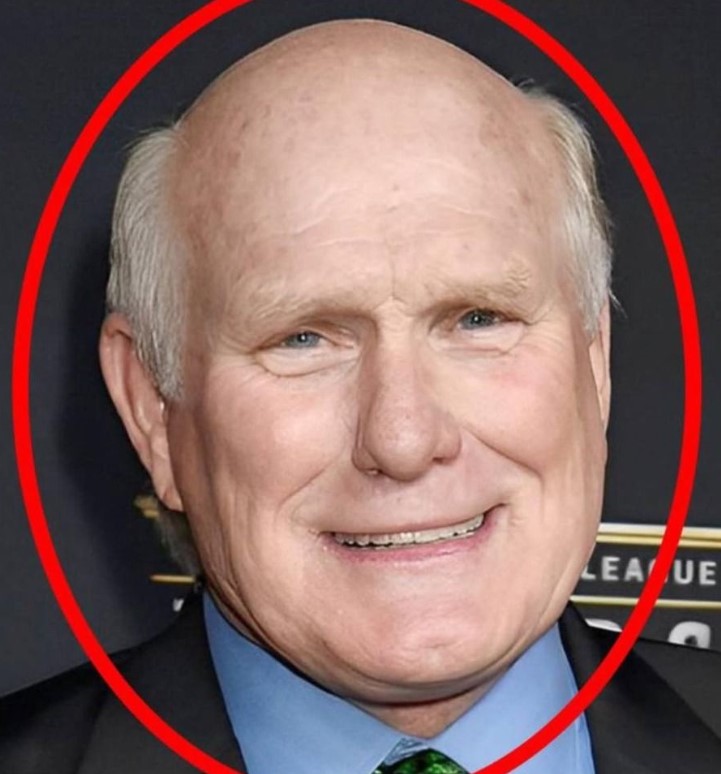
Terry Bradshaw Opens Up About His Private Battles With Two Forms of Cancer
A Different Kind of Challenge for a Football Legend
Terry Bradshaw has spent decades being recognized as one of football’s most familiar personalities. From his years as a championship quarterback and Hall of Famer to his long career as an NFL broadcaster, much of his life has unfolded in front of millions of people.
Behind that familiar public image, however, Bradshaw was quietly dealing with a challenge unlike anything he had encountered on a football field.
Over the course of a difficult year, he faced two separate cancer diagnoses: bladder cancer and Merkel cell carcinoma, a rare and aggressive type of skin cancer.
Bradshaw eventually revealed that he had gone through treatment for both illnesses and said he was cancer-free.
For many fans, the announcement came as a surprise because Bradshaw had continued appearing on television with the same humor, energy and confidence viewers had associated with him for years.
Keeping a Serious Health Battle Away From the Spotlight
Bradshaw chose not to make his health situation a major public story while he was undergoing treatment.
Instead, he continued working while privately managing medical appointments, procedures, recovery and the uncertainty that accompanied two separate cancer diagnoses.
Viewers watching him discuss football could not see what was happening away from the cameras.
Behind the scenes, Bradshaw was dealing with circumstances that required a very different kind of strength from the toughness that had once helped him compete at football’s highest level.
The experience was not measured in scores, victories or championships.
It involved waiting for medical results, undergoing treatment and learning to handle fear without allowing it to control his daily life.
Bladder Cancer Was the First Diagnosis
The first major health problem Bradshaw faced was bladder cancer.
The diagnosis required treatment as well as continuing medical monitoring.
For someone whose public identity had been shaped by physical strength and confidence, the experience created a different kind of vulnerability.
Cancer introduced questions that could not be answered through preparation, competition or determination alone.
There were treatments to complete and medical evaluations to await.
Bradshaw had to rely on the people caring for him while accepting that certain parts of the process remained beyond his control.
He later credited early detection and his medical team as important factors in helping him through the illness.
A Second Cancer Diagnosis Arrives
While Bradshaw was still dealing with the bladder cancer experience, another serious diagnosis followed.
Doctors discovered Merkel cell carcinoma on his neck.
The condition is a rare and aggressive form of skin cancer.
Facing a second cancer before the first experience had fully faded created another physical and emotional challenge.
Bradshaw underwent surgery and radiation as part of his treatment.
The combination of medical procedures, recovery and uncertainty placed significant demands on him.
The second diagnosis also meant that Bradshaw could not simply finish one treatment process and immediately return to normal life.
Instead, he had to begin confronting another potentially serious illness.
Merkel Cell Carcinoma Added Another Layer of Concern
Merkel cell carcinoma is different from more commonly recognized forms of skin cancer because of its rarity and aggressive nature.
In Bradshaw’s case, the cancer was found on his neck and required both surgery and radiation.
The discovery came at a time when he was already managing the consequences of bladder cancer.
That sequence made the experience especially difficult.
One diagnosis alone can bring significant uncertainty for a patient and family. Bradshaw was dealing with the reality of two distinct illnesses within the same period of his life.
The physical effects of treatment were only part of the burden.
There was also the mental strain created by waiting, recovering and wondering whether treatment had been successful.
The Public Continued Seeing the Familiar Terry Bradshaw
Despite everything happening privately, Bradshaw continued appearing professionally.
He remained energetic, humorous and recognizable to viewers.
That consistency made the eventual disclosure even more surprising.
Fans had watched him laugh, analyze football and interact with colleagues without realizing that medical treatments and recovery were taking place away from the television studio.
Bradshaw did not want his illness to become the defining story while he was still going through it.
He preferred to concentrate on treatment and recovery rather than public attention.
That decision allowed him to maintain a degree of normality during an unusually uncertain period.
The Hardest Moments Happened Away From the Cameras
Bradshaw’s football career had exposed him to pressure, injuries and enormous expectations.
Cancer created a different type of adversity.
The challenge could not be solved by studying an opponent or preparing a game plan.
There were moments of exhaustion and fear, along with the difficult waiting that often accompanies medical treatment.
Bradshaw acknowledged that the treatments were difficult.
The uncertainty surrounding them could be even harder.
He had to continue moving forward without always knowing exactly what the next test or medical appointment would reveal.
Family and Friends Became an Important Source of Strength
Bradshaw did not describe his recovery as something he accomplished alone.
He credited the support of family and friends with helping him through the most difficult periods.
That support provided stability when medical circumstances were changing quickly.
People close to him could not undergo the treatments for him, but they could remain beside him while he dealt with the emotional and physical strain.
The experience reinforced the importance of accepting help during circumstances that can make even highly independent people feel vulnerable.
Bradshaw also expressed gratitude for the medical professionals involved in his care.
Faith Helped Bradshaw Navigate the Uncertainty
Another important part of Bradshaw’s experience was his faith.
He described it as a source of clarity and steadiness when the future felt uncertain.
For Bradshaw, faith did not remove the difficult realities of cancer treatment.
It helped him remain grounded while dealing with circumstances he could not completely control.
The diagnoses forced him to confront questions that went far beyond football or professional success.
During those periods, Bradshaw relied on a combination of medical care, personal relationships and faith to keep moving forward.
Why Bradshaw Initially Kept the Diagnoses Private
Bradshaw’s decision to remain quiet about his health was deliberate.
He did not want sympathy while he was still actively fighting the illnesses.
He also did not want cancer to become the central subject surrounding his public appearances.
Instead, Bradshaw focused his attention on getting better.
He continued performing his professional responsibilities while dealing with recovery privately.
That choice reflected an approach he had used throughout much of his life: acknowledge adversity, deal with it directly and continue moving forward.
The Revelation Surprises Fans
When Bradshaw eventually discussed what he had experienced, many viewers were stunned.
The announcement revealed just how much had been happening behind the scenes while he continued appearing publicly.
Messages of encouragement quickly followed.
Fans from different generations expressed support for the former quarterback and broadcaster.
Many had watched Bradshaw during his playing career, while younger viewers knew him primarily through his television work.
The health revelation connected those audiences around a much more personal chapter of his life.
Athletes and Broadcasters Respond to His Story
Bradshaw also received encouragement from people within the sports and broadcasting communities.
The reaction focused not only on the fact that he had survived his illnesses but also on the straightforward way he discussed them.
He did not attempt to portray the experience as easy.
He acknowledged the difficult treatments, uncertainty and emotional burden involved.
At the same time, he did not present himself as someone defined entirely by illness.
That balance became one of the most widely admired aspects of his disclosure.
His Experience Carries a Message About Early Detection
One of the lessons Bradshaw emphasized was the importance of paying attention to personal health.
His experience reinforced the value of medical examinations and early detection.
Both of his cancers required professional treatment, and Bradshaw credited timely medical attention with helping him reach the point where he could say he was cancer-free.
He encouraged others not to ignore changes in their bodies or delay medical appointments unnecessarily.
For men in particular, he hoped his experience might encourage greater willingness to seek preventive care.
Waiting until a health problem becomes impossible to ignore can remove valuable opportunities for earlier intervention.
Bradshaw Refused to Let Cancer Become His Identity
A recurring theme in Bradshaw’s story is his refusal to define himself through illness.
He never denied that cancer frightened or exhausted him.
He simply did not want the diagnoses to replace everything else about his life.
That distinction shaped the way he approached both treatment and his eventual public disclosure.
Bradshaw had spent decades being known as an athlete, broadcaster, entertainer and family man.
Cancer became part of that story, but he did not allow it to become the whole story.
There Was No Need for Forced Positivity
Bradshaw’s account resonated partly because he did not pretend the process had been easy.
He acknowledged fear rather than acting as though confidence alone could defeat illness.
He acknowledged exhaustion rather than presenting recovery as a simple matter of personal toughness.
At the same time, he remained grateful.
He expressed appreciation for medical care, the people who supported him and the opportunity to continue living after treatment.
That combination of realism and gratitude gave his message greater weight.
Illness Changed the Way Ordinary Moments Felt
Those close to Bradshaw observed that the experience gave him a more reflective perspective.
The humor and charisma remained, but the cancer battles brought a deeper awareness of how quickly circumstances can change.
Professional achievements had given Bradshaw a lifetime of memorable moments.
He had won championships and received football’s highest individual honors.
Cancer introduced a very different understanding of victory.
Simply receiving positive health news carried a meaning no trophy could reproduce.
Football Toughness Could Only Take Him So Far
Bradshaw’s reputation was built partly on toughness.
As a quarterback, he competed in a sport where physical punishment and pressure were unavoidable.
Those experiences taught perseverance, but cancer demanded another kind of endurance.
There was no opponent standing across the field.
There was no scoreboard showing whether progress was being made.
Much of the experience involved trusting doctors, completing treatments and waiting for results.
That required patience as much as strength.
Winning Super Bowls and Surviving Cancer Created Different Emotions
Bradshaw’s football achievements brought public celebration.
Thousands of people could witness a championship victory, and the results were immediately clear.
His cancer experience unfolded mostly in private.
There were no crowds watching treatment or recovery.
The meaningful moments came through medical appointments, successful procedures and positive follow-up results.
That contrast gave Bradshaw a different perspective on what a victory can mean.
Football success brought pride, while surviving serious illness also brought humility and gratitude.
Bradshaw Says He Is Cancer-Free
After completing treatment for both bladder cancer and Merkel cell carcinoma, Bradshaw said he was cancer-free.
The announcement represented the outcome he and those closest to him had hoped for throughout a difficult year.
It did not erase the physical and emotional effects of what he had experienced.
Recovery remained important, along with continued attention to his health.
But being able to move forward without active cancer represented an enormous milestone.
Bradshaw could finally speak about the experience from the other side of the most intense period of uncertainty.
Returning to Broadcasting With a Different Perspective
Bradshaw intends to continue his broadcasting work.
Football remains an important part of his life, and his television career has allowed him to remain connected with the sport long after leaving the field.
His health experience, however, has added another dimension to how he thinks about the future.
Time feels more valuable after confronting serious illness.
Bradshaw has expressed a desire to make meaningful use of the years ahead rather than taking ordinary health and daily routines for granted.
Using His Platform to Encourage Preventive Care
Bradshaw also hopes his experience can encourage other people to take their health more seriously.
He wants to raise awareness about screening and preventive care.
The message is especially significant for people who repeatedly postpone medical appointments because they feel healthy or do not want to hear potentially difficult news.
Bradshaw’s experience demonstrates that strength is not shown by avoiding doctors.
It can also mean seeking help early, undergoing uncomfortable tests and accepting treatment when it is necessary.
If sharing his experience encourages someone else to schedule an examination, Bradshaw considers the disclosure worthwhile.
A Reminder That Serious Illness Does Not Respect Fame
Bradshaw’s cancer diagnoses also underline a basic reality about health.
Professional success, wealth, fame and physical toughness do not make someone immune to serious illness.
A person can spend a lifetime competing at the highest level and still face circumstances that cannot be controlled through determination alone.
Champions can become patients.
Public figures can experience the same fear and uncertainty as anyone else receiving difficult medical news.
Bradshaw’s willingness to acknowledge that vulnerability helped make his experience relatable beyond football.
Strength Can Include Accepting Help
For much of his career, Bradshaw was celebrated for leadership and independence.
Cancer required him to depend on others.
Doctors guided treatment decisions.
Family members and friends offered emotional support.
Bradshaw’s faith provided another source of stability.
Instead of seeing that dependence as weakness, his experience demonstrated that accepting help can itself be an important form of strength.
Recovery became a team effort in a way completely different from the teamwork Bradshaw had known on a football field.
One of the Most Personal Comebacks of His Life
Bradshaw’s career contained numerous dramatic moments long before cancer entered his life.
He had experienced major victories, difficult defeats and the pressures that accompany elite competition.
This chapter was different.
There were no stadium lights illuminating the struggle.
There were no spectators cheering during surgery, radiation or recovery.
There was simply a man confronting two serious illnesses and deciding to continue moving forward.
That private battle may stand among the most meaningful challenges he has ever overcome.
Fear Was Present, but It Did Not Take Control
Bradshaw never suggested that courage meant being completely unafraid.
His account acknowledged the fear that accompanied both diagnoses.
The important difference was how he responded to that fear.
He underwent treatment.
He trusted the medical professionals caring for him.
He accepted support from people around him.
And he continued believing there could be meaningful life after cancer.
That approach allowed him to move through uncertainty without pretending it did not exist.
A More Human Side of a Familiar Sports Figure
Millions of people have known Bradshaw through football for most of his adult life.
Some remember the championship quarterback.
Others know the Hall of Famer.
Many younger fans recognize the broadcaster whose humor has become a familiar part of NFL television coverage.
His cancer story adds a more vulnerable dimension to that public image.
It does not diminish the strength associated with his career.
Instead, it broadens the meaning of that strength.
Life After Cancer Carries a New Sense of Gratitude
Now that Bradshaw says he is cancer-free, his attention has shifted toward recovery and the future.
The experience has left him with a greater appreciation for ordinary moments that can easily be overlooked when life feels predictable.
Health challenges can quickly change priorities.
Things that once seemed urgent may become less important, while relationships, time and simple daily experiences take on greater meaning.
Bradshaw’s reflections show that surviving cancer did more than restore his health.
It also changed how he thinks about the life he still has ahead of him.
A Victory With No Trophy
Throughout his football career, Bradshaw experienced victories accompanied by celebrations, trophies and permanent records.
His battles with bladder cancer and Merkel cell carcinoma offered none of those familiar symbols.
The reward was far more personal.
He completed difficult treatments, survived the uncertainty surrounding two diagnoses and eventually received the news he had hoped to hear.
He was cancer-free.
For someone whose life had already included some of football’s greatest achievements, that outcome represented an entirely different kind of triumph.
Terry Bradshaw Moves Forward With Renewed Purpose
Bradshaw’s story is ultimately not about being invincible.
It is about confronting vulnerability without surrendering to it.
His fame did not protect him from cancer, and his athletic accomplishments could not guarantee an easy recovery.
What helped him move through the experience was a combination of medical treatment, early detection, family support, friendship, faith and the willingness to keep going when the future felt uncertain.
He continues to bring the personality viewers recognize to his broadcasting work, but the experience has added a deeper appreciation for what exists away from football.
The jokes remain.
The familiar confidence remains.
What has changed is the perspective beneath them.
Bradshaw’s two cancer battles gave him a reminder that time is never guaranteed and that even people who appear larger than life can face deeply personal struggles away from public view.
For fans who have followed him from the football field to television, his experience reveals another side of the former quarterback.
It shows that courage is not the absence of fear and that toughness is not the refusal to admit vulnerability.
Sometimes strength means listening to doctors, accepting support, enduring treatment and continuing forward one day at a time.
Bradshaw’s cancer fight never took place in front of a cheering stadium, but emerging from it cancer-free may represent one of the most significant victories of his life.
THE MOMENT TERRY BRADSHAW REALIZED LIFE WOULD NEVER FEEL THE SAME
For most of Terry Bradshaw’s life, victory had always made noise.
A roaring stadium.
Thousands of fans on their feet.
Teammates rushing toward him.
Championship celebrations that seemed large enough to swallow an entire city.
But after battling two different cancers, Bradshaw discovered that some of the greatest victories in life happen in almost complete silence.
There is no trophy waiting.
No scoreboard.
No crowd chanting your name.
Sometimes there is only a doctor, a medical result, and a few words capable of changing the way you look at every day that comes afterward.
Bradshaw had survived the pressure of professional football.
He had experienced injuries, criticism, enormous expectations and moments when millions of people were watching what he would do next.
Cancer was different.
Because this time, being Terry Bradshaw could not protect Terry Bradshaw.
Fame could not change the diagnosis.
Championship rings could not guarantee the outcome.
Decades of toughness could not make the uncertainty disappear.
He had to do something that can be extraordinarily difficult for someone accustomed to fighting his own battles.
He had to trust other people.
Doctors.
Medical professionals.
Family.
Friends.
And he had to accept that there were moments when all he could do was undergo the treatment and wait.
That waiting became its own kind of opponent.
When Bradshaw had played quarterback, he could read a defense.
He could adjust.
He could throw the football.
He could make a decision and immediately see what happened.
Cancer offered no such certainty.
Tests required waiting.
Treatment required patience.
Recovery required time.
And when one health battle seemed difficult enough, another arrived.
First came bladder cancer.
Then doctors discovered Merkel cell carcinoma on his neck, a rare and aggressive form of skin cancer.
Bradshaw underwent surgery and radiation as part of his treatment.
Yet while all of this was happening away from public view, millions of people continued seeing the man they thought they knew.
They saw Terry Bradshaw smiling.
They saw him joking.
They saw him talking football.
They saw the familiar personality that had been appearing on television for years.
What they could not see was everything happening after the cameras stopped.
And that was exactly how Bradshaw wanted it for a time.
He did not want every appearance to become a conversation about cancer.
He did not want his illness to replace his identity.
So he concentrated on treatment.
On recovery.
On the people closest to him.
And on getting through one uncertain day after another.
But eventually, the private battle became public.
And when Bradshaw finally revealed what he had been facing, many fans were stunned.
Suddenly, television appearances they remembered looked different.
That familiar smile carried another meaning.
The laughter carried another meaning.
Even the ordinary moments carried another meaning.
Because viewers now understood something they hadn’t known while watching him.
The man making them laugh had been fighting something frightening when the cameras weren’t looking.
But Bradshaw’s message was never simply, “Look what I survived.”
There was something more important beneath it.
Pay attention to your health.
Do not assume toughness means avoiding a doctor.
Do not postpone an examination simply because you are afraid of what might be discovered.
Early detection and medical treatment had become deeply important parts of Bradshaw’s own story.
For a man whose career had been built around strength, he had learned another definition of the word.
Strength could mean admitting you were frightened.
Strength could mean allowing someone else to help you.
Strength could mean walking into another medical appointment when you desperately wished you never needed one.
And sometimes strength meant waiting for an answer you could not control.
Bradshaw also spoke about the importance of the people surrounding him.
Family and friends could not take the treatments in his place.
They could not guarantee what the next medical result would show.
But they could remain beside him.
And during a battle in which so much felt uncertain, simply knowing someone was there mattered.
His faith also became part of how he navigated that uncertainty.
It did not make the medical reality disappear.
It did not eliminate difficult treatments.
But it helped provide steadiness while he confronted circumstances that football had never prepared him for.
Then came the news he had been hoping for.
Bradshaw said he was cancer-free.
For a man who had spent his life collecting some of football’s greatest victories, those words represented something no championship ring could duplicate.
Because a Super Bowl victory tells you that you won a game.
Hearing that you are cancer-free tells you that you have been given something much more precious.
More time.
And time suddenly looked different.
Ordinary mornings mattered.
Conversations mattered.
Family mattered.
Laughter mattered.
Even returning to work and talking about football could feel different when viewed through the perspective of what might have been lost.
That did not mean Bradshaw became a completely different person.
The humor remained.
The personality remained.
The unmistakable Terry Bradshaw energy remained.
But underneath it was a man who now understood vulnerability in a way that fame and football never could have taught him.
For decades, fans had celebrated Bradshaw because they believed he was tough.
Now they were discovering that toughness did not always look like standing inside a stadium and refusing to stay down after a hit.
Sometimes toughness happened in a hospital.
Sometimes it happened during radiation.
Sometimes it happened while waiting for results.
And sometimes it happened when a person finally admitted:
“I was scared.”
Bradshaw’s disclosure therefore became about something larger than one famous athlete.
It became a reminder.
The person laughing beside you may be fighting something you know nothing about.
The strongest person in a family can still need support.
The person who appears fearless may still experience fear.
And someone who has achieved almost everything professionally can suddenly discover that simply being alive is the accomplishment that matters most.
But surviving treatment did not mean Bradshaw could simply erase what happened.
Cancer had become part of his life story.
Not the whole story.
But a chapter impossible to forget.
And perhaps that was why his return to ordinary life carried such significance.
He wasn’t returning as an invincible football legend.
He was returning as something much more human.
A husband.
A father.
A friend.
A patient who had endured frightening diagnoses.
And a survivor grateful to be able to look toward another tomorrow.
There was also something Bradshaw wanted people—particularly those who had spent years putting off their own health concerns—to understand.
Being afraid of a diagnosis does not make ignoring it safer.
Avoiding a doctor does not make an illness disappear.
Sometimes the bravest decision happens long before treatment begins.
It happens when you make the appointment.
When you undergo the examination.
When you listen when your body tells you something may be wrong.
Bradshaw had once been celebrated for reading defenses before they could surprise him.
Now his experience carried a very different lesson:
Pay attention before a health problem has the opportunity to become something worse.
That message could potentially matter far beyond football.
Because somewhere, someone watching Bradshaw might recognize a symptom they had been ignoring.
Someone might finally schedule the appointment they had postponed.
Someone might decide that being “tough” was no longer a good enough reason to avoid asking for help.
And if his story encouraged even one person to act earlier, then speaking publicly about something so personal could carry a purpose beyond himself.
Bradshaw had spent decades entertaining millions.
Now one of the most meaningful things he could offer them was not another football story.
It was a warning born from experience.
Life can change quickly.
Health cannot always be taken for granted.
And tomorrow is never something anyone is promised.
That realization changed the meaning of victory for Terry Bradshaw.
His greatest wins once came beneath stadium lights.
This one came far away from them.
No confetti fell.
No championship trophy was raised.
There was simply the knowledge that after two frightening cancer diagnoses and difficult treatment, he could move forward.
Cancer-free.
Still laughing.
Still working.
Still surrounded by people he loved.
Still here.
But there was one thing his battle had permanently changed.
Bradshaw would never again measure the value of a day quite the same way.
Because after spending a lifetime learning how to win football games, cancer had forced Terry Bradshaw to confront a much harder question:
When you realize your time is not guaranteed… what do you choose to do with the time you still have?
And the answer would shape the next chapter of his life.
AFTER CANCER, TERRY BRADSHAW SAW LIFE DIFFERENTLY
For decades, Terry Bradshaw knew exactly what people expected when they saw him.
They expected the jokes.
The booming laugh.
The football stories.
The unmistakable personality that could turn an ordinary television segment into entertainment.
And after his cancer battles became public, Bradshaw did not suddenly stop being that man.
But something underneath had changed.
Because once you have sat with the uncertainty of a serious diagnosis, ordinary life can stop feeling ordinary.
A quiet morning becomes something worth appreciating.
A conversation with someone you love carries more weight.
Another day at work no longer feels guaranteed.
Bradshaw had spent much of his life chasing goals that could be measured.
Touchdowns.
Victories.
Championships.
Career milestones.
But cancer introduced him to something that could not be measured on any scoreboard.
Time.
Before illness, time can feel endless.
There is always another season.
Another Sunday.
Another opportunity.
Another year.
Then a doctor says a word like “cancer,” and suddenly the future no longer feels like something you automatically own.
Bradshaw had faced bladder cancer.
Then came Merkel cell carcinoma on his neck.
Two separate cancers.
Two different medical battles.
And after undergoing treatment and eventually saying he was cancer-free, he had something more valuable than another professional accomplishment.
He had another chance to keep living his life.
That realization did not require him to become solemn every moment.
In fact, Bradshaw’s humor remained one of the most recognizable parts of him.
But perhaps laughter meant something different now.
It was no longer simply part of his television personality.
It was evidence that life had continued.
That he could still sit beside colleagues.
Still talk football.
Still joke.
Still enjoy the people around him.
Cancer had interrupted his life.
It had frightened him.
It had demanded treatment.
But it had not taken everything that made him Terry Bradshaw.
And there was something powerful about that.
Because illness can sometimes make people feel as though they have become nothing more than patients.
Appointments begin filling calendars.
Tests become milestones.
Medical terminology enters everyday conversations.
Friends ask about treatment.
Family members watch carefully for signs of exhaustion.
Suddenly a person who once had a hundred different identities can feel reduced to one frightening word.
Cancer.
Bradshaw resisted that.
Cancer was something he experienced.
It was not everything he was.
He remained a former quarterback.
A broadcaster.
An entertainer.
A family man.
A friend.
And, now, someone who understood what it meant to confront serious illness.
That distinction mattered.
Because surviving cancer did not require pretending the fear had never existed.
Bradshaw acknowledged that fear.
He acknowledged the difficult reality of treatment.
And he acknowledged how important the people around him had been.
There was no need to rewrite the experience into some perfect story where strength eliminated every frightening emotion.
Real courage could exist alongside fear.
Bradshaw had learned that on a level few stadiums could teach.
During his football career, courage often meant staying composed while enormous athletes were charging toward him.
During cancer treatment, courage could mean entering another medical room without knowing exactly what the next conversation would bring.
It could mean undergoing another procedure.
Another examination.
Another follow-up.
Then waiting.
Waiting can be one of the quietest forms of fear.
Nothing is happening visibly.
There is no opponent to fight.
No immediate action to take.
Yet inside your mind, every possible outcome can begin competing for attention.
Bradshaw could not throw his way out of that uncertainty.
He could not outrun it.
He had to live through it.
One day at a time.
That experience also reinforced something he wanted other people to understand.
Do not confuse avoiding medical care with strength.
For some people, especially those who have spent their lives believing they should simply endure discomfort, admitting something feels wrong can be difficult.
They wait.
They dismiss symptoms.
They tell themselves they are probably fine.
They promise they will schedule an appointment later.
Bradshaw’s story offered another perspective.
Early attention matters.
Medical examinations matter.
Listening to your body matters.
Because discovering a serious problem is frightening.
But allowing fear to prevent you from seeking medical attention can carry its own consequences.
That message became part of the purpose behind Bradshaw discussing his experience publicly.
He had initially kept much of the battle private.
But once he spoke about it, millions of people suddenly had an example sitting directly in front of them.
A Hall of Fame athlete could get cancer.
A championship quarterback could become a patient.
A man known for toughness could admit that serious illness frightened him.
And none of those things diminished him.
If anything, they made his story more human.
Bradshaw had spent years being viewed almost like a larger-than-life character.
Television has a way of doing that.
People see someone week after week and begin feeling as though they know them.
But viewers see only what happens while the cameras are running.
Cancer revealed everything that can exist outside that frame.
A familiar face can smile on television and later attend a medical appointment.
Someone can make millions laugh while privately carrying fear.
A person can look strong while desperately hoping for good news.
That realization extends far beyond Terry Bradshaw.
Everyone carries chapters other people cannot see.
Sometimes the funniest person in a room is dealing with something painful.
Sometimes the strongest person is exhausted.
Sometimes the person who appears completely confident is quietly frightened.
Bradshaw’s experience became a reminder not to assume that someone’s public face tells their entire story.
And after coming through his treatments, gratitude became harder to separate from everyday life.
Not dramatic gratitude.
Not the kind requiring speeches or cameras.
The simpler kind.
Being able to wake up.
Being able to see family.
Being able to return to familiar routines.
Being able to talk about football again.
Being able to laugh without wondering whether the laughter might soon become a memory.
Those things had always existed.
But cancer changed their value.
That may have been one of the strangest lessons of the entire experience.
Sometimes people spend years chasing extraordinary moments only to discover that ordinary moments were extraordinary all along.
Bradshaw already possessed the trophies.
His name was already written into football history.
Nothing could erase the championships he had helped win.
Nothing could remove his place among the sport’s recognizable figures.
Yet none of those accomplishments could replace another healthy day.
And that changed the question.
Instead of asking only:
“What else can I accomplish?”
Life after cancer invites another question.
“Who do I want beside me while I still have time?”
Family had been an important source of strength throughout Bradshaw’s treatment.
Friends mattered.
His medical team mattered.
His faith mattered.
Cancer had reminded him that independence has limits.
Sometimes survival requires trusting other people.
And perhaps one of the most difficult lessons for strong personalities is learning that accepting help does not make them weaker.
There were things Bradshaw simply could not do alone.
He could not perform his own surgery.
He could not control how his body responded to treatment.
He could not personally guarantee that every medical result would be positive.
He had to trust.
That kind of surrender can be frightening.
But it also revealed another form of teamwork.
Bradshaw knew teamwork from football.
Eleven players moving toward the same objective.
Everyone depending on everyone else.
Cancer created a different team.
Doctors.
Family.
Friends.
The people helping him recover.
And Bradshaw himself, continuing to show up for treatment even when the process became difficult.
The goal wasn’t a championship.
It was getting him through.
Eventually, Bradshaw could say the words everyone around him had wanted to hear.
Cancer-free.
But those words were not necessarily the end of the story.
They were the beginning of another chapter.
Because surviving something can leave behind questions that did not exist before.
What matters now?
What deserves my energy?
What have I been postponing?
Who haven’t I told that I love them enough?
How many ordinary days have I treated as though another one was guaranteed?
Cancer could not answer those questions for Bradshaw.
But it had given him a reason to ask them.
And as he returned to the television world viewers recognized, there was an invisible difference.
Fans still saw Terry Bradshaw.
The football legend.
The broadcaster.
The entertainer.
But behind the laughter was now a man who had experienced the terrifying possibility that all of it could suddenly disappear.
That awareness can make a person hold life differently.
Not necessarily tighter.
Sometimes more gently.
You stop expecting every day to be perfect.
You simply become grateful that the day arrived.
And perhaps that is why Bradshaw’s cancer story resonated with people who had never thrown a football, won a championship or appeared on television.
Because beneath all the fame was a fear almost anyone could understand.
The fear of losing time.
And beneath the fear was a hope almost everyone shares.
Just give me another day.
Another year.
Another conversation.
Another chance to be with the people I love.
Bradshaw received that chance.
And now the question was what he would do with it.
Because surviving cancer had taught him something football never could:
The greatest comeback isn’t always returning to the field.
Sometimes it is returning to your own life—and finally understanding how precious that life was all along.
But as Bradshaw looked toward the future, one lesson from those frightening months remained impossible to ignore.
He had survived two cancers.
Now he wanted his experience to become a warning that might help someone else survive theirs.
WHY TERRY BRADSHAW DECIDED HIS PRIVATE BATTLE NEEDED TO BE HEARD
For Terry Bradshaw, surviving cancer was deeply personal.
Talking about it publicly was another decision entirely.
For months, the people watching him on television had seen the same familiar personality.
The jokes were still there.
The laughter was still there.
The football analysis continued.
But the audience had not known what was happening away from the cameras.
Bradshaw had been undergoing medical treatment.
He had been recovering.
He had been waiting for answers.
And he had been carrying the uncertainty that comes with hearing the word no one ever wants to hear.
Cancer.
Not once.
Twice.
The first diagnosis had been bladder cancer.
Then came Merkel cell carcinoma on his neck, a rare and aggressive form of skin cancer.
For Bradshaw, those diagnoses meant doctors, treatment and medical monitoring replaced the kind of challenges he had understood throughout most of his life.
Football had taught him how to compete.
Cancer taught him how to wait.
And eventually, after treatment, Bradshaw said he was cancer-free.
That could have remained the end of the story as far as the public was concerned.
He could have kept the details private.
He could have returned to television and allowed viewers to continue believing nothing unusual had happened.
But Bradshaw eventually chose to speak.
And once he did, his experience carried a message much bigger than football.
Because somewhere watching him was probably someone doing exactly what people sometimes do when they are frightened.
Waiting.
Ignoring something that doesn’t feel right.
Putting off a medical appointment.
Telling themselves they are too busy.
Convincing themselves that if they don’t ask the question, perhaps they won’t have to hear an answer they fear.
Bradshaw understood why people might think that way.
Serious medical news can be terrifying.
But his own experience had reinforced the importance of medical attention and early detection.
There is a difference between being fearless and being responsible.
Bradshaw had built much of his public identity around toughness.
But cancer changed what toughness meant.
Toughness was no longer simply enduring pain.
Sometimes toughness meant admitting:
“Something isn’t right.”
Sometimes it meant making the appointment.
Sometimes it meant allowing a doctor to examine something you would rather ignore.
Sometimes it meant hearing frightening news and beginning treatment anyway.
That was a message Bradshaw wanted people to understand.
Especially people who believed strength meant never admitting vulnerability.
Because Bradshaw had learned the opposite.
He had needed doctors.
He had needed treatment.
He had needed support.
He had relied on family and friends during difficult moments.
And his faith helped provide steadiness when the future felt uncertain.
None of that made him less strong.
It simply made him human.
That humanity was part of why the disclosure affected so many fans.
People had watched Bradshaw for decades.
Some remembered him standing behind the offensive line during his championship years.
Others knew him primarily as the energetic broadcaster who could make his colleagues laugh.
But cancer removed the distance between the famous athlete and the ordinary viewer.
Because illness does not care about trophies.
It does not care how many people recognize your face.
It does not care whether your name is written in record books.
Bradshaw’s fame could give him a platform.
But it could not give him immunity.
And perhaps that was exactly why his words mattered.
If someone as accomplished as Terry Bradshaw could say that medical care mattered, perhaps another person could stop treating a doctor’s appointment like something to avoid.
If Bradshaw could acknowledge fear, perhaps another man could admit he was frightened too.
If a Hall of Fame quarterback could depend on doctors, perhaps accepting help wasn’t weakness after all.
There was another reason his story connected so strongly.
Bradshaw did not try to turn cancer into an inspirational fairy tale.
He did not pretend treatment had been easy.
He did not suggest positive thinking alone could erase illness.
There had been difficult treatment.
There had been uncertainty.
There had been fear.
And there had been waiting.
His gratitude came not from pretending those experiences hadn’t happened.
It came from knowing he had made it through them.
Cancer-free.
Those two words carried a weight no championship statistic ever could.
But they also came with responsibility.
Being cancer-free did not mean forgetting what had happened.
It meant continuing to pay attention to his health.
It meant appreciating the medical professionals who had cared for him.
And it meant recognizing that his experience could potentially help someone who was still standing at the beginning of a frightening journey.
That was where Bradshaw’s public platform suddenly became something more than entertainment.
For decades, people had listened when he talked about football.
Now he had an opportunity to make them listen to something potentially far more important.
Their own bodies.
Their own health.
Their own warning signs.
Their own appointments they kept postponing.
Imagine the person sitting at home watching.
Maybe he has noticed something unusual for months.
Maybe his wife has repeatedly told him to see a doctor.
Maybe he keeps saying:
“I’ll go next week.”
Then next week becomes next month.
And next month becomes another excuse.
Until he hears Terry Bradshaw talking about two cancers.
A man who once seemed physically indestructible.
A man who competed at football’s highest level.
A man whose public personality still seemed full of energy.
And suddenly the excuse sounds different.
Because if cancer could happen to Bradshaw, it could happen to anyone.
That was the uncomfortable truth underneath his story.
But there was also hope.
Bradshaw had received treatment.
He had gone through surgery and radiation for the Merkel cell carcinoma.
He had continued medical care for his illnesses.
And he eventually reached the point where he could publicly say he was cancer-free.
That outcome did not mean everyone would have the same medical journey.
But it reinforced something simple.
Taking your health seriously matters.
And Bradshaw wanted people to understand that before fear convinced them to keep waiting.
There was also another change happening inside him.
His relationship with time had shifted.
Before cancer, years could be organized around football seasons.
The calendar had structure.
Preseason.
Regular season.
Playoffs.
Super Bowl.
Then another year began.
Cancer disrupted that rhythm.
Suddenly life could be divided by something entirely different.
Before the diagnosis.
During treatment.
After treatment.
Before the scan.
After the scan.
Before the result.
After the result.
When your life becomes organized around medical uncertainty, time stops feeling abstract.
It becomes personal.
Another birthday means something.
Another holiday means something.
Another football Sunday means something.
Another morning sitting beside someone you love means something.
Bradshaw had already lived a life filled with extraordinary moments.
But surviving cancer reminded him that extraordinary moments were not the only ones worth protecting.
There were quiet moments too.
Meals with family.
Conversations with friends.
Laughter that happened when no camera was recording.
The simple ability to make plans.
Those were victories now.
And perhaps that was the greatest transformation.
Bradshaw had spent decades understanding success through achievement.
Cancer taught him to understand success through presence.
Being here.
Being able to laugh.
Being able to work.
Being able to love people.
Being able to wake up tomorrow and experience another ordinary day.
There was no trophy for that.
There didn’t need to be.
Yet Bradshaw knew his story could not simply end with gratitude.
Because gratitude without action would leave an important lesson unfinished.
He had a microphone.
He had an audience.
And he had survived something millions of families understand far too well.
So instead of hiding every trace of vulnerability, Bradshaw allowed people to see it.
Not because he wanted pity.
But because vulnerability can sometimes give another person permission to act.
One man’s story can become another man’s warning.
One survivor’s words can become the reason someone finally makes an appointment.
One public admission of fear can remind thousands of people that they do not have to pretend they are fearless.
That may become one of the most important legacies of Bradshaw’s cancer battle.
Not that Terry Bradshaw proved he was invincible.
He proved the opposite.
He wasn’t invincible.
None of us are.
And once he understood that, life became less about pretending nothing could hurt him and more about appreciating everything that remained.
But there was one part of the experience that could never be completely captured by television interviews or headlines.
It was what happened emotionally during those private moments when there was no audience.
No colleagues.
No football conversation to distract him.
Just Bradshaw…
his thoughts…
and the possibility that the future he had always assumed would be there might suddenly look very different.
Those moments forced him to confront something every championship athlete eventually discovers.
There are battles where determination can influence the outcome.
And there are battles where determination means simply refusing to stop showing up.
Bradshaw kept showing up.
For treatment.
For recovery.
For the people who loved him.
For his work.
And ultimately, for his own future.
He emerged cancer-free.
But he did not emerge unchanged.
Because Terry Bradshaw had finally encountered an opponent that made every football opponent of his past seem different.
Cancer had forced him to think about mortality.
And once a person has seriously confronted the possibility of losing tomorrow…
the way they choose to live today can never be quite the same again.
But Bradshaw’s next realization would be even more personal.
After spending decades making millions of strangers laugh, he began thinking much more deeply about the people he wanted beside him when the cameras were gone.
WHEN THE CAMERAS WENT DARK, TERRY BRADSHAW KNEW WHAT MATTERED MOST
There is something strange about spending most of your adult life surrounded by noise.
Stadiums.
Television studios.
Crowds.
Cameras.
People calling your name.
For Terry Bradshaw, that had been normal for decades.
But cancer brought silence.
Not necessarily physical silence.
Something deeper.
The kind that arrives when you are alone with a frightening question and nobody else can answer it for you.
What happens if the treatment doesn’t work?
That uncertainty had nothing to do with football.
Bradshaw had experienced pressure before.
He knew what it felt like to enter a stadium with thousands of people watching.
He knew what it felt like to make mistakes publicly.
He knew criticism.
He knew injuries.
He knew the enormous expectations that came with competing at the highest level.
But cancer introduced a completely different kind of vulnerability.
First came bladder cancer.
Then another diagnosis followed.
Merkel cell carcinoma on his neck.
A rare and aggressive form of skin cancer.
Bradshaw underwent treatment, including surgery and radiation for the second cancer.
And while the public continued seeing the familiar television personality, the private Bradshaw was experiencing something viewers couldn’t see.
Medical appointments.
Recovery.
Uncertainty.
Waiting.
And the emotional burden of knowing that two separate cancers had entered his life within a difficult period.
There was no playbook for that.
No coach could draw the solution on a board.
No halftime adjustment could guarantee a different result.
Bradshaw had to trust the medical professionals caring for him.
And he had to allow family and friends to stand beside him.
That mattered more than perhaps ever before.
Because cancer has a way of stripping away the illusion that one person can control everything.
Bradshaw could choose to undergo treatment.
He could follow medical advice.
He could continue moving forward.
But he could not personally control every result.
For someone whose professional life had revolved around making decisions under pressure, accepting that limitation was its own challenge.
Yet the people closest to him helped provide stability.
They couldn’t fight the cancer for him.
They couldn’t take his place during treatment.
They couldn’t promise what the next medical result would reveal.
But they could be there.
Sometimes that is the most powerful thing another human being can offer.
Presence.
Someone sitting beside you when there are no useful words.
Someone listening when fear becomes difficult to hide.
Someone reminding you that you are more than a diagnosis.
Bradshaw had spent years entertaining strangers.
Cancer reminded him of the people who mattered when there was no audience.
Family.
Friends.
The people who knew Terry Bradshaw without needing the football résumé.
Without needing the championship stories.
Without needing the television personality.
They simply knew Terry.
And when life becomes uncertain, those distinctions suddenly matter.
Because fame can fill a room.
But it cannot replace love.
A championship ring can symbolize extraordinary achievement.
But it cannot sit beside you during a frightening night.
A television audience can admire you.
But admiration and companionship are not the same thing.
Bradshaw’s experience reinforced the value of those relationships.
It also reinforced his faith.
He had described faith as something that helped provide steadiness during uncertainty.
Not an escape from reality.
Not a replacement for medical treatment.
But a source of grounding while facing circumstances he could not completely control.
That distinction mattered.
Bradshaw still needed doctors.
He still needed procedures.
He still needed treatment.
Faith did not remove those realities.
It helped him move through them.
One day.
One appointment.
One result at a time.
And eventually came the outcome he had hoped for.
Bradshaw said he was cancer-free.
For the public, those words could fit neatly into a headline.
For Bradshaw, they represented something far more personal.
They represented everything that had happened before those words could be spoken.
The fear.
The procedures.
The radiation.
The recovery.
The people who stood beside him.
The doctors who treated him.
The waiting.
And finally…
the ability to look toward the future again.
But being cancer-free did not mean the experience disappeared.
Some battles leave no trophy.
They leave perspective.
And Bradshaw’s perspective had changed.
He had spent much of his career in a world obsessed with winning.
Who scored?
Who lost?
Who advanced?
Who became champion?
Sports naturally organize life into victories and defeats.
Cancer was not that simple.
Bradshaw did not survive because he wanted victory more than another patient.
He did not defeat illness through athletic toughness alone.
He benefited from medical care and treatment.
That reality carried humility.
It also carried gratitude.
Because when you cannot guarantee tomorrow, another ordinary day stops feeling ordinary.
Imagine waking up after living through months of uncertainty.
Nothing dramatic happens.
No television crew is waiting.
No stadium erupts.
You simply wake up.
You breathe.
You look around.
And suddenly that itself feels significant.
Another morning.
Another conversation.
Another opportunity to laugh.
Another chance to tell someone you love them.
Another football Sunday.
Another day.
Bradshaw had spent his life collecting unforgettable memories.
But cancer taught him that a meaningful life isn’t built only from unforgettable moments.
It is also built from thousands of small ones people rarely appreciate until something threatens to take them away.
That may explain why his familiar humor mattered so much after treatment.
Bradshaw could still laugh.
He could still make others laugh.
Cancer had become part of his history without becoming the entirety of his identity.
That was important.
He wasn’t “Terry Bradshaw, cancer patient” forever.
He was Terry Bradshaw.
Cancer was one chapter.
A frightening chapter.
A transformative chapter.
But still only one chapter.
And perhaps that is something survivors sometimes need to hear.
You are allowed to move forward.
You are allowed to laugh again.
You are allowed to think about things other than illness.
You are allowed to enjoy ordinary life without constantly explaining what you endured.
Bradshaw returned his attention to broadcasting and the sport that had defined so much of his professional life.
But the man returning was carrying a different understanding.
Football had once taught him that every play mattered because games eventually ended.
Cancer taught him something much larger.
Every day matters because life eventually does too.
That doesn’t mean living in constant fear.
Bradshaw’s story suggested almost the opposite.
Knowing time is limited can make fear less useful.
Why spend another day worrying about something insignificant?
Why allow pride to keep you from telling someone they matter?
Why postpone every meaningful experience for a future you assume will always arrive?
Cancer had confronted Bradshaw with questions that professional success could never answer.
What does a championship mean when you’re waiting for medical results?
What does fame mean when you are frightened?
What does money mean when the thing you want most cannot simply be purchased?
And who remains beside you when none of those achievements can solve the problem?
Those questions have a way of clarifying priorities.
Bradshaw’s football legacy was already secure.
He did not need another trophy to prove what he had accomplished.
But after cancer, legacy could mean something else too.
Perhaps part of it could be encouraging another person to take their health seriously.
Perhaps someone watching him would stop delaying an examination.
Perhaps someone would notice a change in their body and decide to call a doctor instead of ignoring it.
Perhaps someone who thought fear was weakness would understand that Bradshaw had been afraid too.
And he still kept moving forward.
That message was powerful precisely because Bradshaw never needed to pretend he was invincible.
Cancer had already proven he wasn’t.
His body could become ill.
He could become frightened.
He could need help.
He could depend on doctors.
He could depend on family.
And none of those truths erased the toughness people had admired for decades.
They expanded its meaning.
The quarterback who had once demonstrated courage beneath stadium lights had learned that courage can happen in much quieter places.
A doctor’s office.
A treatment room.
A hospital corridor.
Or at home late at night when fear begins whispering possibilities you desperately do not want to imagine.
Sometimes courage is simply reaching the next morning.
And then doing it again.
Bradshaw did.
Until eventually the conversation changed.
From diagnosis…
to treatment…
to recovery…
to cancer-free.
But another transformation was happening quietly.
The man who had spent decades thinking about football victories had begun understanding a completely different kind of victory.
It was not being celebrated by thousands.
It was being surrounded by the people who mattered.
It was being able to continue working.
It was having another opportunity to laugh.
It was being alive.
And somewhere inside that realization was perhaps the most important lesson of the entire ordeal:
You don’t have to wait for a frightening diagnosis to start appreciating your life.
You don’t have to nearly lose something before admitting how much it means.
You don’t have to assume there will always be another opportunity to say what should have been said today.
Bradshaw had been given more time.
And he intended to use it.
Not as a man pretending death didn’t exist.
But as someone who understood that life mattered precisely because it could never be guaranteed.
That understanding followed him back into the television studio.
The lights came on.
The cameras started rolling.
The football conversations returned.
Bradshaw smiled.
He laughed.
To millions watching, it looked familiar.
But underneath that familiar smile was a truth the audience now understood.
The man making them laugh had survived two cancers when almost nobody watching knew he was fighting them.
And there was one reason Bradshaw believed telling that truth was worth exposing such a private part of himself.
Because somewhere watching him might be a person ignoring a warning sign—and Bradshaw wanted that person to make the appointment before it was too late.
THE WARNING TERRY BRADSHAW HOPED PEOPLE WOULD NOT IGNORE
Terry Bradshaw had already spent decades using his voice to talk about football.
Now he had something much more personal to say.
And this time, the message wasn’t about quarterbacks.
It wasn’t about championships.
It wasn’t about who would win on Sunday.
It was about something that could affect almost anyone.
Your health.
Bradshaw knew how easy it could be to postpone something uncomfortable.
A medical examination can be frightening precisely because of what it might reveal.
People tell themselves they feel fine.
They say they are too busy.
They promise they will schedule the appointment next month.
Then another month passes.
Bradshaw’s experience had given those excuses a different meaning.
He had faced bladder cancer.
Then, while dealing with that experience, doctors discovered Merkel cell carcinoma on his neck.
Two separate cancers.
Two separate medical battles.
And suddenly, the former quarterback whose life had been built around preparation was confronting a lesson that applied far beyond sports:
Sometimes the most important thing you can do is pay attention early.
Bradshaw later emphasized the importance of medical examinations and early detection.
His message was straightforward.
Don’t ignore changes in your body.
Don’t unnecessarily postpone medical care.
And don’t mistake avoiding a doctor for toughness.
That last point carried special meaning coming from Terry Bradshaw.
This was a man whose reputation had been built partly on physical toughness.
Professional football demanded it.
He had spent years taking hits, dealing with pressure and getting back up.
But cancer changed his understanding of what being tough could mean.
Sometimes toughness is not enduring something silently.
Sometimes it is saying:
“I need help.”
Sometimes it is admitting:
“I’m worried.”
And sometimes it is walking into a doctor’s office even though part of you would rather never hear what the doctor might say.
That takes courage too.
Bradshaw knew because he had lived through what came afterward.
Treatment.
Medical procedures.
Recovery.
Radiation for the Merkel cell carcinoma.
And the uncertainty surrounding whether everything had worked.
There were no shortcuts.
He couldn’t simply decide that he had had enough and walk away from the process.
He had to continue.
Appointment after appointment.
Treatment after treatment.
Then came the waiting.
That waiting had become one of the most difficult parts of the experience.
Because treatment gives you something to do.
Waiting gives your mind room to imagine everything.
Good possibilities.
Bad possibilities.
Questions without immediate answers.
Bradshaw had experienced pressure in packed stadiums, but this was pressure without a crowd.
There was no noise to drown it out.
No scoreboard showing progress.
No clock counting toward the end.
Just uncertainty.
And that was where the people around him mattered.
Family.
Friends.
Medical professionals.
Bradshaw had been known for independence and leadership throughout his career.
But illness required dependence.
Doctors had knowledge he needed.
Family and friends provided support he could not manufacture by himself.
His faith gave him another source of steadiness.
Together, those things helped carry him through a period when his own determination could only take him so far.
That lesson became important too.
Accepting help is not surrender.
Sometimes accepting help is exactly how you continue fighting.
Bradshaw eventually reached the milestone he had desperately hoped for.
He said he was cancer-free.
Those words changed everything.
But they also gave him a reason to look backward at the path that had brought him there.
What if he had ignored his health?
What if he had refused medical attention?
What if fear had convinced him that not knowing was somehow safer?
Those questions helped explain why Bradshaw became willing to speak publicly about something he had originally kept private.
He did not need sympathy.
He wanted awareness.
Because somewhere among the millions of people who knew his name could be someone postponing exactly the appointment they needed.
Maybe that person had noticed something unusual.
Maybe they had been telling themselves it was nothing.
Maybe they were afraid.
Maybe they were embarrassed.
Maybe they simply didn’t want their routine disrupted.
Bradshaw’s experience offered a reminder that serious illness does not wait for a convenient moment.
Cancer did not care that he had television responsibilities.
It did not care that he was famous.
It did not care that millions of people associated his name with strength.
It arrived anyway.
And when it did, the most useful thing Bradshaw could do was not pretend it wasn’t there.
He had to face it.
That is why his story carried particular weight for people who pride themselves on being tough.
There is a cultural idea that strong people should simply push through everything.
Pain?
Ignore it.
Fear?
Hide it.
Something feels wrong?
Wait and see.
Bradshaw’s cancer experience challenged that idea.
Strength can mean taking action before a problem becomes impossible to ignore.
Strength can mean listening to medical professionals.
Strength can mean allowing the people who love you to support you.
And strength can mean admitting that your body is not indestructible.
Bradshaw wasn’t.
Neither is anyone else.
That realization might sound frightening.
But there was another side to it.
If vulnerability is universal, then nobody needs to feel ashamed for needing help.
A champion can become a patient.
A Hall of Famer can be afraid.
A famous broadcaster can sit in a medical office wondering what comes next.
And a person watching at home can make the phone call they have been postponing.
That may have been one of the most meaningful possibilities created by Bradshaw’s disclosure.
Football had given him an enormous audience.
Cancer gave him something unexpected to tell that audience.
Take care of yourself.
It was a remarkably simple message.
But simple messages can become complicated when fear enters the picture.
People sometimes believe that avoiding information protects them.
If they don’t receive a diagnosis, perhaps nothing has changed.
But Bradshaw’s experience pointed toward the opposite lesson.
Knowing allows action.
Medical attention allows doctors to evaluate what is happening.
And early detection can matter.
Bradshaw credited timely medical care and the professionals treating him as important parts of his own experience.
That gratitude was not abstract.
It came from knowing how much had been at stake.
And once he had emerged from the most intense period of treatment, the ordinary things returned.
Work.
Football.
Television.
Jokes.
Conversations.
Life.
Those things could easily have seemed routine before.
They did not feel quite as routine afterward.
Bradshaw had learned how quickly a person’s priorities can change when health becomes uncertain.
A disagreement that once seemed important can suddenly feel insignificant.
A postponed family visit can suddenly feel foolish.
A morning you might have complained about can suddenly feel like a gift.
Cancer had not made every day perfect.
It had made every day valuable.
There is an important difference.
A valuable life can still contain frustration.
Bad days still happen.
People still argue.
Plans still fail.
Work can still be exhausting.
But after confronting serious illness, the existence of those imperfect days can itself become something worth appreciating.
Bradshaw was still here to experience them.
Still here to complain.
Still here to laugh.
Still here to watch football.
Still here to make another memory.
Still here to love the people closest to him.
That became its own kind of wealth.
And perhaps that was why Bradshaw no longer needed cancer to be hidden completely.
Speaking about it could transform a frightening personal experience into something useful.
His illness could not be undone.
But maybe its lesson could travel.
From Bradshaw…
to a viewer…
from that viewer…
to a doctor’s office…
and perhaps from that doctor’s office to an earlier diagnosis for somebody else.
Bradshaw could never know every person his words might reach.
He didn’t need to.
Sometimes you tell your story because one unknown person might need to hear it.
And there was another part of his message that mattered.
Cancer-free did not mean careless.
Surviving serious illness can make continued attention to health even more meaningful.
Bradshaw understood that moving forward did not mean pretending the previous year had never happened.
It meant carrying the lesson without allowing the fear to dominate everything ahead.
That balance was important.
He could appreciate life without living every day terrified of losing it.
He could remain attentive to his health without allowing cancer to become his identity.
He could tell people what happened without turning every conversation into a story about illness.
Because Bradshaw had already made one decision clear.
Cancer would become part of his story.
But it would never be allowed to become the entire story.
He had more life to live.
More laughter.
More football.
More time with people he cared about.
And more opportunities to use his experience for something larger than himself.
Yet behind his public message remained a deeply private truth.
There had been moments during those battles when Bradshaw could not know whether he would eventually be standing on the other side telling the story.
Today, the ending seems reassuring.
He underwent treatment.
He recovered.
He said he was cancer-free.
But while he was living through it, the ending had not yet been written.
And that is what made the courage meaningful.
He kept going before he knew how everything would turn out.
That may be the real definition of courage.
Not confidence after receiving good news.
But continuing forward while the answer is still uncertain.
Bradshaw had done that.
And when the good news finally arrived, it gave him something football had never been able to provide.
A renewed appreciation for simply being here.
But there was another question waiting beneath all that gratitude.
After championships…
after fame…
after decades on television…
and after surviving two cancers…
what did Terry Bradshaw now believe made a life truly successful?
The answer had far less to do with football than anyone might have expected.
AFTER EVERYTHING, TERRY BRADSHAW DISCOVERED A DIFFERENT MEANING OF SUCCESS
For most athletes, Terry Bradshaw had already reached the kind of success people dream about.
Championships.
Recognition.
A place in football history.
Then came a broadcasting career that kept him connected to the sport long after his playing days ended.
From the outside, it looked like a life defined by achievement.
But cancer has a way of asking questions that trophies cannot answer.
When Bradshaw was diagnosed first with bladder cancer and later with Merkel cell carcinoma on his neck, the measurements of success suddenly became very different.
A successful day could mean completing treatment.
It could mean getting through another appointment.
It could mean recovering from a procedure.
It could mean hearing encouraging news from his doctors.
And eventually, it meant being able to say something far more important than any football statistic.
He was cancer-free.
For Bradshaw, that outcome represented a victory with no stadium celebration.
No crowd.
No trophy.
Just relief.
Gratitude.
And the opportunity to keep moving forward.
But the experience also raised a deeper question.
If championships, fame and professional accomplishments could not protect someone from serious illness, then what ultimately made a life successful?
Bradshaw’s cancer journey seemed to bring the answer closer.
Success was no longer only about what a person accomplished.
It was also about what remained when accomplishments could no longer solve the problem.
Family remained.
Friends remained.
Faith remained.
The people caring for him remained.
And the willingness to continue through uncertainty remained.
That realization did not erase everything Bradshaw had achieved.
His football career still mattered.
His broadcasting career still mattered.
The memories and victories still mattered.
But cancer put them into a different perspective.
A championship can become part of history.
Another day becomes part of life.
And when life itself has been threatened, the second can suddenly feel much more valuable than the first.
Bradshaw had experienced enormous public victories.
Cancer gave him an intensely private one.
He completed treatment.
He endured uncertainty.
And he reached the point where he could tell people he was cancer-free.
Yet what made the experience especially meaningful was that he did not describe himself as invincible afterward.
Quite the opposite.
The experience had exposed vulnerability.
Bradshaw had needed medical professionals.
He had needed support.
He had relied on the people around him.
He had leaned on faith during periods when certainty was impossible.
That wasn’t failure.
It was part of surviving.
And perhaps one of cancer’s most difficult lessons is that independence can only carry a person so far.
There are moments when strength means letting someone else help.
Bradshaw knew teamwork better than most.
Football had taught him that victory was rarely produced by one person.
A quarterback could receive attention, but he still needed protection.
He needed receivers.
He needed coaches.
He needed teammates performing their responsibilities.
Cancer revealed another version of teamwork.
Doctors.
Family.
Friends.
People offering encouragement.
People providing care.
People simply being present.
This time Bradshaw wasn’t trying to reach an end zone.
He was trying to reach the other side of treatment.
And he did.
But the journey changed how he thought about the time ahead.
There had once been a natural assumption that another season would come.
Another television appearance.
Another family gathering.
Another birthday.
Another year.
Serious illness disrupts assumptions like those.
It reminds a person that time is not a contract.
Nobody is guaranteed the next chapter simply because the previous chapter was successful.
For Bradshaw, that realization could have produced nothing but fear.
Instead, it also produced gratitude.
Not gratitude because cancer had been easy.
It wasn’t.
Not gratitude because fear had disappeared.
It hadn’t.
But gratitude because life had continued.
There were still mornings to wake up to.
Still people to love.
Still conversations to have.
Still football games to discuss.
Still jokes to tell.
Still ordinary moments waiting to happen.
And ordinary moments had acquired a different value.
For much of life, people chase the extraordinary.
The promotion.
The championship.
The bigger house.
The recognition.
The moment when everyone finally notices what they have accomplished.
Bradshaw had already experienced recognition on a scale few people ever will.
Yet cancer had shown him something fame could not provide.
Peace does not necessarily arrive with applause.
Sometimes it arrives in a doctor’s office when the news is finally encouraging.
Sometimes it arrives at home when the people you love are nearby.
Sometimes it arrives when you realize the day you once would have called boring is exactly the day you were praying to experience during treatment.
That changes a person.
It changes what seems urgent.
It changes what seems important.
And it can change what success means.
Maybe success is having enough time to enjoy what you spent years building.
Maybe it is being surrounded by people who care about you when there is nothing you can offer them in return.
Maybe it is being able to accept help without feeling diminished.
Maybe it is learning to appreciate a life before something threatens to take it away.
Bradshaw’s experience contained pieces of all those lessons.
And there was one more.
Your story can matter to someone you will never meet.
When Bradshaw spoke publicly about his cancers, he allowed millions of people to see something they had not seen during his treatment.
Vulnerability.
The public knew the athlete.
They knew the broadcaster.
Now they saw the patient too.
That mattered because patients do not always look sick.
Fear does not always show on someone’s face.
A person can laugh publicly while privately wondering what their next medical result will reveal.
Bradshaw had demonstrated that without intending to.
Fans had watched him on television without realizing the seriousness of what was happening behind the scenes.
Once they learned the truth, those appearances looked different.
His smile had not meant that nothing was wrong.
It meant the audience had not been seeing the entire picture.
That lesson reached beyond cancer.
People rarely know every battle another person is carrying.
The coworker making everyone laugh may be frightened.
The family member who says, “I’m fine,” may be struggling.
The person who appears strongest may desperately need someone to ask twice.
Bradshaw’s disclosure reminded people of that.
But he also wanted his experience to encourage action.
Pay attention to your health.
Do not ignore changes in your body.
Do not repeatedly postpone medical appointments.
Early detection and medical treatment had been important parts of Bradshaw’s experience.
He knew that people—particularly men who had spent years being told to “tough it out”—could sometimes resist seeking care.
His story offered another definition of toughness.
Make the appointment.
Ask the uncomfortable question.
Allow the examination.
Listen to the doctor.
Accept treatment when it is needed.
That is not weakness.
Bradshaw’s entire life had been associated with toughness, and now he could use that reputation to make the point even stronger.
A tough person can still ask for help.
A champion can still become a patient.
And a frightened person can still be courageous.
Because courage is not necessarily what someone feels.
It is what they choose to do despite what they feel.
Bradshaw had been afraid.
Yet he underwent treatment.
He continued forward.
And eventually, the uncertainty gave way to the news he had been hoping for.
Cancer-free.
But perhaps the greatest change happened after those words.
He no longer needed every victory to be visible.
Some of life’s greatest victories would never appear on television.
A clear medical result.
A quiet dinner.
Another holiday.
Another morning.
Another chance to tell someone they matter.
Those victories don’t create headlines.
But Bradshaw now understood how precious they could be.
And that was why his return to broadcasting carried a deeper meaning.
To the audience, it might simply look like Terry Bradshaw doing what Terry Bradshaw had always done.
Talking football.
Laughing.
Entertaining.
Enjoying the people around him.
But behind that familiar personality was someone who understood that none of those moments were guaranteed.
The lights would eventually turn off.
The football season would eventually end.
The television career would someday become another chapter in a long life.
And when all the public accomplishments were stripped away, Bradshaw’s cancer experience had helped reveal what would matter most.
The people.
The memories.
The faith that steadied him.
The doctors who helped care for him.
The opportunity to wake up and keep living.
Maybe that was success now.
Not proving he was invincible.
But understanding that he wasn’t—and choosing to live fully anyway.
Yet there was one final piece of his cancer experience that Bradshaw could never completely leave behind.
Every time another medical examination approached, there was a reminder of the uncertainty he had once faced.
Surviving cancer meant celebrating the present.
But it also meant learning how to live without demanding guarantees about the future.
And for a man who had spent his football career trying to control what happened on the next play, that might have been one of the hardest lessons of all.
Terry Bradshaw had learned how to survive the diagnosis.
Now he had to learn something entirely different: how to stop letting the possibility of tomorrow steal the life he had been given today.
TERRY BRADSHAW LEARNED TO LIVE WITHOUT A GUARANTEE OF TOMORROW
Being told you are cancer-free can feel like the ending everyone has been waiting for.
But for Terry Bradshaw, it also marked the beginning of something else.
Learning how to move forward.
Because surviving serious illness does not erase the months that came before.
The appointments still happened.
The treatments still happened.
The fear was real.
And the memory of hearing two separate cancer diagnoses could not simply be switched off because better news eventually arrived.
Bradshaw had faced bladder cancer.
Then doctors discovered Merkel cell carcinoma on his neck, a rare and aggressive form of skin cancer.
He underwent treatment, including surgery and radiation for the second cancer.
Eventually, he was able to say he was cancer-free.
Those words brought enormous relief.
But relief and forgetting are not the same thing.
Bradshaw still understood something he had perhaps never needed to understand so clearly before.
Health can change.
Quickly.
A person can feel as though life is moving normally, and then one medical conversation can divide everything into two categories.
Before.
And after.
Before the diagnosis, tomorrow can feel automatic.
After the diagnosis, tomorrow can feel precious.
That shift in perspective stayed with Bradshaw.
He had spent his football career preparing for uncertainty.
A quarterback never knows exactly what a defense will do.
You study.
You prepare.
You recognize possibilities.
Then the ball is snapped and you respond.
Cancer was different.
Preparation could only go so far.
Bradshaw could attend appointments.
He could undergo treatment.
He could follow medical guidance.
But he could not personally guarantee what the next result would say.
And that loss of control created a different kind of challenge.
How do you live normally when you have learned that normal life can change so quickly?
For Bradshaw, the answer was not to pretend nothing had happened.
It was to continue living despite what had happened.
That distinction became important.
Cancer could teach caution.
But Bradshaw did not want fear to become another illness.
He had already spent enough time thinking about diagnoses, treatment and medical uncertainty.
Now there were other things worth thinking about.
Family.
Friends.
Faith.
Football.
Laughter.
The future.
And perhaps most importantly…
the present.
Because the present was something Bradshaw actually had.
Tomorrow could never be guaranteed.
But today was here.
That realization sounds simple until life forces someone to understand it.
Most people know intellectually that time is limited.
Yet daily life makes forgetting easy.
We postpone conversations.
We delay trips.
We tell ourselves we will spend more time with someone later.
We wait to apologize.
We wait to forgive.
We wait to take care of ourselves.
We wait because we assume another opportunity is coming.
Cancer had challenged that assumption for Bradshaw.
Suddenly, “later” was not something to treat casually.
That did not mean he had to live every moment as though disaster were approaching.
It meant appreciating life without requiring life to be perfect.
Another day at work could matter.
Another conversation could matter.
Another joke with colleagues could matter.
Another quiet moment with family could matter.
These were not the spectacular victories that had defined Bradshaw’s younger years.
But after cancer, perhaps spectacular was no longer necessary.
Being there was enough.
And there was another realization hidden inside that.
Bradshaw’s public life had always been full of expectations.
As an athlete, people expected performance.
As a broadcaster, people expected entertainment.
As Terry Bradshaw, people expected Terry Bradshaw.
The smile.
The laugh.
The personality.
Cancer created moments when he did not need to perform for anyone.
He could simply be a person dealing with something frightening.
He could be tired.
He could be uncertain.
He could need support.
He could rely on doctors.
He could admit vulnerability.
And when he eventually spoke publicly about what he had endured, he did something important.
He allowed the audience to see that strength and vulnerability can exist in the same person.
That message mattered.
Especially because of who Bradshaw was.
He had spent years representing a traditional image of toughness.
Professional football is not gentle.
Players compete through pain.
They are praised for endurance.
They learn to keep moving after being hit.
But cancer required another kind of strength.
Instead of ignoring pain, you may need to investigate it.
Instead of hiding a problem, you may need to tell a doctor.
Instead of insisting you can handle everything yourself, you may need to accept help.
Bradshaw’s experience showed that taking health seriously is not the opposite of toughness.
It can be an expression of it.
And that became one of the most useful things he could offer other people.
Not medical promises.
Not guarantees.
A reminder.
Pay attention.
Seek professional care.
Don’t allow pride to make decisions about your health.
Bradshaw credited medical attention and early detection as important parts of his experience.
He also expressed gratitude toward those who supported him.
Because surviving his cancer battles was never simply the story of one stubborn man refusing to quit.
There were medical professionals involved.
There were family members and friends.
There was faith.
There were people standing beside him when he could not know exactly what would happen next.
Bradshaw understood the importance of that support.
Perhaps more than ever.
It is easy to celebrate with someone when they are winning.
It is different to remain beside them when they are afraid.
Football had given Bradshaw plenty of public celebrations.
Cancer showed him the value of private loyalty.
The person who calls.
The person who checks in.
The person who sits beside you.
The person who doesn’t demand that you pretend everything is fine.
Those people become part of the story too.
And when Bradshaw looked toward the years ahead, those relationships carried a different weight.
Professional success had already given him more recognition than most people experience in a lifetime.
He did not need cancer to teach him that his career had been extraordinary.
Cancer taught him that career was not everything.
One day the cameras would stop.
One day football would continue without Terry Bradshaw analyzing it.
One day another generation of players and broadcasters would become the familiar faces viewers recognized.
That is the nature of time.
But relationships exist outside the camera frame.
The people who know you when the lights are off carry something different.
They know the person instead of the personality.
Bradshaw’s health battles had brought that distinction into sharper focus.
Maybe that was part of why ordinary moments became more valuable.
There was no need for every day to become historic.
Bradshaw had already lived enough historic days.
Sometimes a good day could simply mean nothing terrible happened.
No frightening phone call.
No unexpected diagnosis.
No medical emergency.
Just life.
Breakfast.
Conversation.
Work.
Laughter.
Home.
Sleep.
Then another morning.
There had been a time when those things might have seemed too ordinary to remember.
Cancer gave them a different meaning.
Because once someone has wondered whether those routines could disappear, routine itself can become beautiful.
But there was another challenge.
How do you remain grateful without becoming afraid of losing everything?
That is where living after serious illness can become complicated.
Gratitude can easily turn into anxiety.
Every unusual feeling can become frightening.
Every future appointment can bring back memories.
Every test can remind a person of the first diagnosis.
Bradshaw had to continue paying attention to his health without allowing health concerns to consume every day.
There was no scoreboard telling him exactly how to achieve that balance.
He simply had to keep living.
And perhaps that became another form of courage.
Not only surviving cancer.
But allowing yourself to enjoy life afterward.
To laugh without guilt.
To make plans.
To look forward.
To stop treating every tomorrow as a threat and start treating today as an opportunity.
Bradshaw had already shown he could endure treatment.
Now he could show something equally important.
A survivor is still allowed to live.
Cancer did not deserve ownership of every remaining chapter.
It had taken enough time already.
So Bradshaw returned to something familiar.
Football.
The television studio.
The colleagues who had become part of his professional life.
The laughter viewers recognized.
And every time the cameras turned on, there was something quietly remarkable about the ordinary scene.
Terry Bradshaw was there.
Still talking.
Still joking.
Still living.
The audience could easily overlook how meaningful that was.
Bradshaw probably couldn’t.
Because there had been moments when the future had been uncertain.
Now the future was arriving one day at a time.
And he intended to meet it that way.
Not demanding guarantees.
Not pretending he was invincible.
Simply appreciating the opportunity to continue.
But his cancer journey had left him with another powerful realization.
Bradshaw had spent decades being remembered for the games he won.
Yet the older he became, the less important it seemed to be remembered only as a quarterback.
There were other things a man could leave behind.
The way he treated people.
The lessons he shared.
The courage to admit vulnerability.
The possibility that his experience might convince someone else to take their health seriously.
Those things could become a different kind of legacy.
A legacy with no statistics.
No trophies.
No championship banners.
Just human impact.
And after everything Bradshaw had survived, perhaps that kind of legacy mattered more than ever.
Because eventually, every athlete discovers the same truth.
The crowd stops cheering.
The stadium empties.
The records become history.
But the way a person used the time they were given can continue affecting others long afterward.
And after surviving two cancers, Terry Bradshaw had begun to understand something profound:
Maybe his most important contribution would not be another football memory at all.
Maybe it would be what he chose to do with the second chance he had been given.
TERRY BRADSHAW’S SECOND CHANCE BECAME SOMETHING BIGGER THAN FOOTBALL
Terry Bradshaw had already built the kind of legacy that could survive long after his final television appearance.
Football had given him championships.
His career had given him recognition.
Broadcasting had introduced his personality to another generation of fans.
But surviving two cancers gave the word “legacy” an entirely different meaning.
Because Bradshaw now had something to share that couldn’t be measured by touchdowns, trophies or television ratings.
He had experience.
The experience of hearing a frightening diagnosis.
The experience of undergoing treatment.
The experience of needing other people.
The experience of waiting for medical results without knowing what they would reveal.
And finally, the experience of being able to say he was cancer-free.
That journey changed what a second chance could mean.
It wasn’t simply more time.
It was an opportunity to use that time differently.
For Bradshaw, one of the clearest ways to do that was by speaking about the importance of health.
His story had already demonstrated something uncomfortable.
Cancer did not care who he was.
It did not care that he had been a professional athlete.
It did not care about fame.
It did not care about championships.
First came bladder cancer.
Then doctors discovered Merkel cell carcinoma on his neck.
Two separate cancers within the same difficult period.
Suddenly Bradshaw was no longer facing an opponent he could study on film.
He was facing illnesses that required professional medical care.
And that experience reinforced the importance of paying attention to the body instead of assuming everything would simply work itself out.
Bradshaw wanted people to understand that.
Because waiting can feel easier.
Making an appointment means admitting there might be a problem.
Undergoing a test means accepting that the answer may be frightening.
So people postpone.
Tomorrow.
Next week.
After work becomes less busy.
After the holidays.
After something else gets finished.
But health does not always respect the schedule we create for it.
Bradshaw’s story became a reminder that taking action matters.
Not because every symptom means something serious.
But because determining what is happening belongs in the hands of qualified medical professionals.
That message was especially meaningful coming from someone whose public image had been connected to toughness for so long.
Bradshaw had been hit by enormous defensive players.
He had performed under pressure.
He had experienced the physical demands of professional football.
Yet none of that made him immune to vulnerability.
Cancer required him to redefine toughness.
Toughness could mean undergoing treatment when treatment was difficult.
It could mean accepting help.
It could mean admitting fear.
It could mean trusting doctors.
And sometimes it could mean doing absolutely nothing except waiting for the next result while refusing to allow fear to control the entire day.
That was a kind of courage no highlight reel could capture.
Bradshaw’s second cancer made that reality even more intense.
Merkel cell carcinoma is a rare and aggressive form of skin cancer.
In his case, it was discovered on his neck.
Treatment included surgery and radiation.
That meant another medical battle at a time when Bradshaw had already been dealing with bladder cancer.
One diagnosis would have been enough to change anyone’s perspective.
Two made the uncertainty even harder to ignore.
Yet Bradshaw continued appearing publicly.
He remained recognizable.
He laughed.
He talked football.
He interacted with colleagues.
Millions of viewers saw the personality they had known for years.
They simply didn’t know what existed behind it.
That became one of the most powerful elements of his story after he revealed what had happened.
People realized how little they had known.
A man could appear energetic while privately dealing with cancer treatment.
Someone could make jokes while carrying fear.
Someone could look completely normal while waiting for medical answers capable of changing everything.
Bradshaw’s experience therefore became more than a story about health.
It became a reminder about people.
We don’t always know what someone is carrying.
The loudest laugh in a room does not guarantee the easiest life.
A smile does not prove the absence of fear.
Strength is not always visible.
Neither is suffering.
Bradshaw had spent decades being watched by millions.
Yet one of the most important chapters of his life had happened largely outside their view.
Perhaps that made the chapter even more meaningful.
There was no performance required.
No need to entertain.
No audience waiting.
There was only Terry Bradshaw, his doctors, the people closest to him and the reality of what he was facing.
Those circumstances stripped away everything unnecessary.
Fame could not answer his questions.
Football statistics could not calm every fear.
Money could not guarantee the outcome.
What mattered was medical care.
Support.
Faith.
And continuing forward.
Eventually, the words Bradshaw had hoped for became part of his story.
Cancer-free.
But those words did not erase everything before them.
They gave everything before them meaning.
The treatments had led somewhere.
The waiting had led somewhere.
The fear had not become the ending.
And now Bradshaw had something many patients desperately hope to receive.
More time.
The question was what to do with it.
He could return to broadcasting.
He could continue enjoying football.
He could spend time with the people he loved.
He could appreciate the ordinary routines that had once seemed guaranteed.
But there was something else.
He could talk.
Bradshaw had a platform most cancer survivors do not.
Millions of people recognized his face.
Millions knew his name.
When he spoke, people listened.
And now he could use some of that attention to encourage others not to neglect their health.
That did not mean Bradshaw could tell anyone exactly what their medical future would hold.
His experience belonged to him.
Every patient’s situation is different.
But there was one lesson broad enough to share.
Don’t assume silence from your body means permanent safety.
Don’t allow fear to make every decision.
And don’t wait indefinitely when something concerns you.
Seek appropriate medical attention.
Bradshaw knew what early medical care had meant in his own journey.
That gave his message weight.
But another lesson mattered just as much.
Let people help you.
There is a strange pride that sometimes develops around suffering.
People convince themselves they should handle everything alone.
They don’t want to worry family.
They don’t want friends treating them differently.
They don’t want to feel dependent.
Bradshaw had reasons to understand that instinct.
He had spent much of his life being viewed as a leader.
Yet cancer made independence less important than connection.
Family and friends became sources of strength.
Medical professionals became people he had to trust.
Faith helped him remain grounded.
There was no shame in any of that.
The battle wasn’t diminished because other people helped him through it.
In fact, their presence became part of why the experience changed him.
Football had taught Bradshaw about teams.
Cancer taught him about another kind of team.
One that did not celebrate touchdowns.
One that celebrated encouraging medical news.
One that did not gather beneath stadium lights.
One that gathered around a person when he was vulnerable.
Those were the people who mattered when everything else became uncertain.
And as Bradshaw looked forward, perhaps those were the relationships worth protecting most.
Because there is another uncomfortable truth about fame.
Public attention is temporary.
People eventually move on.
New athletes arrive.
New broadcasters appear.
New champions are crowned.
Records are broken.
The game continues.
But the people who love you are not watching because you are famous.
They are there because you are you.
Cancer made that distinction impossible to ignore.
Bradshaw could spend another year worrying about how he was perceived.
Or he could spend that year appreciating the people who already knew him.
He could worry endlessly about what might happen tomorrow.
Or he could live the day actually in front of him.
He could allow cancer to become the central identity of the rest of his life.
Or he could allow it to become a lesson.
Bradshaw chose to keep moving.
The jokes remained.
The television work remained.
Football remained.
But beneath all of it was a different awareness.
Every laugh was happening because he was still here to laugh.
Every broadcast was another day he was healthy enough to work.
Every ordinary family moment existed because the frightening possibilities he had once considered had not become his ending.
That was the second chance.
Not perfection.
Presence.
And perhaps Bradshaw’s greatest responsibility was simply not to waste that presence.
There would still be difficult days.
Growing older does not suddenly become easy because someone survived cancer.
There would still be medical attention and continued awareness of his health.
There would still be uncertainty because uncertainty is part of being alive.
But Bradshaw no longer needed certainty before allowing himself to enjoy the future.
He had learned something through treatment that championships never taught him.
You don’t need to know how many days remain before deciding that today matters.
And maybe that is why his cancer story reached beyond football.
Most people will never know what it feels like to win a Super Bowl.
Most people will never become Hall of Fame athletes.
Most will never sit beneath television lights with millions watching.
But almost everyone understands loving someone.
Almost everyone understands fear.
Almost everyone understands wanting more time.
And almost everyone eventually discovers that life does not provide guarantees.
Bradshaw’s story simply forced him to discover that truth in a frightening way.
Yet he came through the most difficult period able to say he was cancer-free.
That did not make him invincible.
It made him grateful.
And it gave him an opportunity to tell millions of people something they might otherwise learn too late:
Take your health seriously.
Accept help when you need it.
Appreciate the people beside you.
And don’t spend your entire life waiting for the “right time” to start valuing the life you already have.
Because Bradshaw had spent decades chasing victories.
Now he understood that one of life’s greatest victories can be almost invisible.
Opening your eyes in the morning.
Realizing another day has arrived.
And knowing you still have the opportunity to decide what you will do with it.
But there was still one question Bradshaw’s experience had not completely answered.
If cancer had changed his definition of victory…
and changed his definition of strength…
had it also changed the way he wanted people to remember Terry Bradshaw when the stadium lights finally went dark for good?
The answer would reveal why this private battle had become one of the most meaningful chapters of his entire life.
THE GREATEST VICTORY OF TERRY BRADSHAW’S LIFE
Someday, the stadium lights go dark for every athlete.
The crowd goes home.
The final whistle sounds.
The uniform is put away.
And the statistics that once seemed so important become numbers preserved in history.
Terry Bradshaw had already lived through that transition once.
He had gone from championship quarterback to former player.
Then he had built another chapter as a broadcaster, remaining connected to football and becoming familiar to another generation of viewers.
But cancer forced Bradshaw to confront a transition much deeper than retirement from a game.
It forced him to confront the fragility of life itself.
And after everything he had experienced, perhaps the question was no longer how football would remember Terry Bradshaw.
Perhaps the better question was:
What had Terry Bradshaw learned about being alive?
The answer began during one of the most frightening periods of his life.
First came bladder cancer.
Then doctors discovered Merkel cell carcinoma on his neck, a rare and aggressive form of skin cancer.
Two separate diagnoses.
Two different battles.
Bradshaw underwent treatment.
For the Merkel cell carcinoma, that included surgery and radiation.
And while millions continued watching the familiar Bradshaw on television, much of the real struggle happened somewhere else.
Away from the cameras.
Away from the stadium.
Away from the applause.
There were medical appointments.
Procedures.
Recovery.
Waiting.
And questions no championship quarterback could answer by himself.
Would the treatment work?
What would the next medical result show?
How much would life change?
For perhaps one of the first times in a career built around taking control under pressure, Bradshaw had to accept that some things were beyond his control.
He needed doctors.
He needed treatment.
He needed the people around him.
And he needed patience.
Football had taught him how to act quickly.
Cancer taught him how to wait.
Football had taught him how to absorb a hit.
Cancer taught him how to admit vulnerability.
Football had taught him how to lead a team.
Cancer reminded him that sometimes you survive because you allow another team to help carry you.
Doctors.
Family.
Friends.
The people who remained nearby during the moments when there was nothing entertaining about what Bradshaw was experiencing.
And through that uncertainty, his faith also became a source of steadiness.
It did not eliminate the medical reality.
It did not make treatment unnecessary.
It did not guarantee the answer Bradshaw desperately wanted.
But it helped him continue while the answer was still unknown.
That distinction matters.
Because courage is easy to recognize after everything turns out well.
The harder courage happens before you know the ending.
Bradshaw continued treatment without knowing exactly how the story would end.
He continued attending appointments.
He continued recovering.
He continued living.
And then, eventually, came the words he had been hoping to say.
Cancer-free.
Two words.
No stadium erupted when he heard them.
There was no trophy presentation.
No confetti fell from the ceiling.
No record book needed updating.
But Bradshaw understood the magnitude of that victory.
He was still here.
For a man who had spent his career surrounded by public celebrations, one of his greatest victories had happened almost entirely in private.
And maybe that was appropriate.
Because cancer had taught him that the most valuable things in life do not always need an audience.
A quiet morning.
A conversation with family.
A joke with a friend.
Another football Sunday.
Another birthday.
Another ordinary dinner.
Another chance to tell someone you love them.
Another day.
Before cancer, those moments could easily disappear into routine.
After cancer, routine itself could feel extraordinary.
That was the perspective Bradshaw carried forward.
He did not need to pretend the experience had been easy.
It hadn’t.
He did not need to pretend he had never been afraid.
Fear had been part of the journey.
And he certainly did not need to pretend he had conquered cancer through determination alone.
Medical care mattered.
Treatment mattered.
Early detection mattered.
Support mattered.
That was precisely why Bradshaw eventually chose to speak about what he had experienced.
His story could become useful.
Somewhere, there might be a person who had noticed something unusual and kept ignoring it.
Someone frightened of making an appointment.
Someone telling themselves:
“I’ll deal with it later.”
Someone who believed that going to a doctor meant admitting weakness.
Bradshaw’s life offered a different definition.
Seeking help can be strength.
Getting examined can be courage.
Following medical advice can be toughness.
Admitting you are frightened does not make you weak.
And there is nothing heroic about ignoring your health simply because you are afraid of the answer.
If Bradshaw’s experience convinced even one person to take a concerning change seriously and seek appropriate medical care, then sharing such a private chapter could accomplish something no football statistic ever could.
It could help another human being.
Perhaps that was part of his new understanding of legacy.
Bradshaw’s football legacy was already written.
The championships happened.
The great games happened.
The Hall of Fame recognition happened.
Nothing about cancer could erase those achievements.
But surviving serious illness reminded him that legacy can also be much quieter.
It is the way people remember how you treated them.
It is whether your experience helped someone else.
It is whether the people closest to you knew they mattered.
It is whether you used the time you had instead of endlessly assuming more would arrive.
Because time was the one thing Bradshaw could no longer view casually.
He had learned that tomorrow is never owed to anyone.
Not to a football legend.
Not to a celebrity.
Not to someone wealthy.
Not to someone physically strong.
Not to any of us.
And strangely, understanding that truth did not have to make life darker.
It could make life brighter.
Because when tomorrow stops feeling guaranteed, today stops feeling disposable.
Bradshaw could laugh and recognize the privilege of still being able to laugh.
He could work and appreciate the ability to work.
He could sit with family and understand that the moment did not need to be dramatic to be important.
Cancer had not given Bradshaw a perfect life.
It had given him perspective on the imperfect life he already had.
And perhaps that was enough.
There would always be uncertainty.
Growing older brings its own changes.
Health still deserves attention.
Life still refuses to provide guarantees.
Bradshaw could spend the years ahead fearing every possibility.
Or he could continue living.
That became the choice.
Not between mortality and immortality.
Nobody receives that choice.
The choice was between allowing fear to dominate the time that remained…
or allowing gratitude to give that time meaning.
Bradshaw chose to move forward.
The television lights came on again.
Football conversations continued.
His familiar laugh remained.
The jokes remained.
To someone casually watching, Terry Bradshaw might have looked exactly the same.
But he knew differently.
Behind that smile was a man who had sat with uncertainty.
Behind that laugh was someone who understood how quickly circumstances could change.
Behind the famous personality was a patient who had needed doctors, support and treatment just like countless other people.
And perhaps that made Terry Bradshaw stronger than the image people had celebrated all those years.
Not because he had become invincible.
Because he had finally understood that he never was.
There is freedom in that realization.
You stop trying to prove that nothing can hurt you.
You stop confusing vulnerability with failure.
You begin understanding that strength is not about controlling everything.
Sometimes strength means accepting what you cannot control…
and still choosing to live fully.
Bradshaw had spent decades being asked about his greatest football memories.
People could debate his best game.
His greatest throw.
His biggest championship moment.
But cancer created a victory that statistics could never explain.
He walked into one of the most frightening chapters of his life without knowing the ending.
He accepted treatment.
He endured uncertainty.
He leaned on people who cared about him.
And he eventually walked out the other side able to say:
Cancer-free.
No trophy could make that moment more valuable.
No crowd could make it more real.
And no football record could measure what another day of life meant to a man who had been forced to consider losing it.
So perhaps Terry Bradshaw’s greatest victory was never about defeating an opponent.
Perhaps it was learning that life itself was never a competition.
You don’t win by collecting the most trophies.
You don’t win by becoming the most famous person in the room.
You don’t win because everyone remembers your name.
You win in smaller ways.
By taking care of yourself.
By accepting help when you need it.
By showing up for the people you love.
By appreciating another morning.
By laughing while you still can.
By refusing to allow fear to steal the days that fear was supposedly trying to protect.
And by understanding, before it is too late, that ordinary life was never ordinary at all.
Years earlier, Bradshaw had stood beneath stadium lights while thousands celebrated his victories.
Those moments became football history.
But somewhere far from those roaring crowds came a victory only Terry Bradshaw and the people closest to him could completely understand.
A doctor could give encouraging news.
Bradshaw could go home.
He could wake up the next morning.
And life could continue.
That was enough.
Maybe more than enough.
Because championships eventually become memories.
Applause eventually fades.
Stadiums eventually empty.
And television cameras eventually turn off.
But while there is still another morning waiting…
there is still another opportunity to live.
Another opportunity to love.
Another opportunity to laugh.
Another opportunity to help somebody.
Another opportunity to make the time matter.
Terry Bradshaw had already spent a lifetime learning how to win.
Cancer taught him something far more important.
It taught him what was actually worth winning for.
Not another trophy.
Not another headline.
Not another round of applause.
Another day.
And maybe that is the lesson his story leaves behind for everyone who hears it:
Don’t wait for illness to remind you that you’re alive.
Don’t wait for frightening news before making the appointment you know you should make.
Don’t wait until someone is gone before telling them what they mean to you.
Don’t spend today assuming tomorrow belongs to you.
Because eventually every stadium becomes quiet.
Every spotlight turns off.
Every crowd goes home.
And when all the noise disappears, what remains was never the trophies.
It was the people.
The memories.
The love.
The laughter.
And the time you were fortunate enough to have.
Terry Bradshaw’s cancer battle never gave him another championship ring.
It gave him something no ring could represent.
A second chance to understand the value of being here.
And for a man who had already experienced some of football’s greatest victories…
simply waking up to another day may have become the greatest victory of them all.